Man In The Hathaway Shirt Print Ad
Updated on
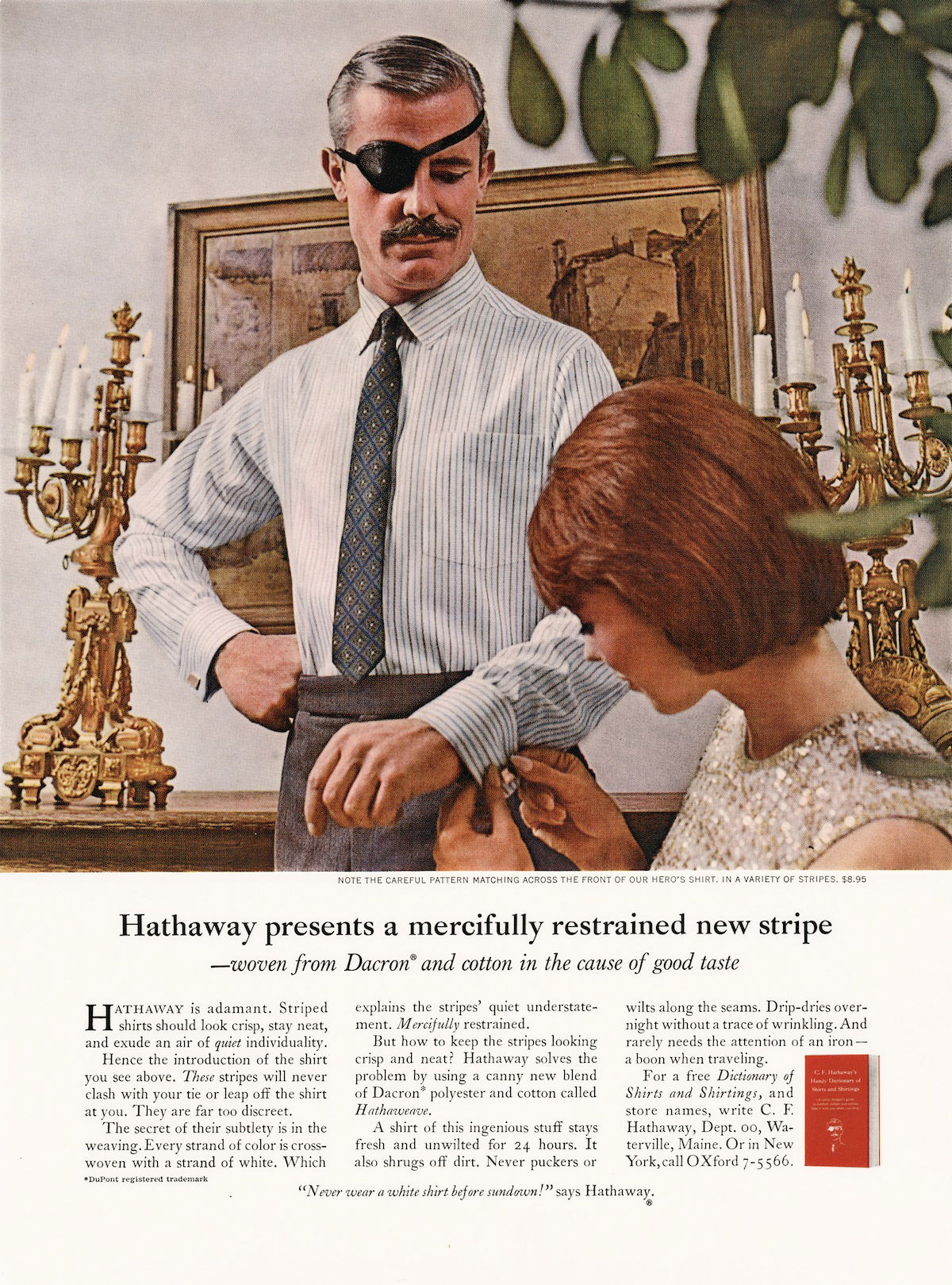
A crisp shirt. A fancy room. A confident man. Snooze fest.
But slap an eyepatch on him and—boom—you’ve got one of the most famous ads ever made. David Ogilvy’s “Man in the Hathaway Shirt” proved one small, unexpected detail can flip boring into unforgettable.
Marketing Analysis
Everything looks polished and proper. Gold candlesticks, tasteful art, good lighting. But the eyepatch hijacks attention. It breaks the pattern, makes your brain ask, “Wait, what’s his story?” That curiosity buys mindshare—and brand recall.
Why It Works
- Curiosity trumps reason
- Pattern-breaking sticks
- Makes viewers write their own story
- Adds emotion to logic-driven products
Real-World Examples
- Old Spice’s bizarre spokesman made deodorant fun
- Dos Equis’ “Most Interesting Man” built mystery around beer
- Apple’s “Think Different” reframed computers as rebellion
- Rolls-Royce sold power by talking about silence
Analyzed by Swipebot
Loading analysis...
.png?width=3840&quality=80)