Organizing your day
Updated on
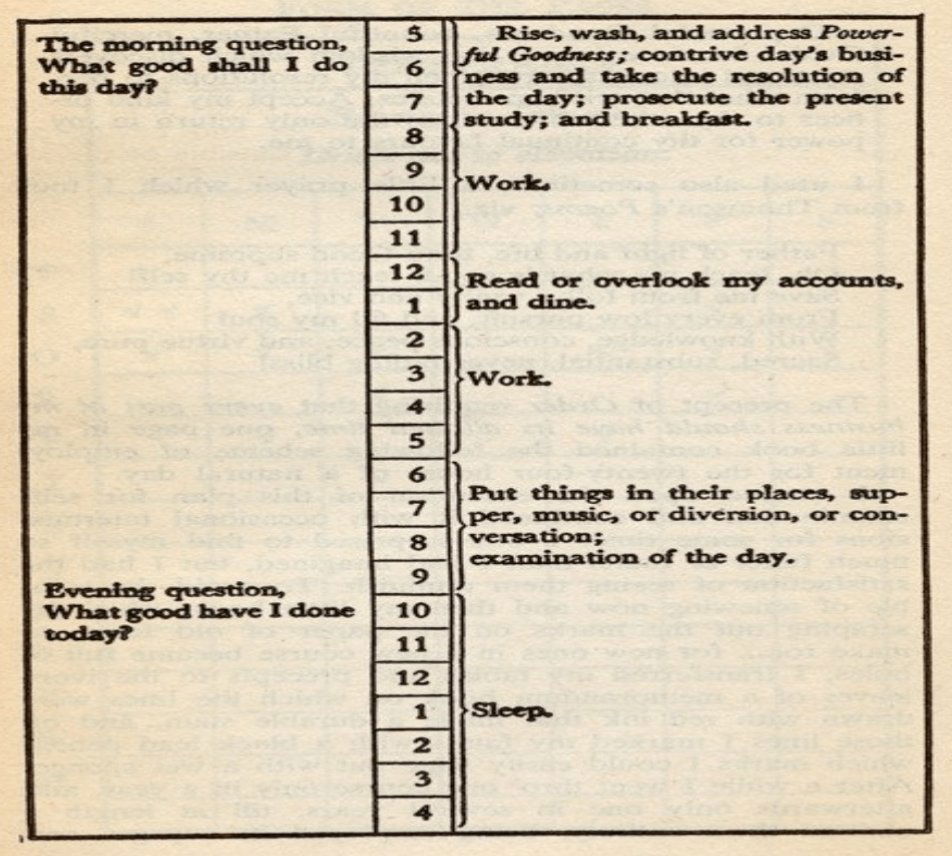
Ben Franklin was a productivity beast. His daily schedule asked one simple question every morning: “What good shall I do this day?” and ended with “What good have I done today?” That simple reflection loop kept him focused and intentional long before “time-blocking” was a thing.
Marketing Analysis
This old-school layout works because it combines purpose and planning. Each block of time has a mission, which reduces decision fatigue and keeps actions aligned with values. Marketers could steal this structure to plan creative work and reflection time instead of just meetings.
Why It Works
- Starts and ends with purpose
- Forces prioritization of big tasks
- Creates habitual structure
- Builds momentum through repetition
- Turns productivity into a daily ritual
Examples
- The Ivy Lee Method: list six top tasks daily, ranked by importance.
- Elon Musk uses 5-minute scheduling blocks.
- Cal Newport’s time-blocking focuses deep work into chunks.
- James Clear’s habit tracking builds the daily review muscle.
Analyzed by Swipebot
Loading analysis...