1939 Ad for Phosferine Tonic Wine
Updated on
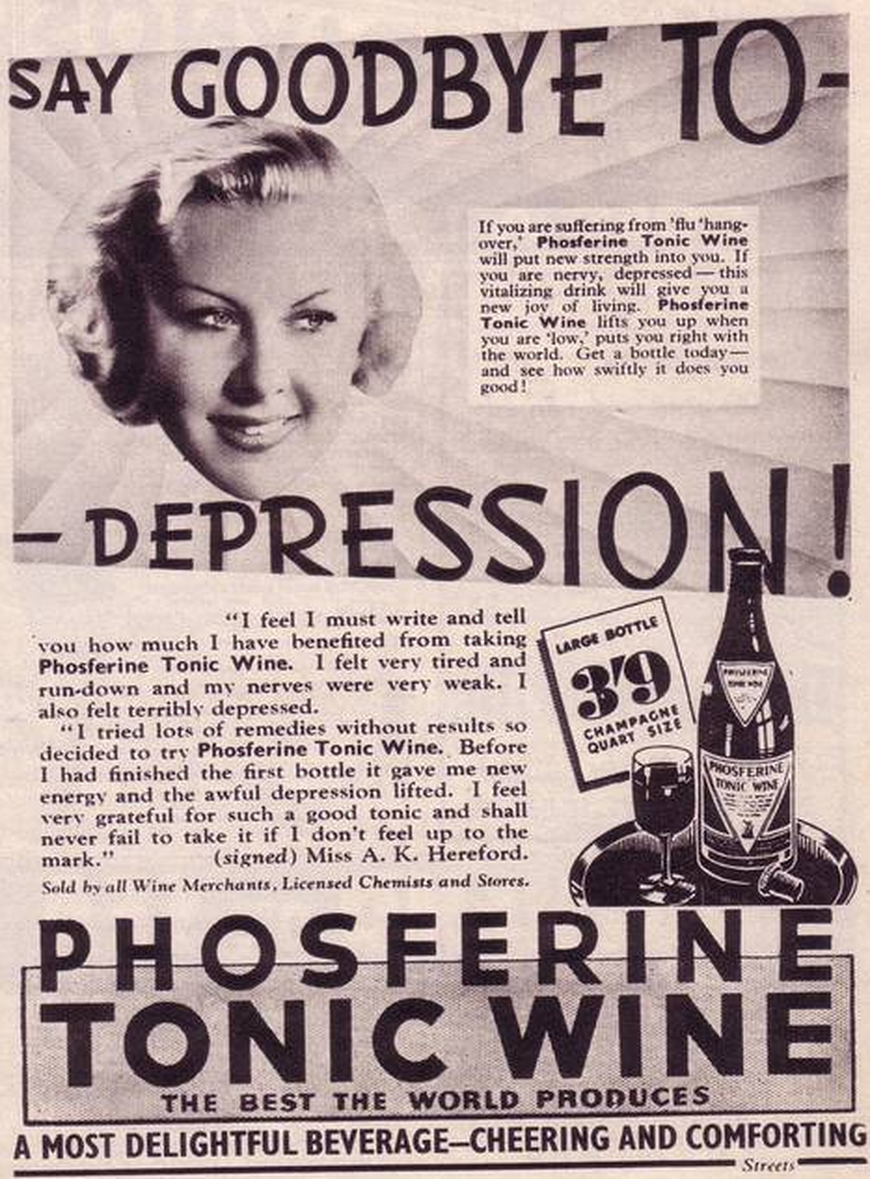
Before wellness drinks and mood-boosting supplements, there was Phosferine Tonic Wine. This 1939 ad turned a sad story into a sales pitch — using one emotional customer letter to make the product feel like a personal cure for depression.
Marketing Analysis
The ad leans hard on social proof and emotional storytelling. Instead of shouting features, it lets a “real person” describe her transformation. That makes the product seem trustworthy and human. The bold headline “Say Goodbye to Depression!” grabs attention, while the testimonial does the persuasion.
Why It Works
- Emotional storytelling builds empathy
- A testimonial lowers buying resistance
- Bold benefit headline draws instant attention
- The “before-and-after” framing promises transformation
- Simple pricing adds credibility and clarity
Examples
- Weight-loss brands use testimonials with before-and-after photos
- Calm app shares user stories about improved sleep and happiness
- Proactiv skyrocketed after infomercials showed real teen results
- Athletic Greens features athlete endorsements for trust
- Peloton ads highlight customer transformations, not product specs
Analyzed by Swipebot
Loading analysis...