Averted Gaze Boosts Sales 30% in Facebook Ads | Tom Pestridge posted on the topic | LinkedIn
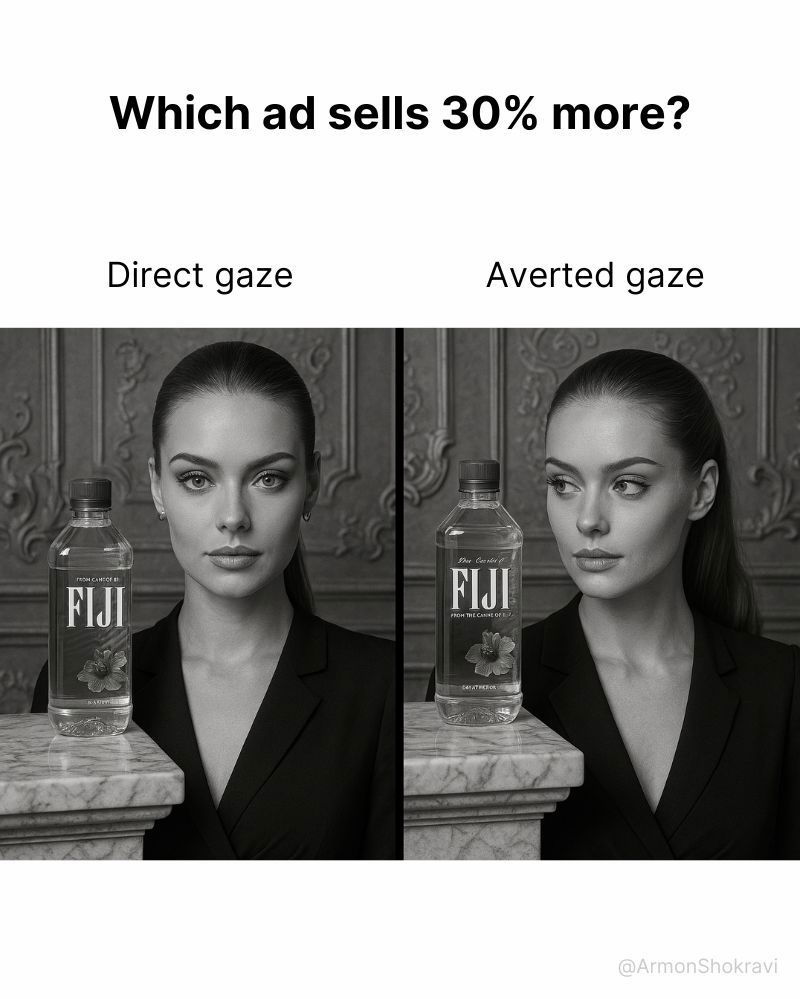
Turns out you can bump Facebook sales 30% just by moving a model’s eyeballs. Same ad. Same product. Same copy. Only difference: where the person is looking. University of Houston researchers ran the test, and the averted gaze crushed the direct stare. Here’s how to steal that tiny tweak for disproportionate gains.
What the Study Actually Found
Researchers ran Facebook ads with identical creative: same product, same headline, same model. The only variable was eye direction: straight at the camera vs looking away. The averted gaze version pulled more clicks and 30% more sales, thanks to an automatic brain glitch called gaze cuing.
The Psychology Behind It
- Your eyes automatically follow where other eyes are looking, even in still photos.
- An averted gaze pulls you into the “scene,” making it feel like a story you just walked into.
- This immersion is especially powerful for emotional, lifestyle, and luxury offers.
- Direct eye contact can feel confrontational in ads, while averted gaze feels aspirational.
How To Use Averted Gaze In Your Ads
- Shoot two versions of your hero image: one with direct eye contact, one with the model looking at the product or scene.
- Run an A/B test on Facebook using identical copy and targeting; only change the gaze.
- Use averted gaze for story-driven, emotional, or luxury angles; test direct gaze for bold, call-to-action heavy offers.
- Make sure the model’s eyes point toward the product, headline, or call-to-action you want clicked.
Real-World Uses Of Averted Gaze
Apple often shows models looking at their iPhones or MacBooks instead of the camera, subtly directing your attention to the product itself.
Nike frequently uses athletes staring down a finish line or off into the distance, pulling viewers into an emotional performance story instead of a simple product shot.
Analyzed by Swipebot
Loading analysis...