Google’s full search model document leak.
Updated on
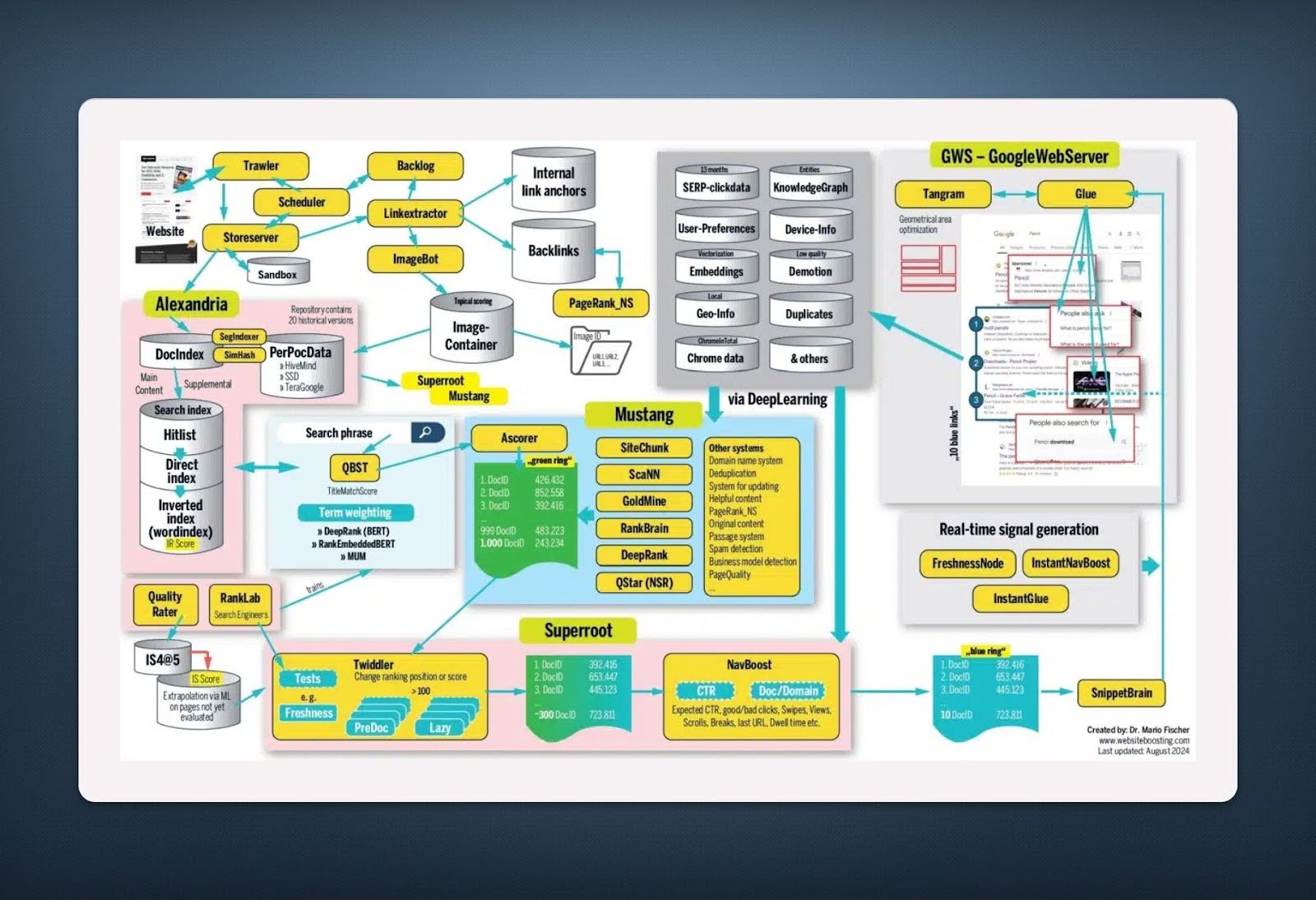
This flowchart looks like a spaceship control panel, but it’s actually how Google decides what shows up in search results. Every little box—Alexandria, Mustang, Glue—is a system feeding signals into a bigger decision engine. It’s wild complexity doing one simple thing: show the most relevant result fast.
Why It Works
- Layers of systems = more accurate results
- Real-time signals let Google adapt to fresh content
- Data loops keep improving the algorithm
- Every input (clicks, dwell time, backlinks) refines ranking
Examples
- Amazon’s recommendation engine uses layered data (browsing + purchases + timing) to push products.
- Netflix’s home screen constantly adjusts using live viewing data.
- TikTok’s feed ranks videos by engagement loops, improving every second.
- Spotify’s playlists blend behavioral and contextual data just like Google’s “signals.”
Analyzed by Swipebot
Loading analysis...