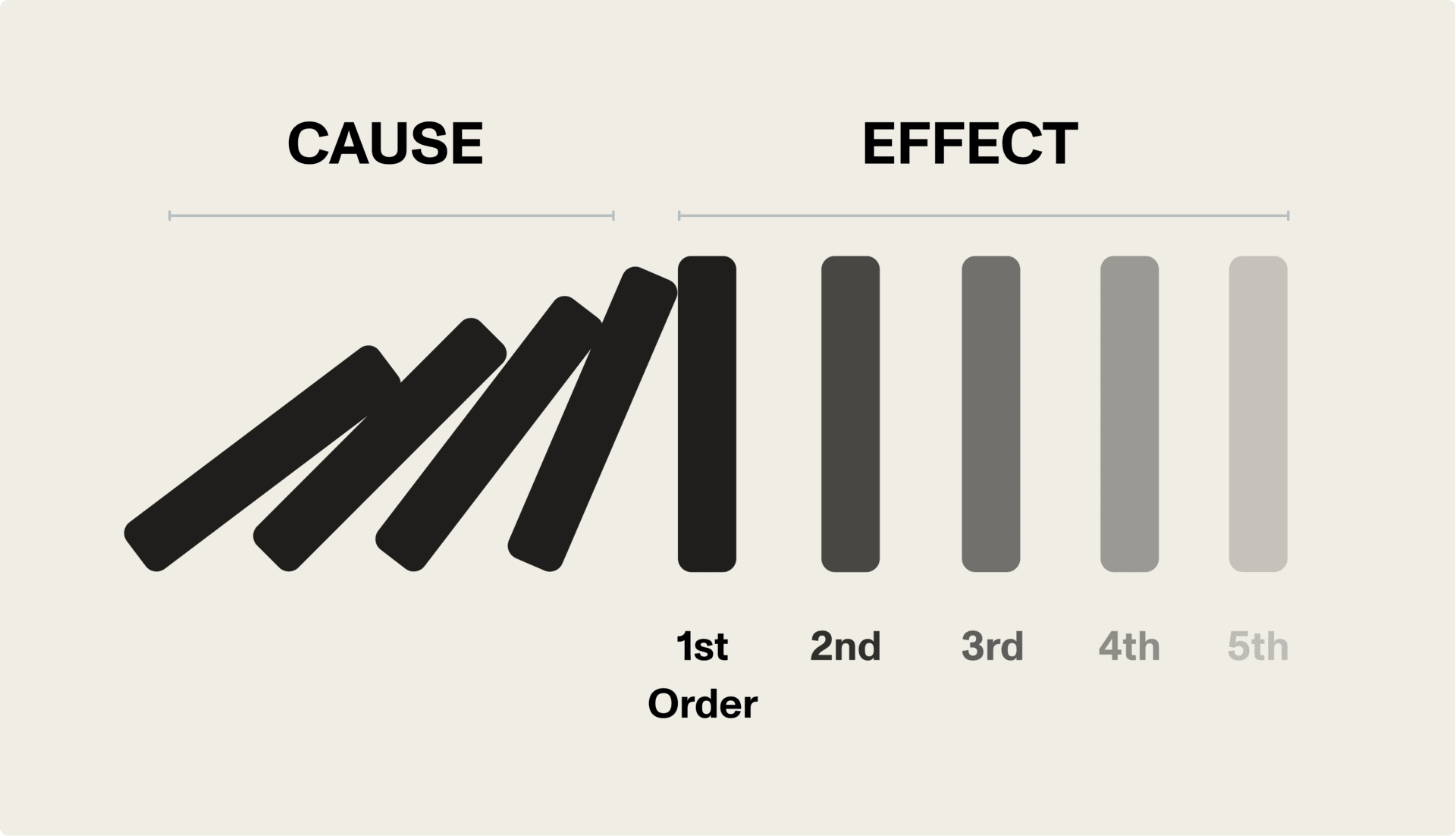
Look at the image: one heavy black domino gets hit, then a clean row of lighter dominos lines up behind it. That first upright domino is your first‑order effect. Everything after that gets fuzzier, weaker, and more unpredictable. Build your plan around that first hit, not the fifth wobble.
How To Use This In Real Life
Before any project, ask: what is the bold black domino here? For a launch, it might be getting 100 people to genuinely try the product, not predicting what their friends’ friends will think. Design your actions to guarantee that first effect, then let the later dominos fall how they fall.
The Psychology Behind The Domino Graphic
- First‑order effects are closest to the cause, so they are controllable.
- Second, third, fourth order effects fade in the graphic because certainty fades too.
- Focusing on far‑down dominos tempts you into paralysis, not decisive action.
Real‑World First‑Order Focus

Amazon obsessed over fast, reliable delivery as the first‑order effect, trusting that word‑of‑mouth and loyalty would follow.
Basecamp focused on making project setup absurdly simple, knowing that more teams and upgrades would be downstream effects.