Rebrands and pivots that made companies more money.
Published on
Here’s 30+ examples of companies that rebranded or slightly pivoted their product to make a bunch more money.
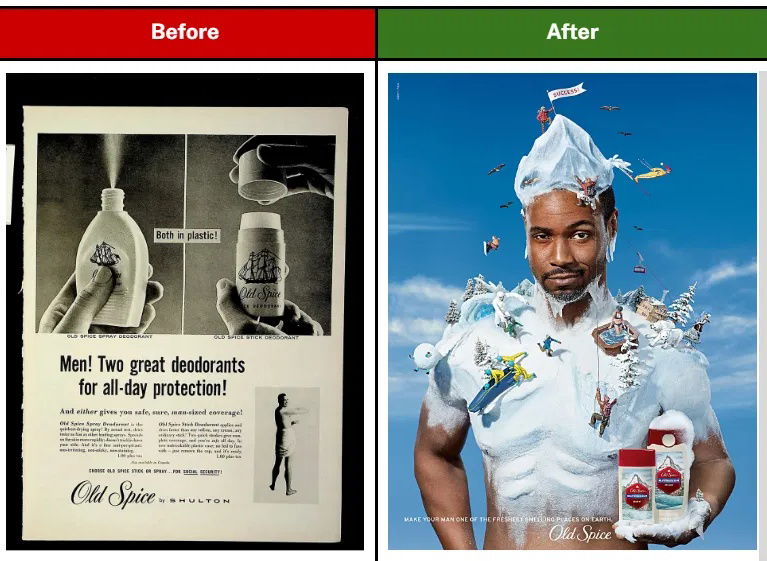
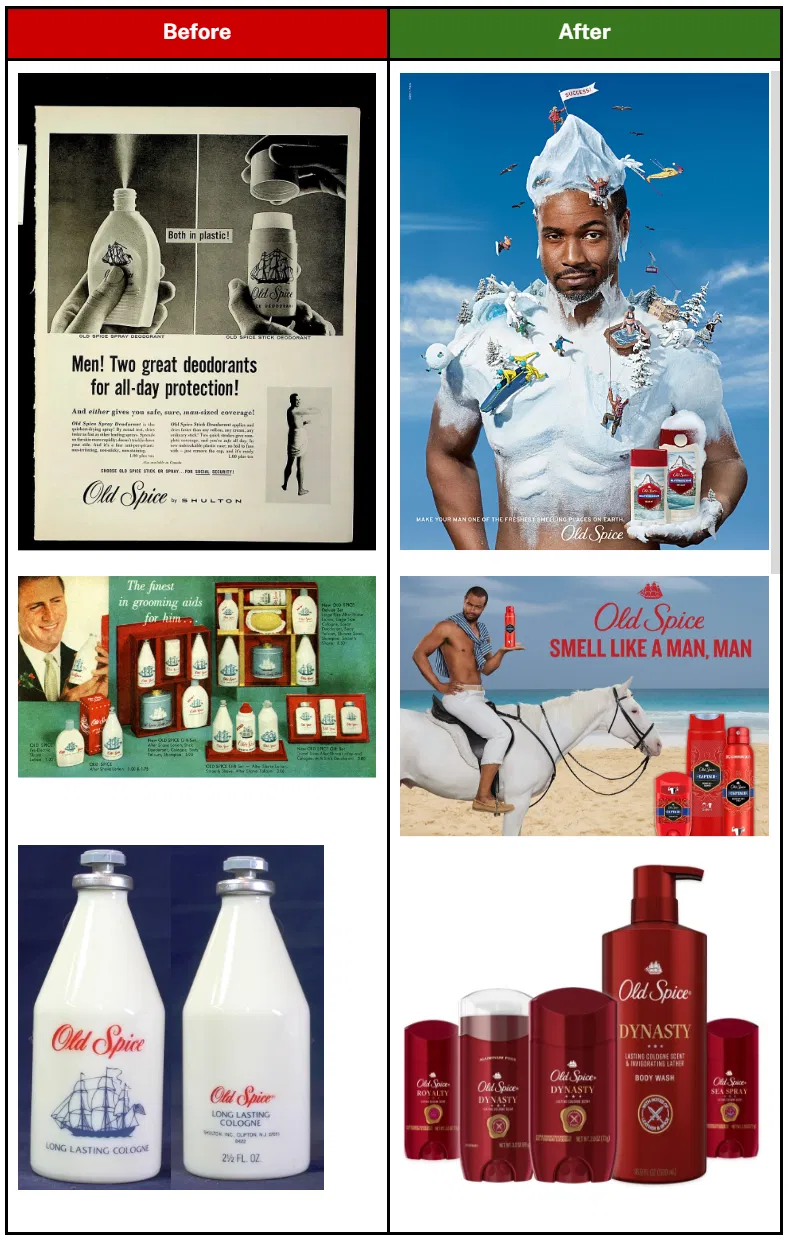
#1.) Old Spice
Before Rebrand: Old Spice was viewed as an outdated brand for older men. Its customer base was shrinking, and it lacked a distinctive identity.
After Rebrand: In 2010, Old Spice launched a humorous campaign featuring "The Man Your Man Could Smell Like." It successfully modernized the brand’s image, making it more appealing to younger audiences and even female buyers.
Impact: Sales increased by 125% year-over-year within just a few months of the campaign launch. The brand established itself as cool, confident, and youthful, solidifying its place in the market.
#2.) Domino's
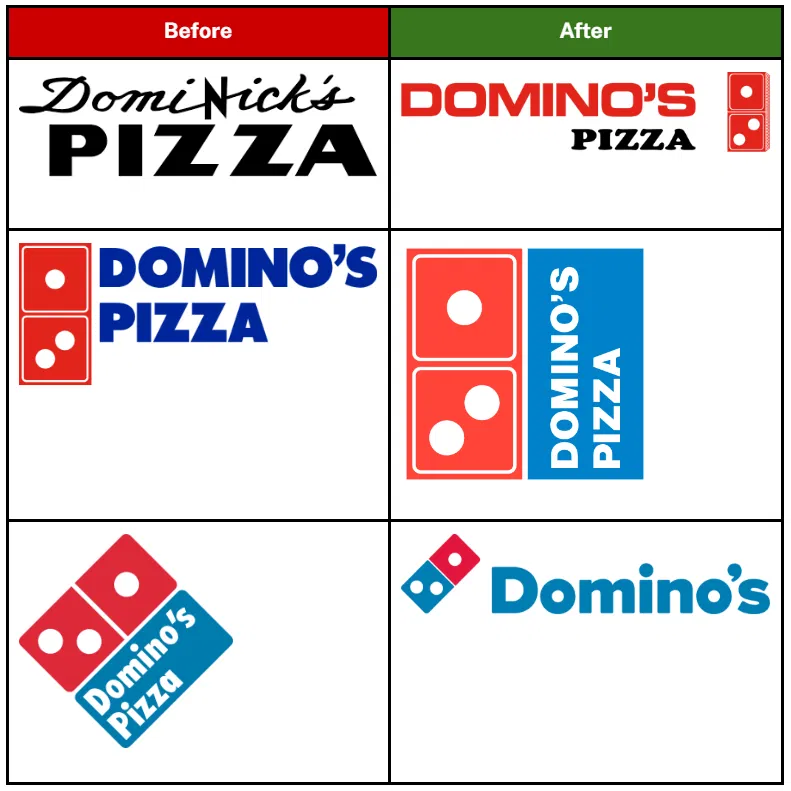
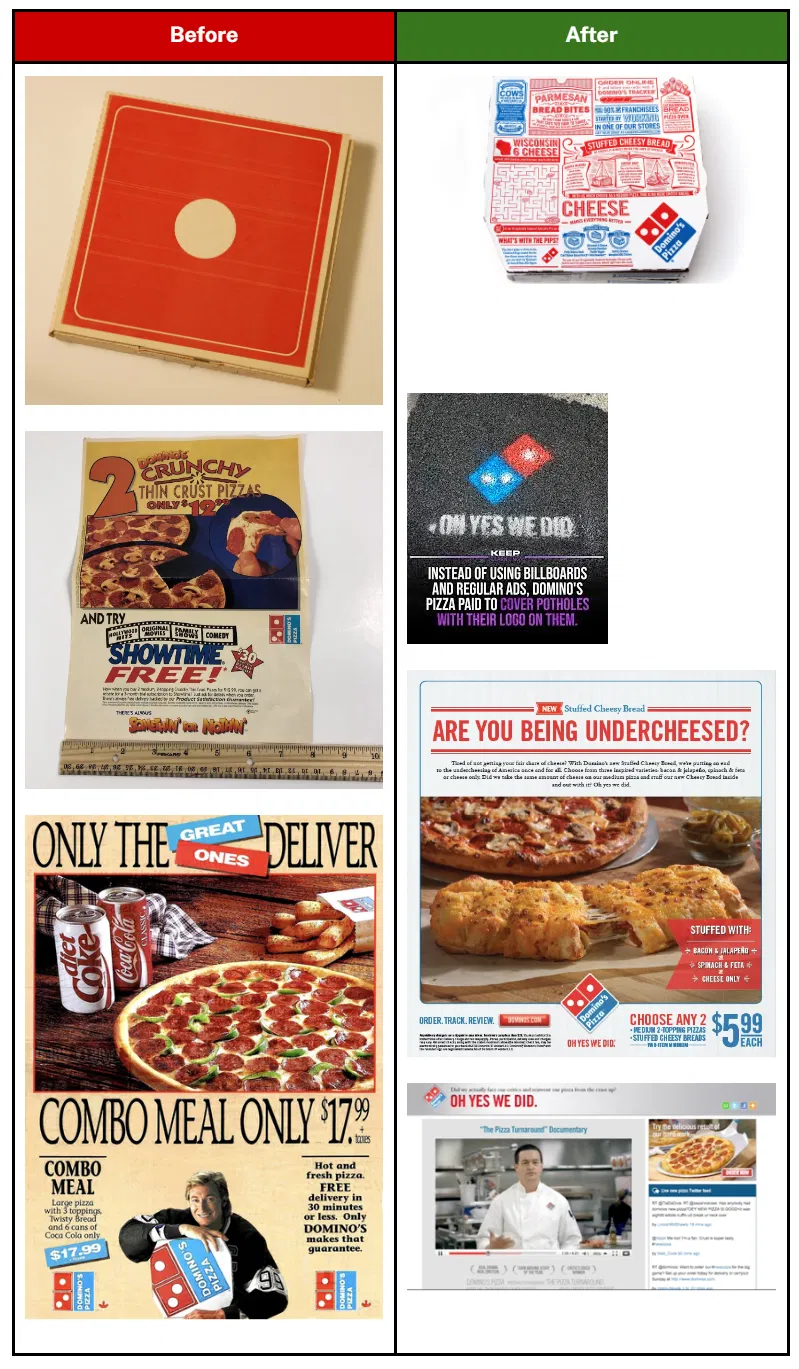
Before Rebrand: Domino's had a reputation for low-quality pizza and received negative reviews. The company’s brand perception was declining, and sales stagnated.
After Rebrand: In 2009, Domino’s launched a complete overhaul by publicly acknowledging their flaws, improving their recipe, and investing in technology to make ordering easier. They launched a new campaign under the "Oh Yes We Did" tagline, showing transparency and listening to customer feedback.
Impact: Domino’s shares surged from around $8 in 2009 to over $300 by 2021. The rebrand and operational improvements helped Domino's become the global leader in the pizza delivery space.
#3.) Burberry
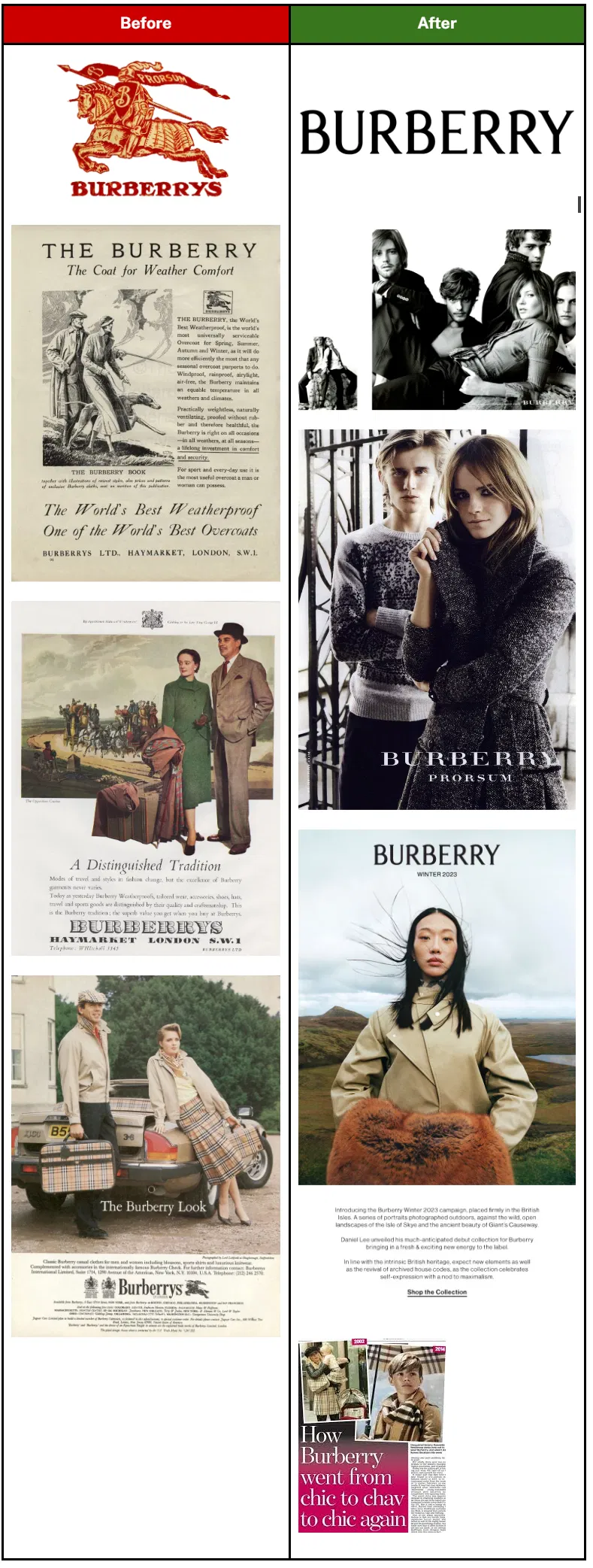
Before Rebrand: In the early 2000s, Burberry's image suffered from being perceived as a "chav" brand—a label for low-quality, undesirable consumers—largely due to counterfeit products flooding the market.
After Rebrand: Burberry revamped its image under CEO Angela Ahrendts and creative director Christopher Bailey. The focus shifted to embracing its heritage while promoting exclusivity and digital-forward luxury branding.
Impact: By 2018, Burberry’s valuation increased to over $10 billion, with a significant turnaround from losing relevance to becoming a symbol of British luxury again. The brand’s annual revenue increased from £742 million in 2006 to £2.7 billion in 2018.
#4.) McDonald's
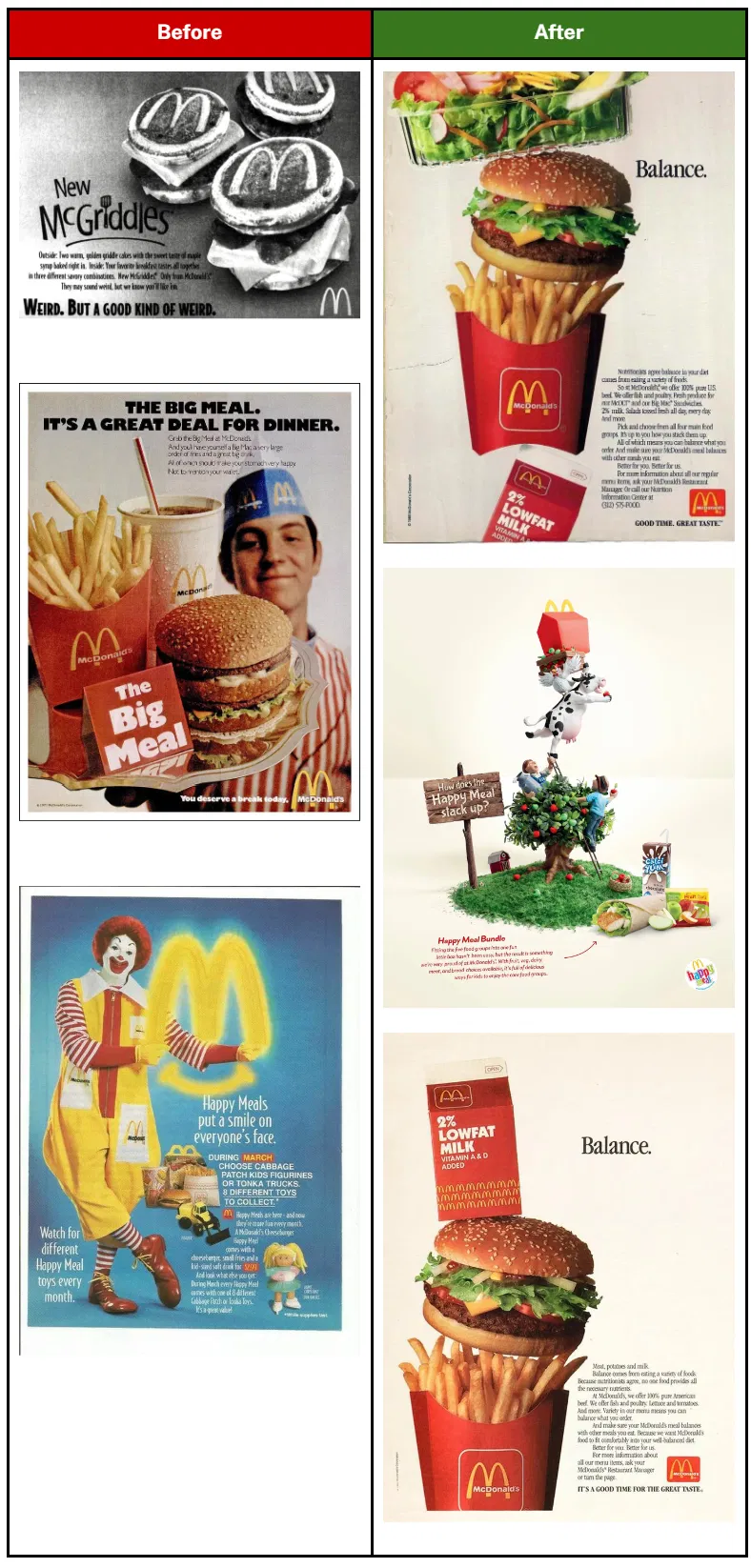
Before Rebrand: In the early 2000s, McDonald's had a reputation for unhealthy fast food and faced declining growth, amid backlash about obesity and poor nutritional content.
After Rebrand: The company invested in a healthier menu, store redesigns, and new marketing campaigns like "I'm Lovin' It." They also emphasized a more modern, customer-centric dining experience.
Impact: Over the next decade, McDonald’s saw strong financial growth, with revenues increasing from $22.8 billion in 2005 to $27.4 billion by 2015. The brand also began focusing more on technology, launching mobile ordering and delivery, helping modernize its convenience factor.
#5.) Lego
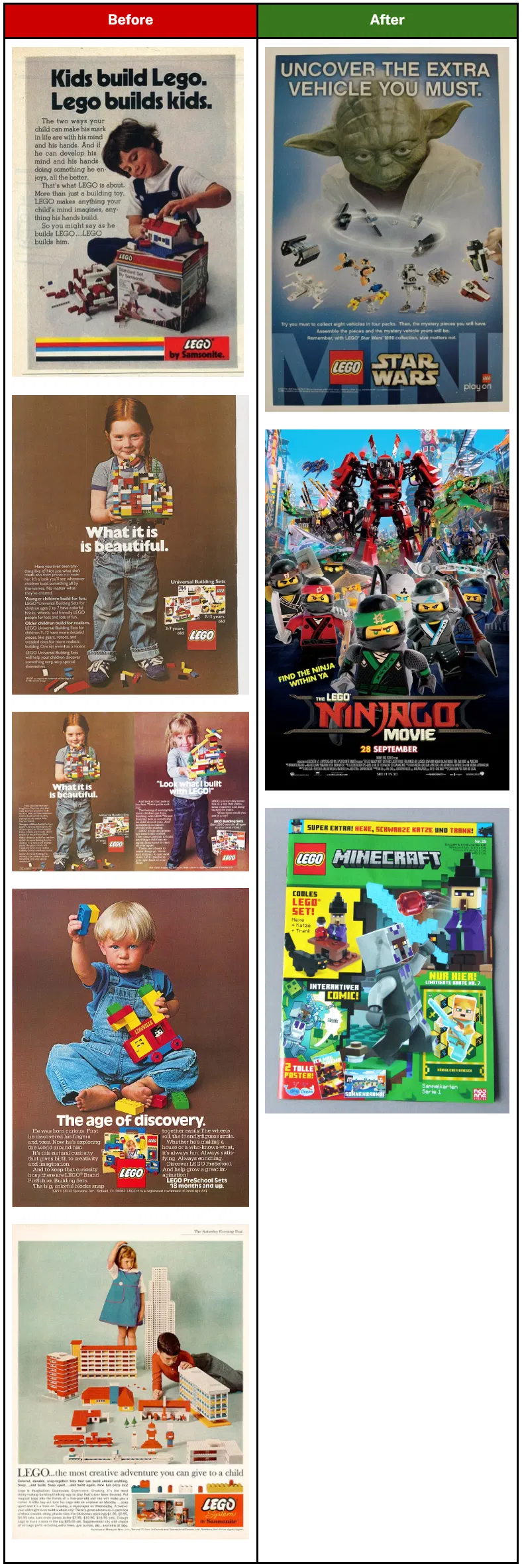
Before Rebrand: In the early 2000s, Lego was on the brink of bankruptcy, losing relevance to digital forms of entertainment.
After Rebrand: Lego focused on its core product—the brick—while embracing collaboration with popular franchises like Star Wars, Harry Potter, and Marvel. They also expanded into digital media, movies, and gaming.
Impact: By 2015, Lego became the largest toy company in the world, with revenues surpassing $5.2 billion compared to $1 billion in 2004. The brand's financial health turned around drastically through re-focused branding and innovative partnerships.
#6.) RXBar
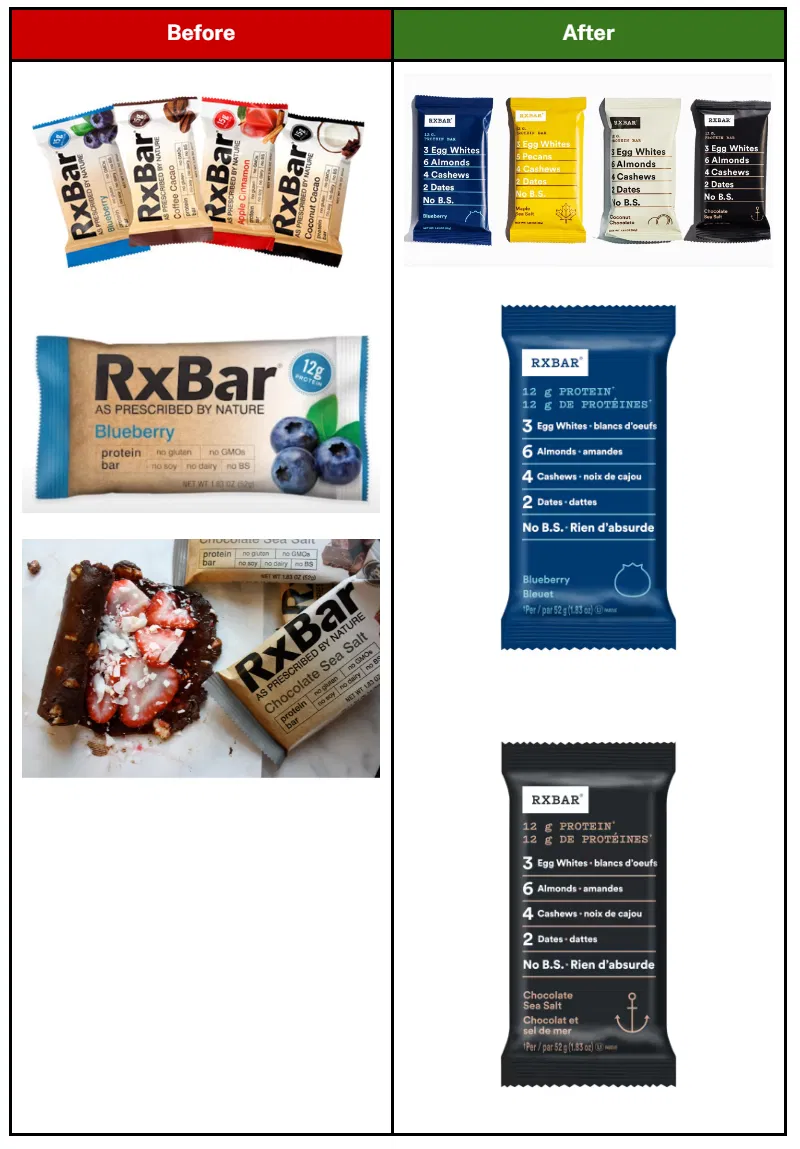
Before Rebrand: RXBar started in 2013 as a small player in the protein bar market with clean ingredients but lacked strong brand identity.
After Rebrand: They emphasized simple, transparent labeling—listing only the core ingredients on the front of the package, adopting a minimalist design.
Impact: The rebrand resonated with health-conscious consumers. In 2017, Kellogg acquired RXBar for $600 million, a testament to the brand’s growth and value appreciation.
#7.) Apple
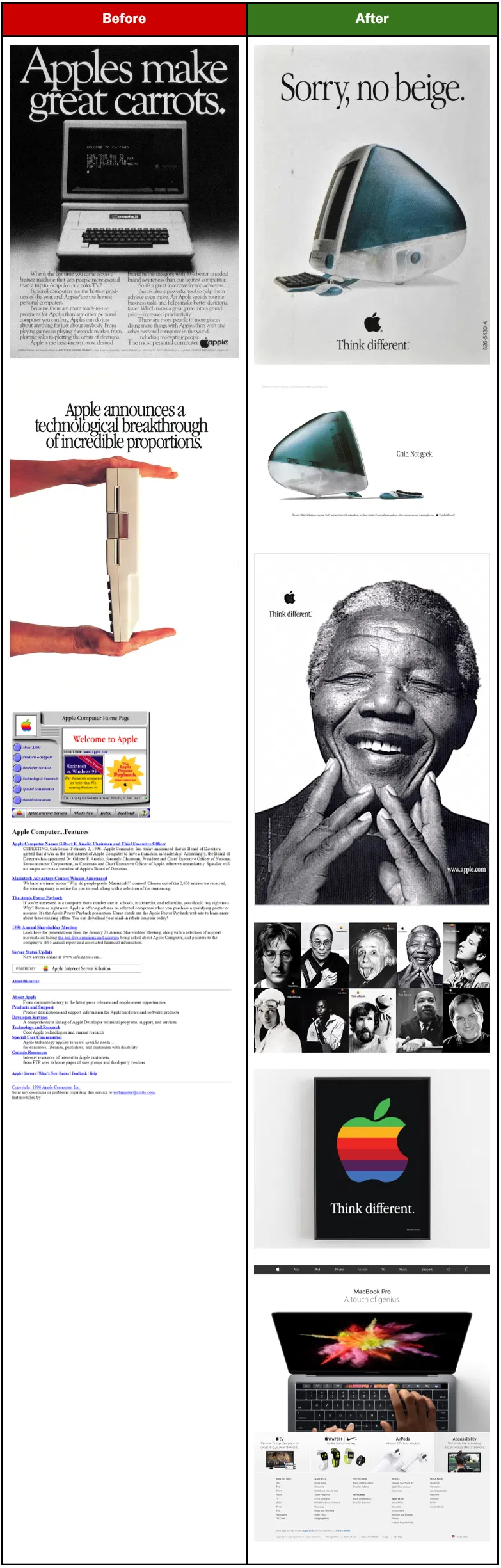
Before Rebrand: In the late 90s, Apple was struggling with declining market share, a fragmented product lineup, and an unclear brand identity.
After Rebrand: With Steve Jobs' return in 1997, Apple simplified its product line, revamped the design of its devices, and launched the “Think Different” campaign. The focus shifted to innovation, creativity, and sleek, user-friendly products.
Impact: In 1997, Apple’s market cap was around $3 billion; today, it’s one of the most valuable companies globally, with a market cap exceeding $3 trillion in 2023.
#8.) Airbnb
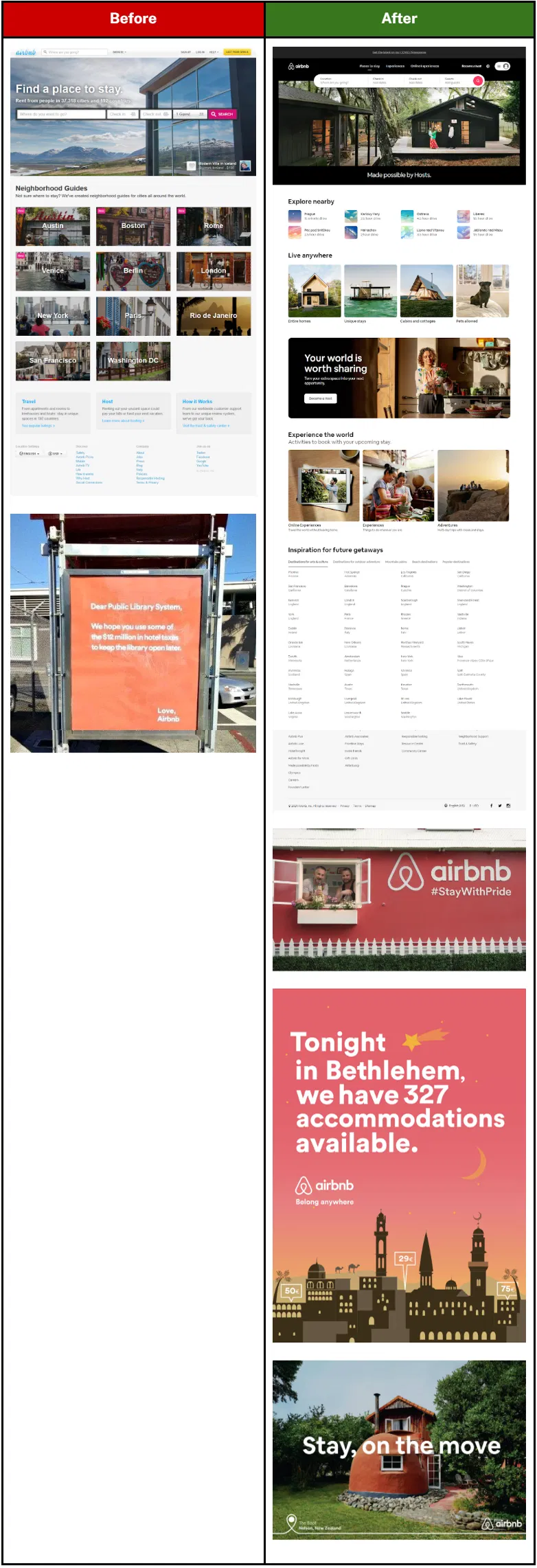
Before Rebrand: In its early days, Airbnb was seen as a budget, couch-surfing option for travelers.
After Rebrand: In 2014, Airbnb underwent a rebranding that included a new logo ("Bélo") representing belonging, and refined their messaging to focus on experiences and community.
Impact: The rebrand helped reposition Airbnb from budget stays to a community-based travel platform. Revenue grew from $250 million in 2013 to over $8 billion in 2022, helping Airbnb become a mainstream travel alternative.
#9.) Dunkin’ (formerly Dunkin' Donuts)
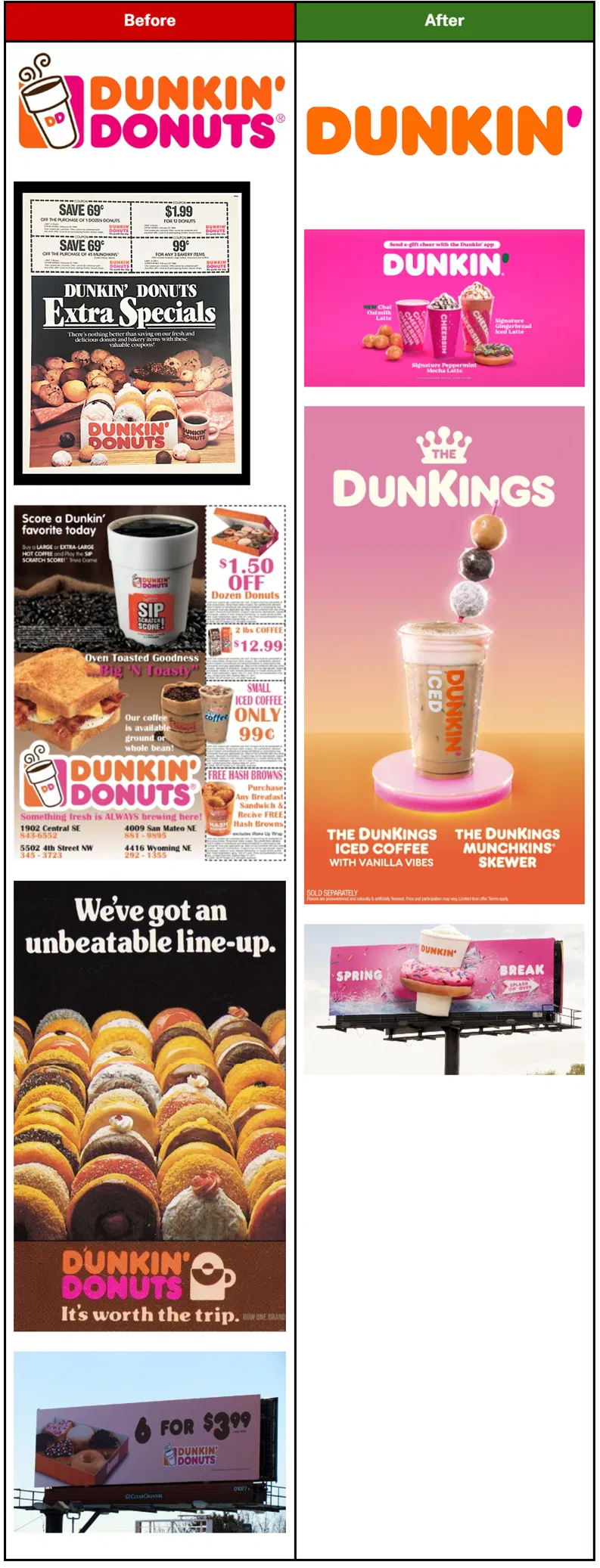
Before Rebrand: Dunkin’ Donuts was associated almost exclusively with donuts, despite having a significant portion of revenue coming from coffee and beverages.
After Rebrand: In 2018, the brand dropped "Donuts" from its name to become just "Dunkin’," signaling a shift to focus on coffee, quick bites, and convenience.
Impact: The rebrand contributed to a sales increase of 1.4% in the year following and repositioned Dunkin' as a competitor to Starbucks in the coffee market.
#10.) Marvel
Before Rebrand: In the 1990s, Marvel was primarily a comic book company on the verge of bankruptcy, struggling to stay relevant in an increasingly digital world.
After Rebrand: Marvel reinvented itself by moving into the film industry, creating Marvel Studios and launching the Marvel Cinematic Universe (MCU) in 2008 with "Iron Man."
Impact: Today, the MCU is a multi-billion dollar franchise, with total box office revenue exceeding $29 billion by 2024, making it one of the highest-grossing film franchises of all time.
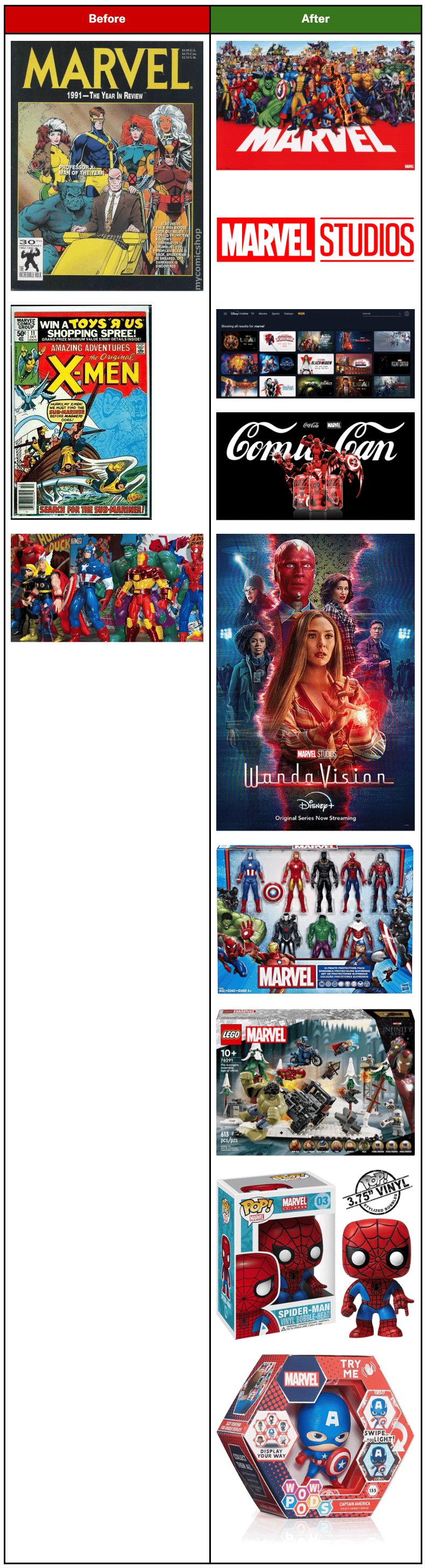
#11.) Instagram
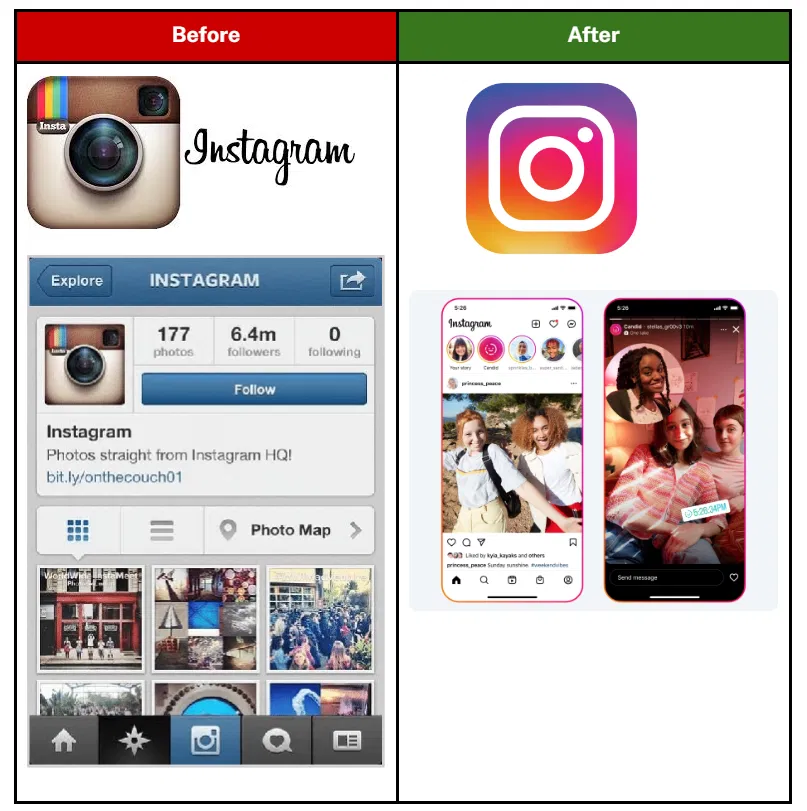
Before Rebrand: Instagram started in 2010 as a photo-sharing app focused primarily on filtered photos and small social groups.
After Rebrand: In 2016, Instagram changed its logo and added features like Stories, shifting its brand from a simple photo-sharing app to a broader social media and content creation platform.
Impact: The rebrand and feature updates helped Instagram grow from 500 million monthly active users in 2016 to over 2 billion by 2023, becoming one of the most influential social platforms.
#12.) Cadbury
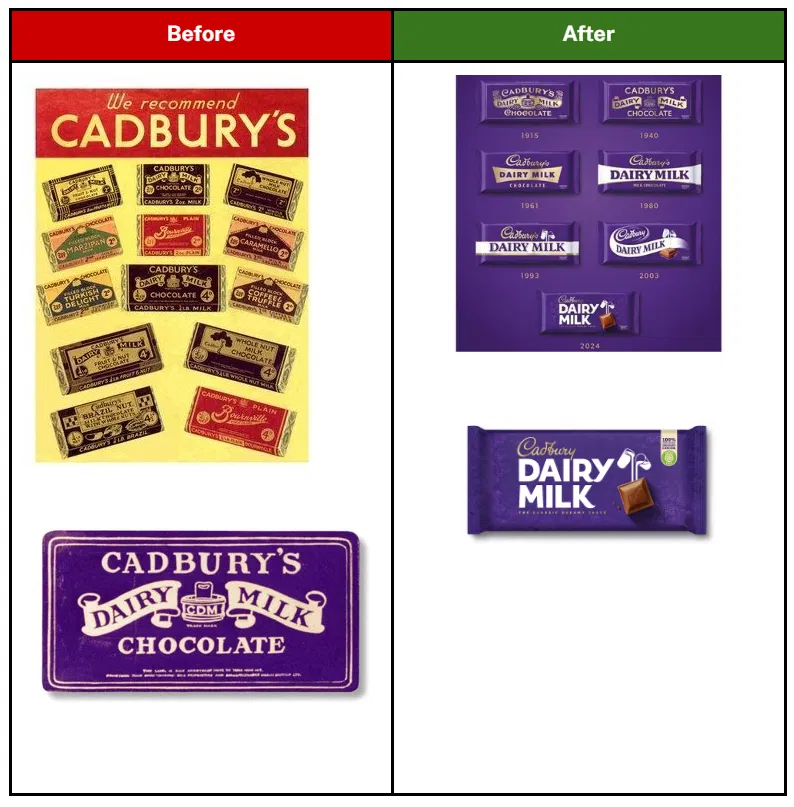
Before Rebrand: In the early 2000s, Cadbury was facing stagnation in brand perception and was seen as old-fashioned.
After Rebrand: The company adopted a more modern logo and marketing campaign in 2008 focused on fun and joy ("Glass and a Half Full of Joy"). They rebranded with an emphasis on emotional connection and a playful image.
Impact: Post-rebrand, Cadbury's sales increased significantly, with brand value rising from $5 billion in 2008 to over $12 billion by 2020, re-establishing Cadbury as one of the world’s leading confectionery brands.
#13.) Nike
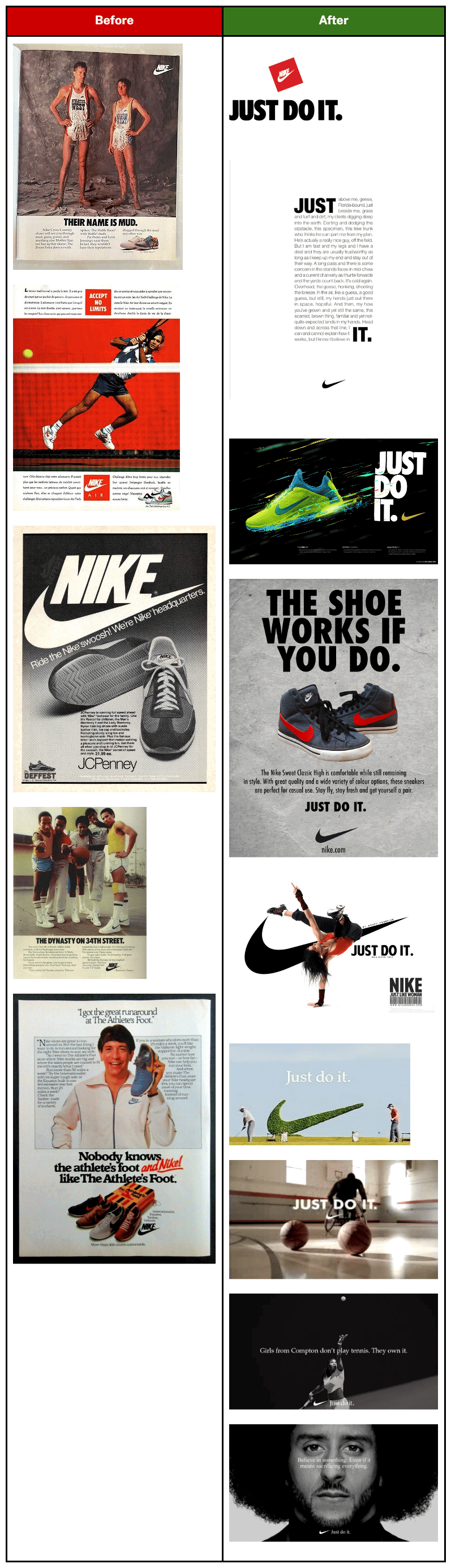
Before Rebrand: In the 1980s, Nike was primarily seen as an athletic shoe company, not distinct from its competitors.
After Rebrand: Nike launched the "Just Do It" campaign in 1988, pairing it with endorsements from top athletes like Michael Jordan. This rebranding positioned Nike as an aspirational lifestyle brand focused on determination and performance.
Impact: Revenues grew from $877 million in 1988 to over $50 billion by 2022, with the "Just Do It" campaign becoming one of the most iconic slogans of all time.
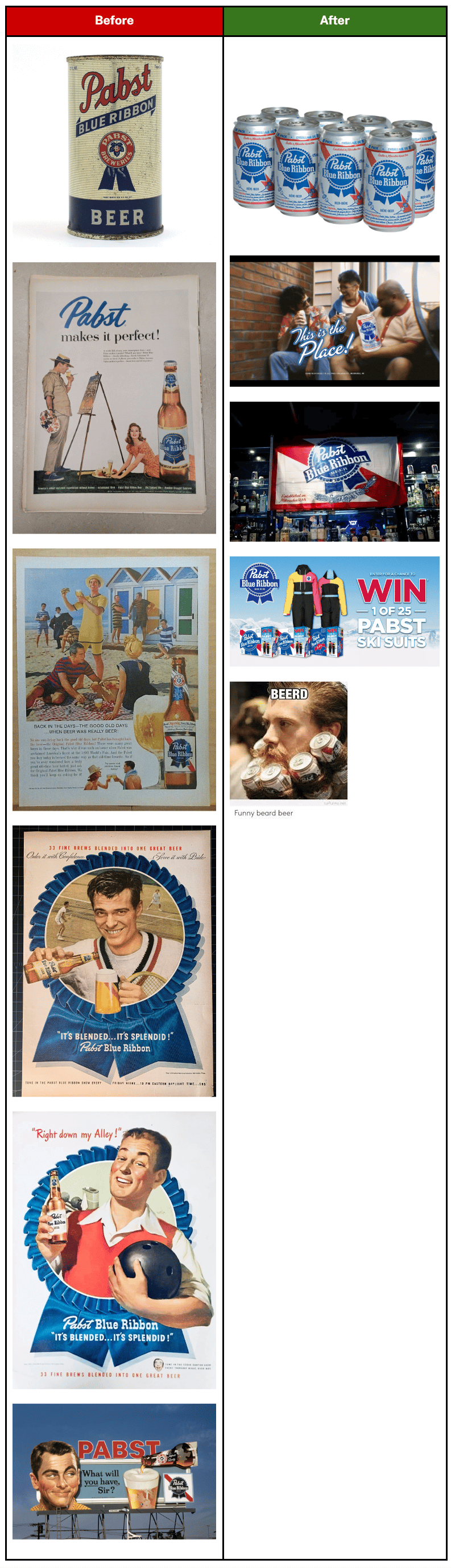
#14.) Pabst Blue Ribbon (PBR)
Before Rebrand: PBR was known as a cheap beer brand, mostly associated with older consumers and lacking any cultural cachet.
After Rebrand: In the early 2000s, PBR began targeting younger, urban markets by aligning with hipster culture. The brand focused on grassroots marketing, sponsoring local art, music, and skateboarding events.
Impact: Between 2001 and 2012, sales increased from 140,000 barrels per year to 925,000 barrels, turning PBR into a trendy, counterculture symbol.
#15.) Harley-Davidson
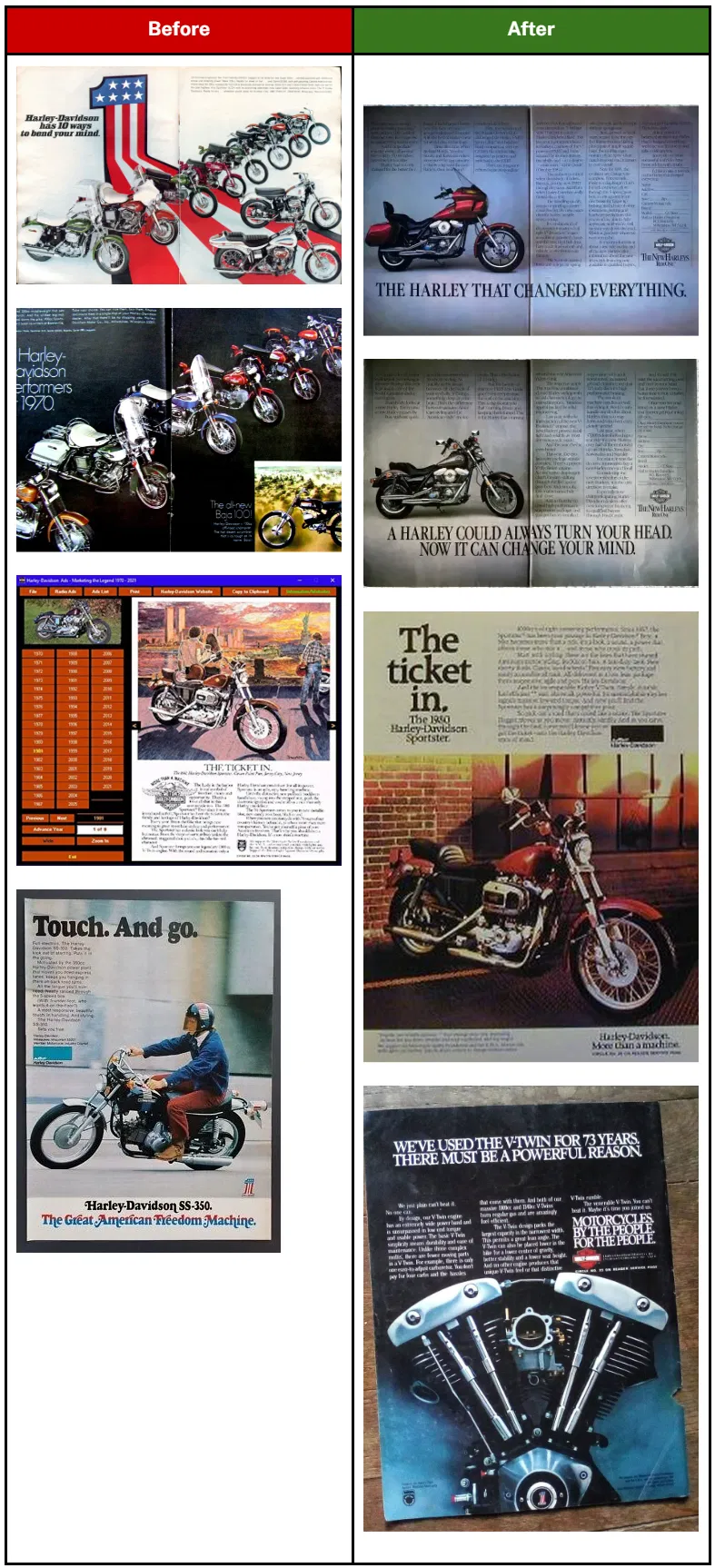
Before Rebrand: In the early 1980s, Harley-Davidson faced stiff competition from Japanese manufacturers and declining brand loyalty.
After Rebrand: Harley focused on emphasizing American craftsmanship, the unique rumble of their engines, and building a lifestyle around "freedom." They fostered a community through H.O.G. (Harley Owners Group).
Impact: Harley-Davidson’s sales went from $210 million in 1983 to $1.6 billion by 1990, re-establishing the brand as the quintessential symbol of the American road.
#16.) Volkswagen Beetle
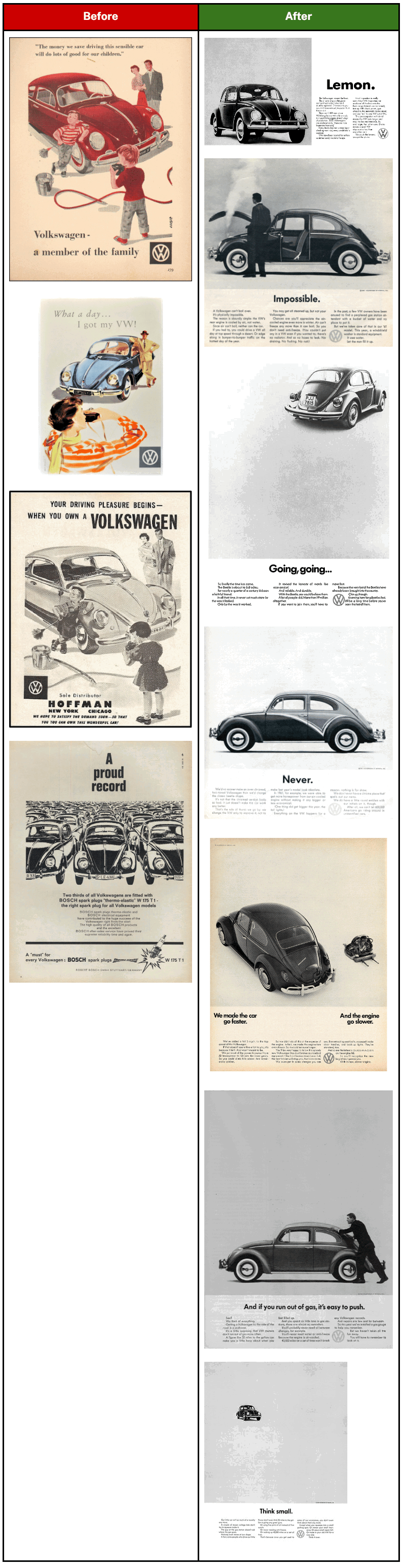
Before Rebrand: In the early 90s, the Volkswagen Beetle was seen as an outdated "hippie car" and wasn't appealing to the modern driver.
After Rebrand: In 1998, Volkswagen introduced the New Beetle with a modern twist on the classic design, appealing to both nostalgia and a new generation of drivers.
Impact: The New Beetle helped Volkswagen sell over 1.2 million units globally between 1998 and 2011, giving the brand a significant boost in visibility and relevance.
#17.) Gucci
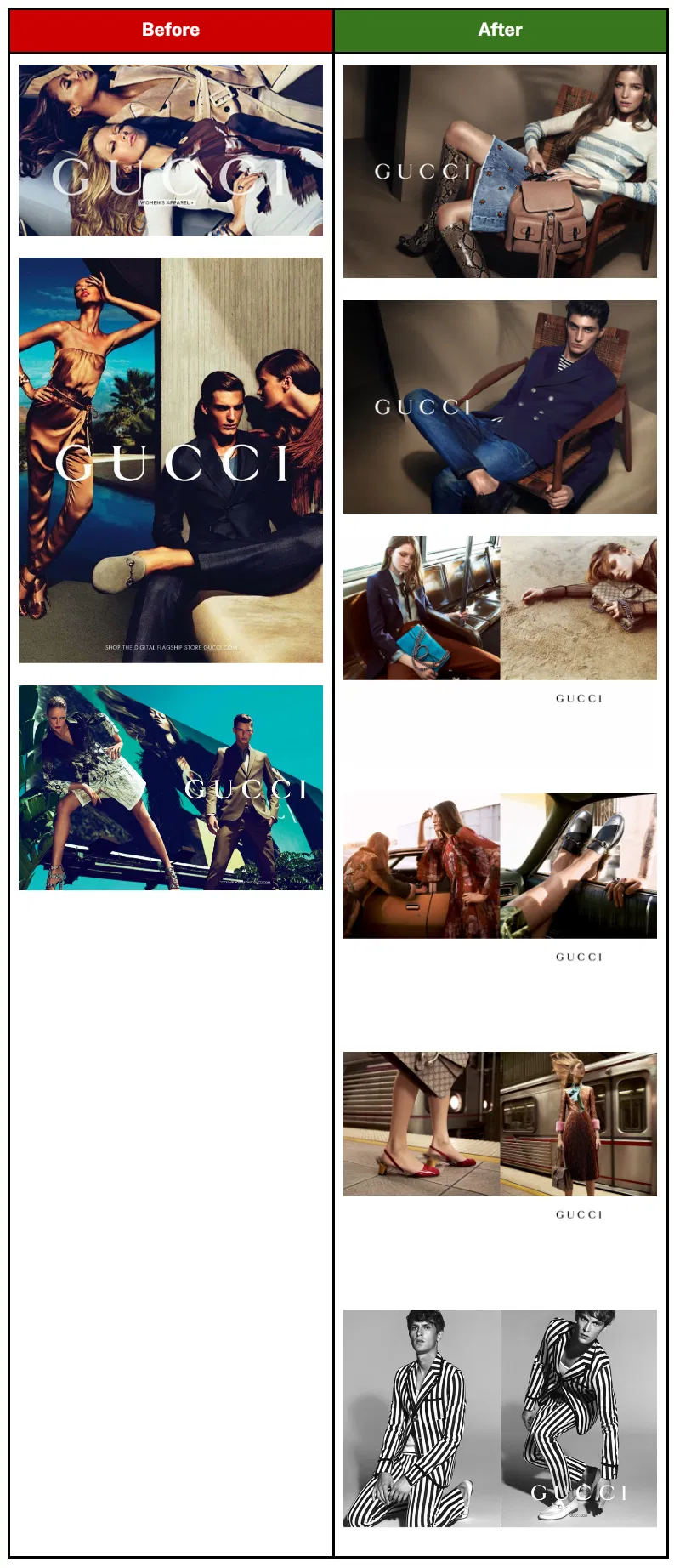
Before Rebrand: In the early 2010s, Gucci was viewed as a fading luxury brand, struggling with stagnation, and was seen as too traditional.
After Rebrand: In 2015, Alessandro Michele took over as creative director and redefined Gucci’s aesthetic to focus on eclectic, gender-fluid, and more youthful designs. They also embraced digital marketing and collaborations with pop culture influencers.
Impact: The brand's revenue grew from €3.9 billion in 2015 to over €9.6 billion in 2022, making it one of the fastest-growing luxury brands.
#18.) Taco Bell
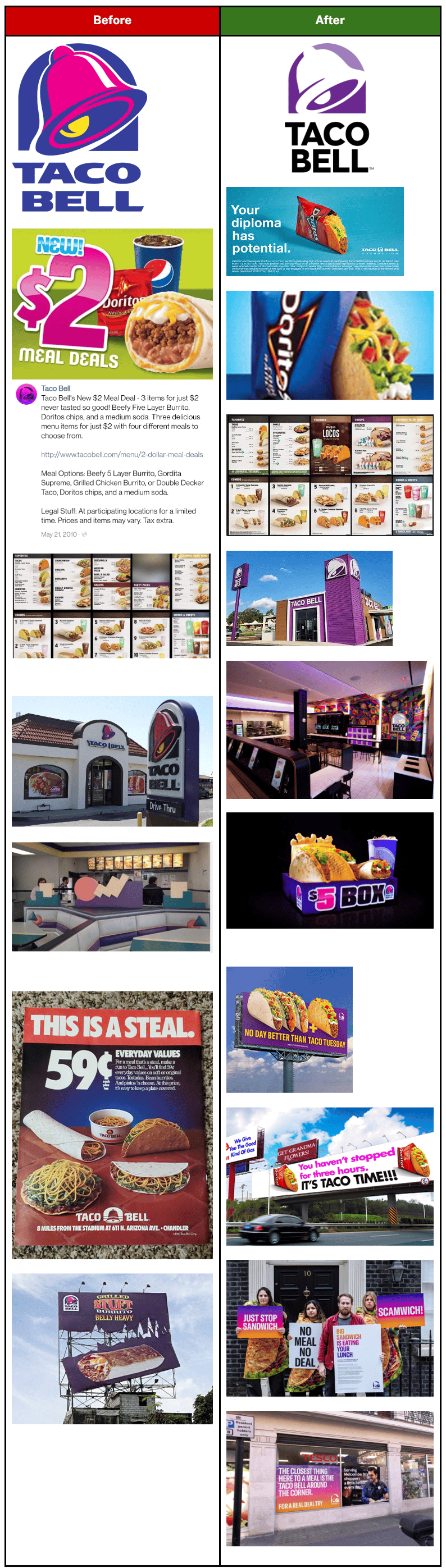
Before Rebrand: In the early 2010s, Taco Bell was struggling to attract millennial customers and was primarily seen as a cheap fast-food option.
After Rebrand: Taco Bell shifted its focus to creating a fun, "foodie" brand experience, launched the upscale Cantina locations, experimented with innovative menu items (like Doritos Locos Tacos), and leveraged social media marketing.
Impact: Taco Bell’s sales grew from $7 billion in 2012 to over $14 billion by 2022, and the brand gained strong traction with younger demographics.
#19.) Mailchimp
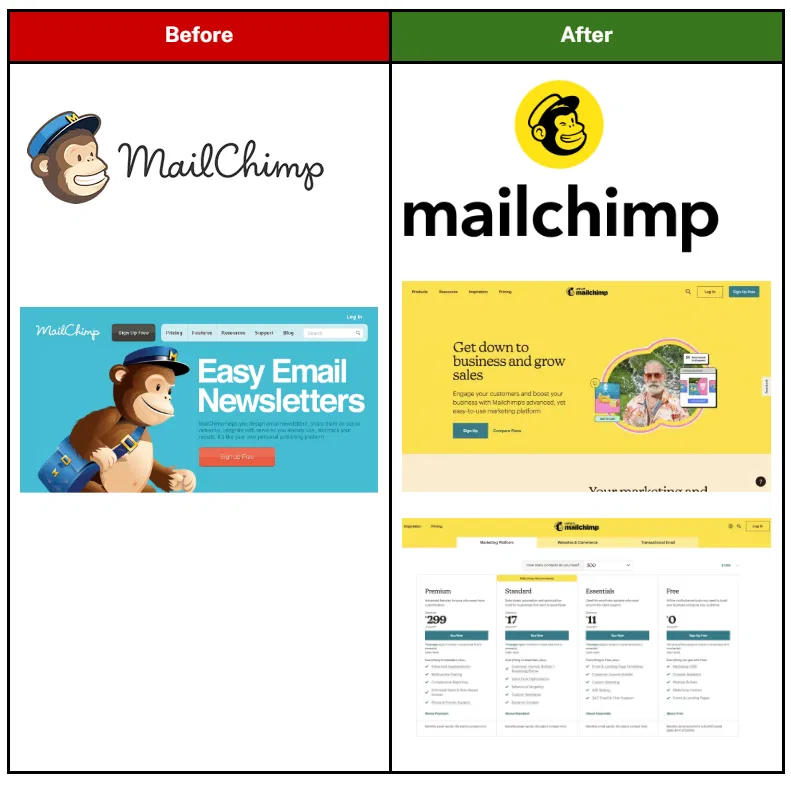
Before Rebrand: Mailchimp started as a simple email marketing tool, largely viewed as affordable but lacking an aspirational identity.
After Rebrand: In 2018, Mailchimp rebranded with a bold new look and positioning as an all-in-one marketing platform for growing businesses, focusing on empowering small businesses to do creative marketing.
Impact: Mailchimp’s valuation soared, eventually leading to its acquisition by Intuit for $12 billion in 2021. Revenue grew to more than $800 million per year by the time of the acquisition.
#20.) Planet Fitness
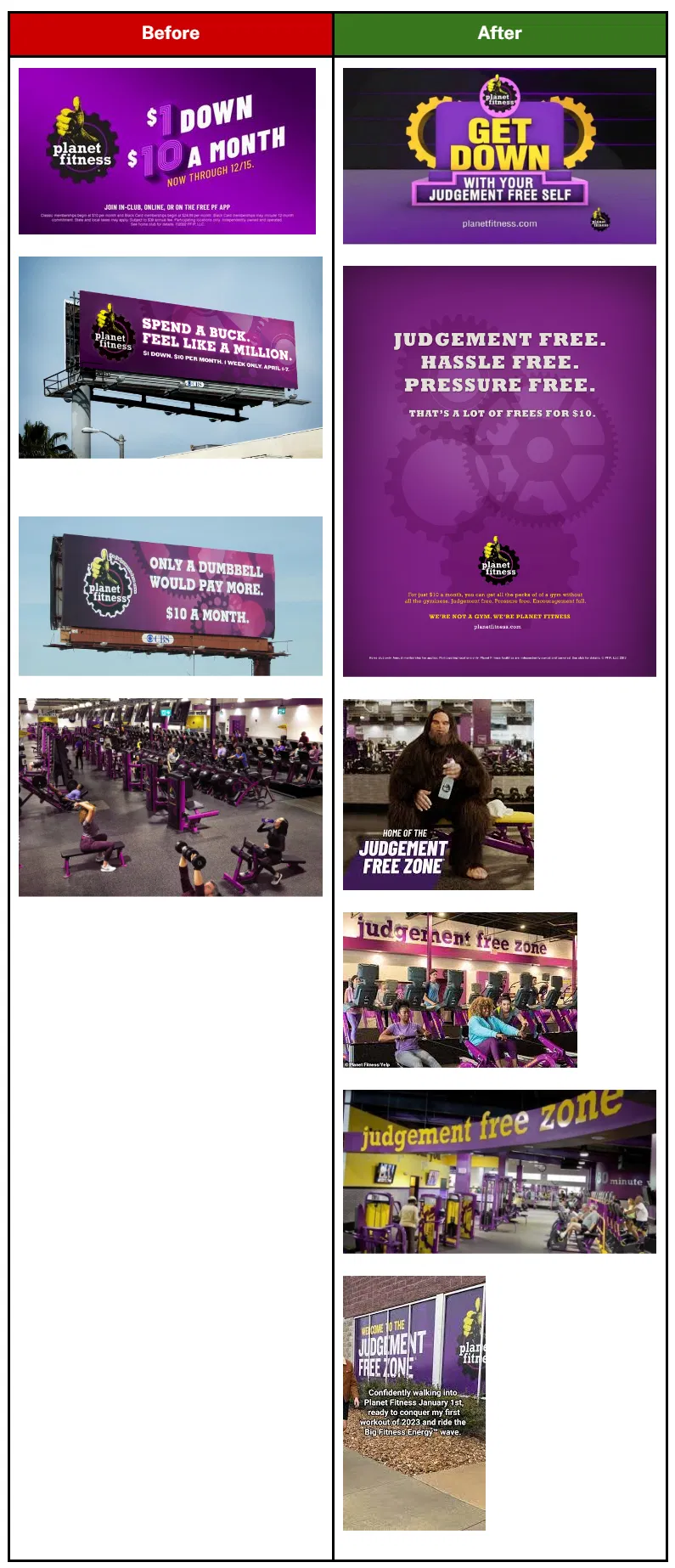
Before Rebrand: Planet Fitness was originally just another gym chain, competing primarily on price with other low-cost gyms.
After Rebrand: Planet Fitness positioned itself as the "Judgement Free Zone," targeting first-time gym-goers and people intimidated by traditional gyms. They emphasized a welcoming, non-intimidating environment.
Impact: The rebrand led to Planet Fitness growing to over 2,400 locations by 2023, with annual revenue reaching $1 billion, establishing itself as the dominant chain in the value gym category.
#21.) KFC (Kentucky Fried Chicken)
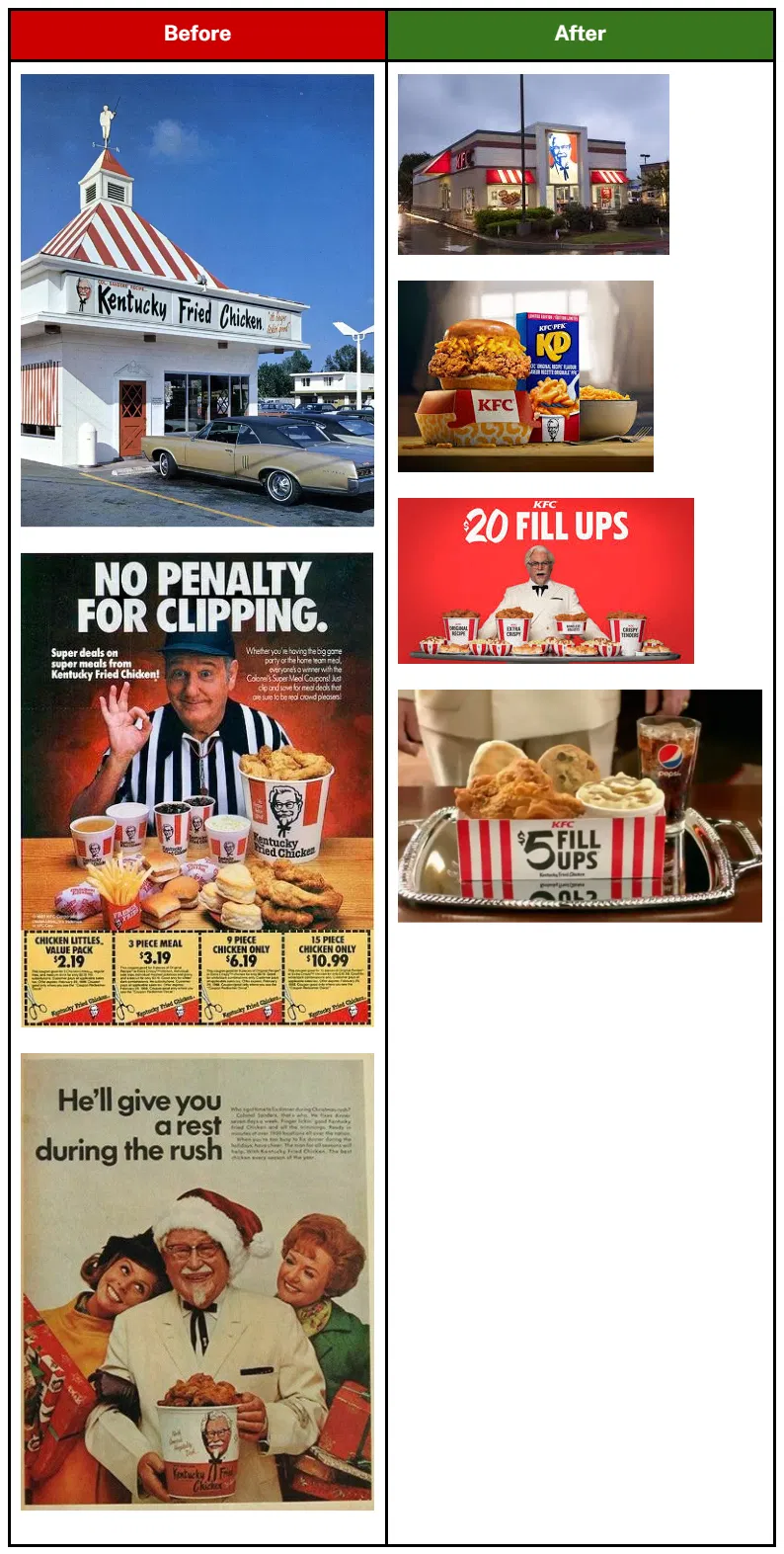
Before Rebrand: In the 2000s, KFC faced declining relevance, particularly among younger consumers, and was seen as unhealthy and outdated.
After Rebrand: KFC re-emphasized its original recipe and quirky branding with Colonel Sanders campaigns. They invested in modernized restaurant designs and a marketing overhaul focused on nostalgic humor and quality.
Impact: The rebrand helped KFC regain market share, and its U.S. sales grew by 5% annually from 2016 to 2022, while KFC now boasts over 25,000 locations worldwide.
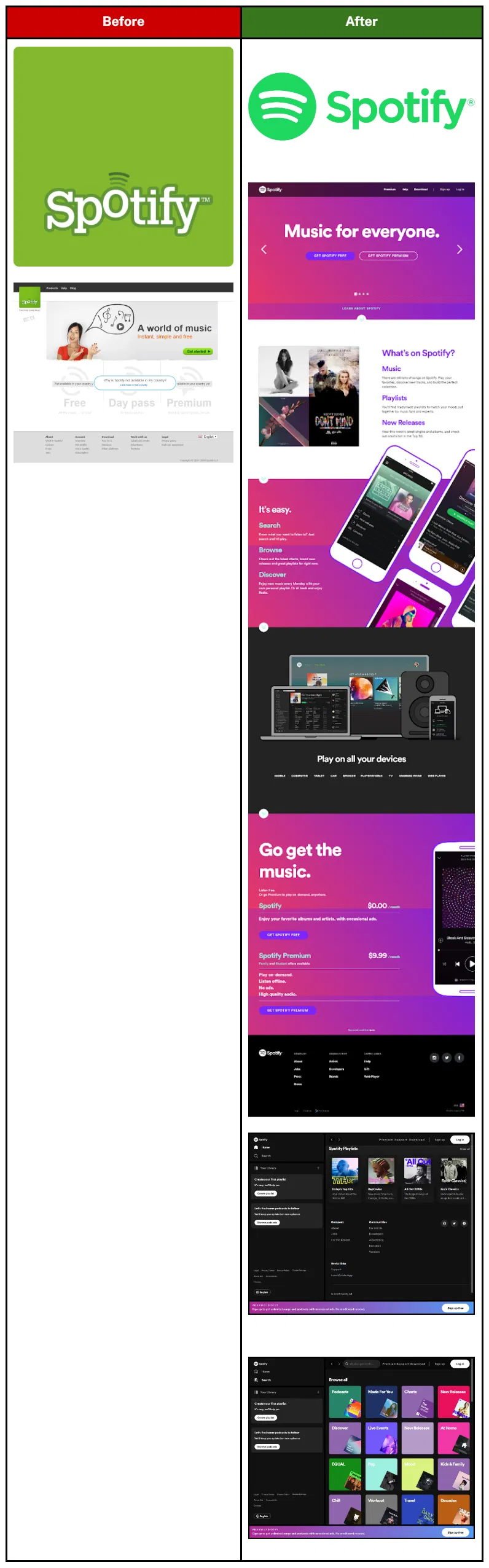
#22.) Spotify
Before Rebrand: Spotify began as a music streaming service without much emphasis on personalized listening.
After Rebrand: Spotify shifted to focusing on the individual user experience, emphasizing personalization features such as Discover Weekly, and investing in podcasts and original content.
Impact: Spotify grew from 30 million users in 2014 to over 550 million users by 2024, capturing a huge share of the streaming market and expanding its offerings to include podcasts and audiobooks.
#23.) Microsoft
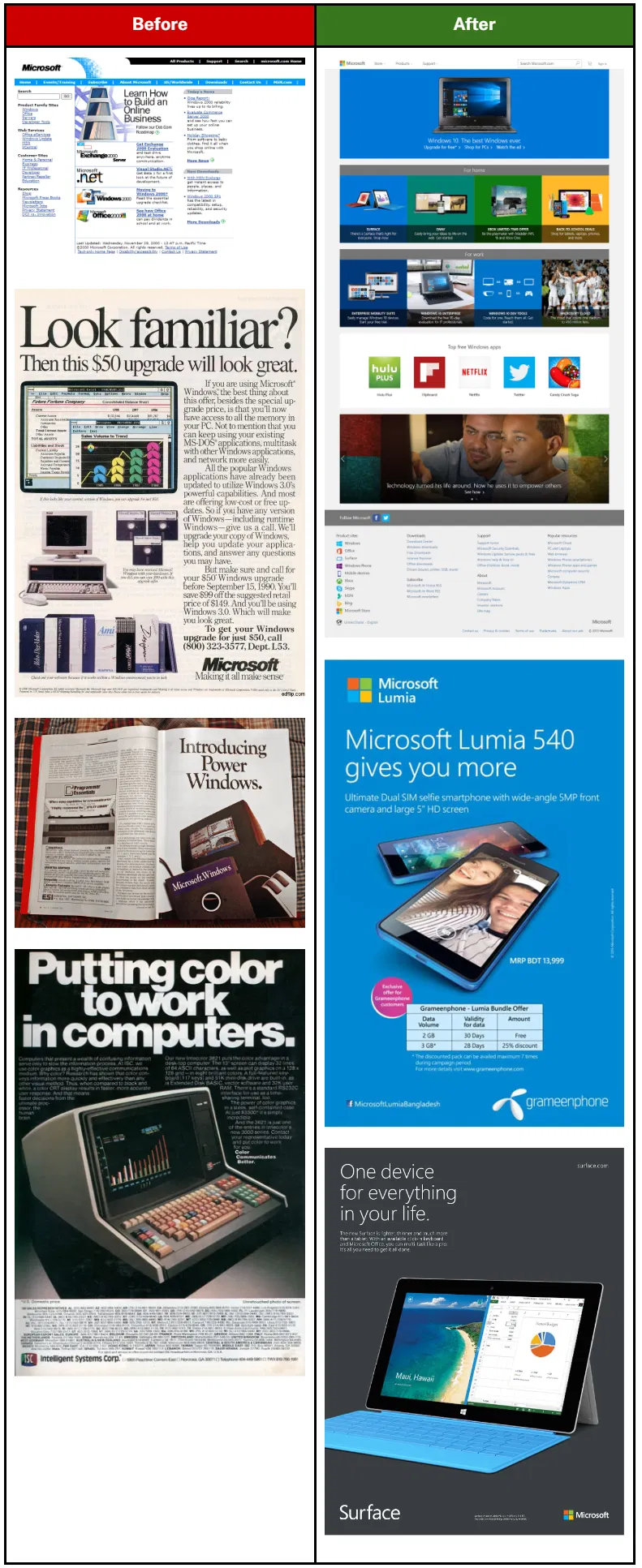
Before Rebrand: In the early 2000s, Microsoft was seen as outdated, especially compared to Apple, and their brand was tied primarily to Windows.
After Rebrand: Under Satya Nadella's leadership (starting in 2014), Microsoft rebranded to emphasize cloud computing, enterprise software, and innovation. They launched a new logo and invested heavily in products like Azure and Office 365.
Impact: Microsoft’s market value rose from around $300 billion in 2014 to over $2.8 trillion by 2023, making it one of the most valuable companies in the world, largely thanks to cloud services.
#24.) Target
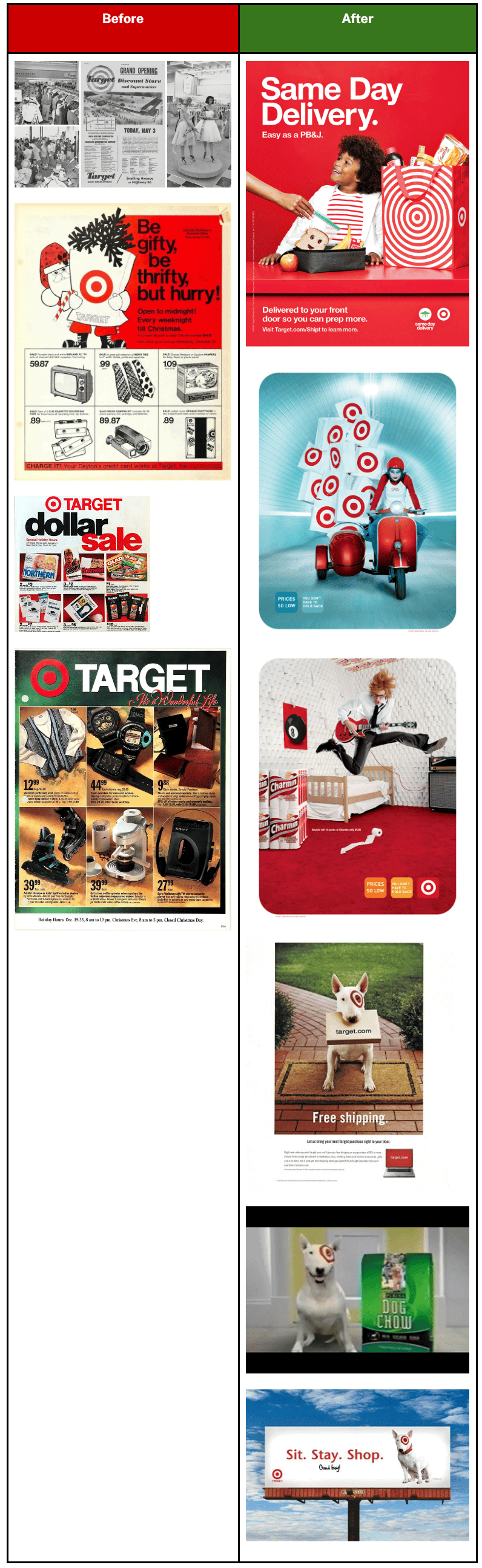
Before Rebrand: In the 1990s, Target was just another discount retailer competing with Walmart and Kmart, without a distinct identity.
After Rebrand: Target repositioned itself as a place for affordable style, partnering with designers to create exclusive collections and modernizing its stores to feel more upscale and trendy.
Impact: The rebrand helped Target grow annual revenue from $26 billion in 1995 to over $110 billion by 2022, making it the preferred choice for value-conscious yet style-oriented shoppers.
#25.) Stella Artois
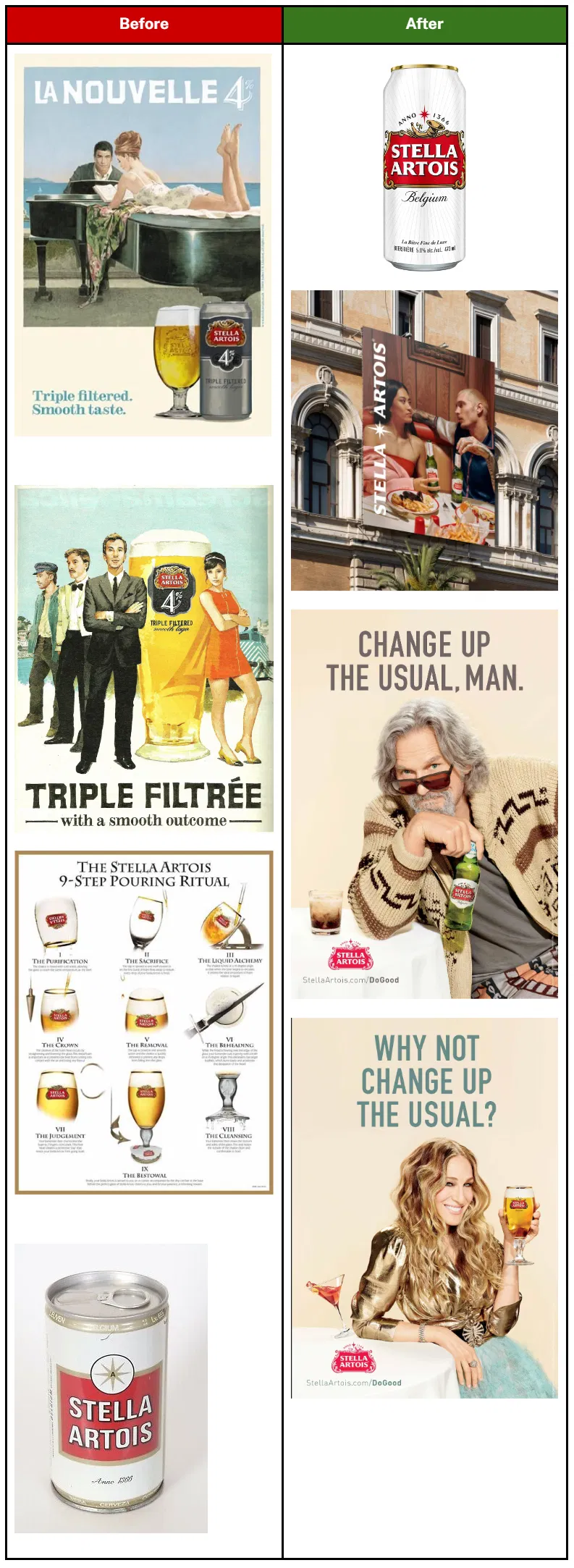
Before Rebrand: In the early 2000s, Stella Artois was considered a standard beer with an association as a low-cost lager.
After Rebrand: Stella Artois rebranded itself as a premium product, focusing on heritage, sophisticated packaging, and marketing campaigns emphasizing quality and luxury.
Impact: Sales rose substantially as Stella Artois became recognized as a high-end beer globally, contributing to an estimated growth rate of 5-8% annually from 2012 to 2020, with an increasing share of the premium beer market.
#26.) Netflix
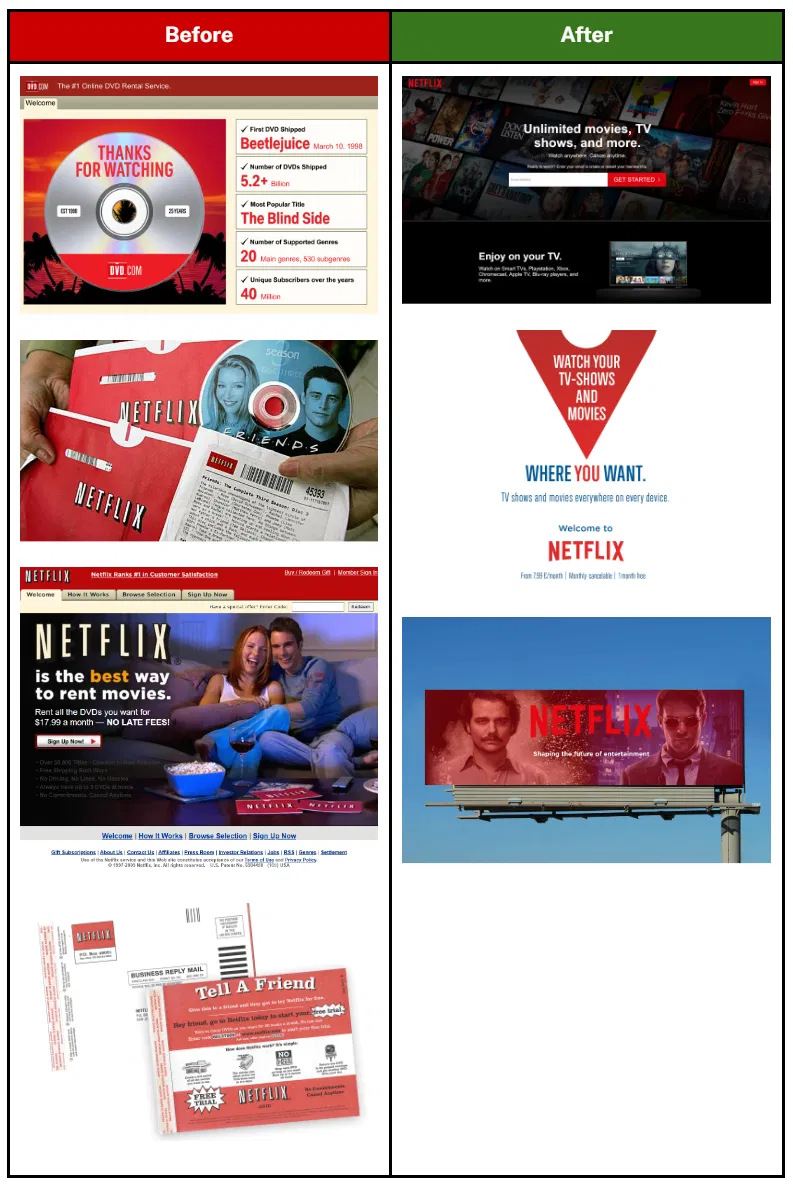
Before Rebrand: In its early days, Netflix was known as a DVD rental-by-mail company competing with Blockbuster.
After Rebrand: Netflix pivoted to an online streaming service in 2007 and eventually began producing its own original content. The brand shifted to focus on convenience, binge-watching, and high-quality content.
Impact: The transformation led Netflix’s subscribers to grow from 20 million in 2010 to over 247 million by 2023, and annual revenue surged from $2.1 billion in 2010 to $31.6 billion by 2022. Netflix is now one of the world's leading entertainment companies.
#27.) Ugmonk
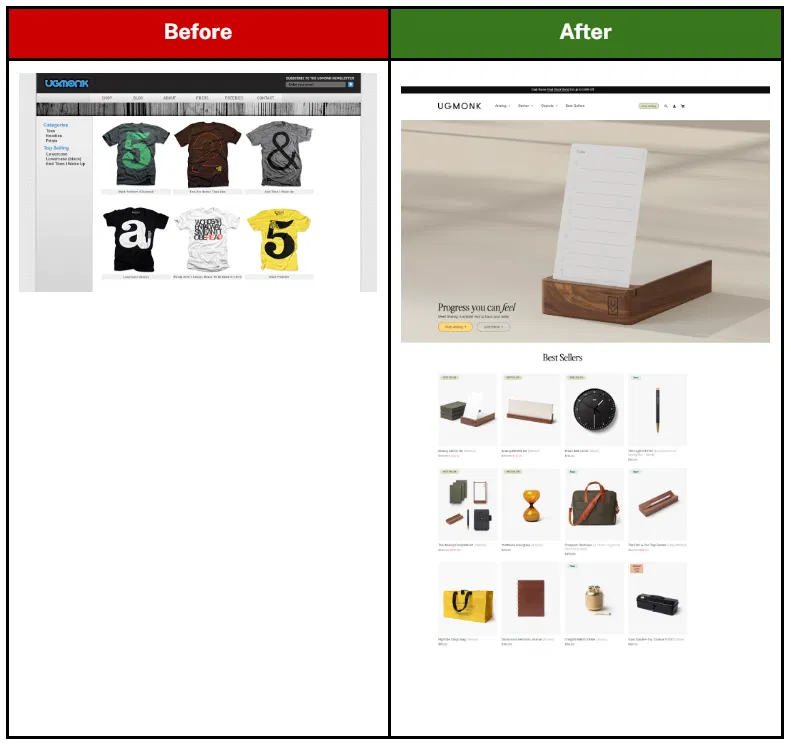
Before Rebrand: Ugmonk started as a t-shirt brand focusing on graphic designs without a clear target audience.
After Rebrand: Founder Jeff Sheldon rebranded Ugmonk into a minimalist lifestyle brand focused on high-quality, well-designed products ranging from clothing to productivity tools (e.g., the Gather desk organizer).
Impact: The rebrand resulted in an increase in customer loyalty, strong demand for Ugmonk's new productivity products, and over $400,000 in crowdfunding for the Gather organizer, expanding its reach beyond just apparel.
#28.) Candid
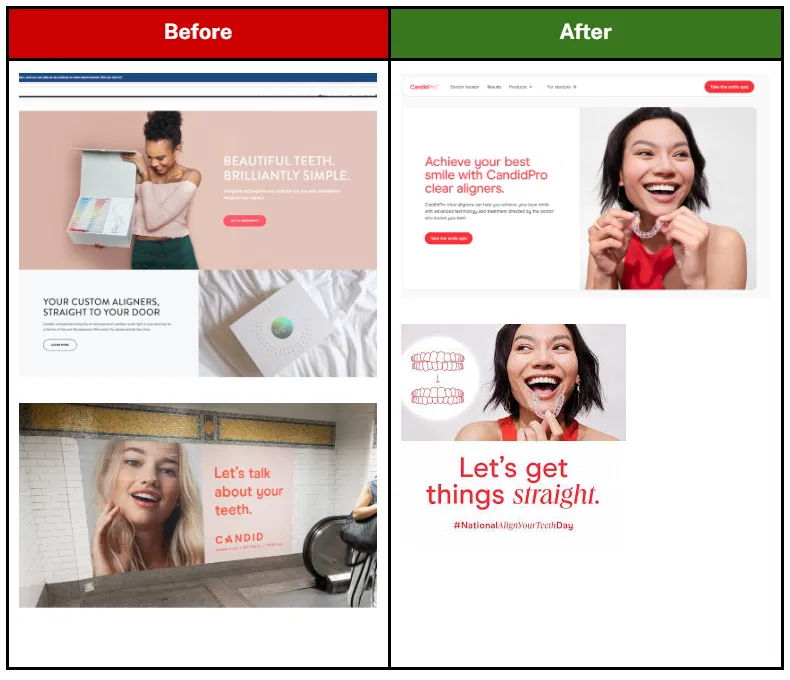
Before Rebrand: Candid started as a small orthodontic company providing invisible braces, but it struggled with a lack of brand differentiation compared to its larger competitors like Invisalign.
After Rebrand: Candid rebranded itself with a modern, approachable identity, emphasizing quality orthodontist oversight and transparent pricing, focusing on millennials.
Impact: The rebrand helped Candid raise over $63 million in funding and increase brand awareness among young professionals, carving out a niche against more established players in the orthodontic space.
#29.) Zola
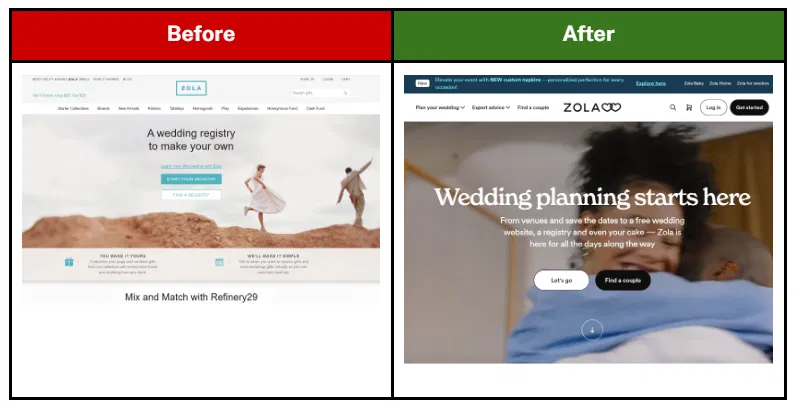
Before Rebrand: Zola initially started as a simple wedding registry service but had a hard time standing out among established competitors.
After Rebrand: Zola shifted to offer a comprehensive suite of wedding services, including planning tools, custom websites, invitations, and more. They adopted a sleek, modern visual identity that resonated with tech-savvy couples.
Impact: Zola’s rebrand and expanded offering attracted a younger generation of engaged couples, leading to annual sales reaching over $140 million by 2019.
#30.) Magic Spoon
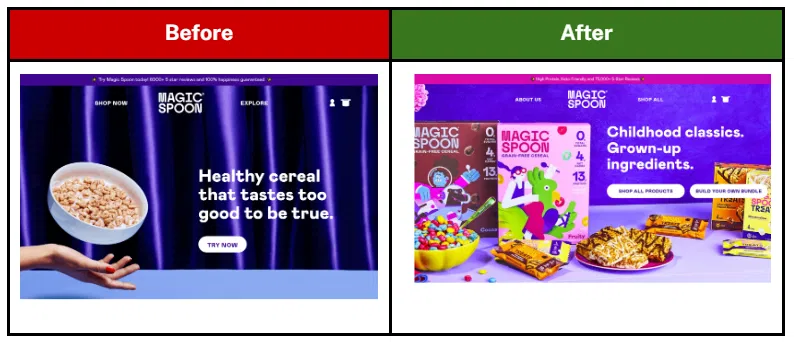
Before Rebrand: The company launched with an idea to make healthy cereal but lacked a clear aesthetic or target audience.
After Rebrand: Magic Spoon rebranded to target millennials and health-conscious adults with fun, retro-inspired packaging and branding that promised "childhood cereal flavors" with a healthy twist (high protein, low sugar).
Impact: Magic Spoon’s rebrand led to a strong social media following, significant buzz, and over $100 million in annual revenue within three years of launching.
#31.) Recess
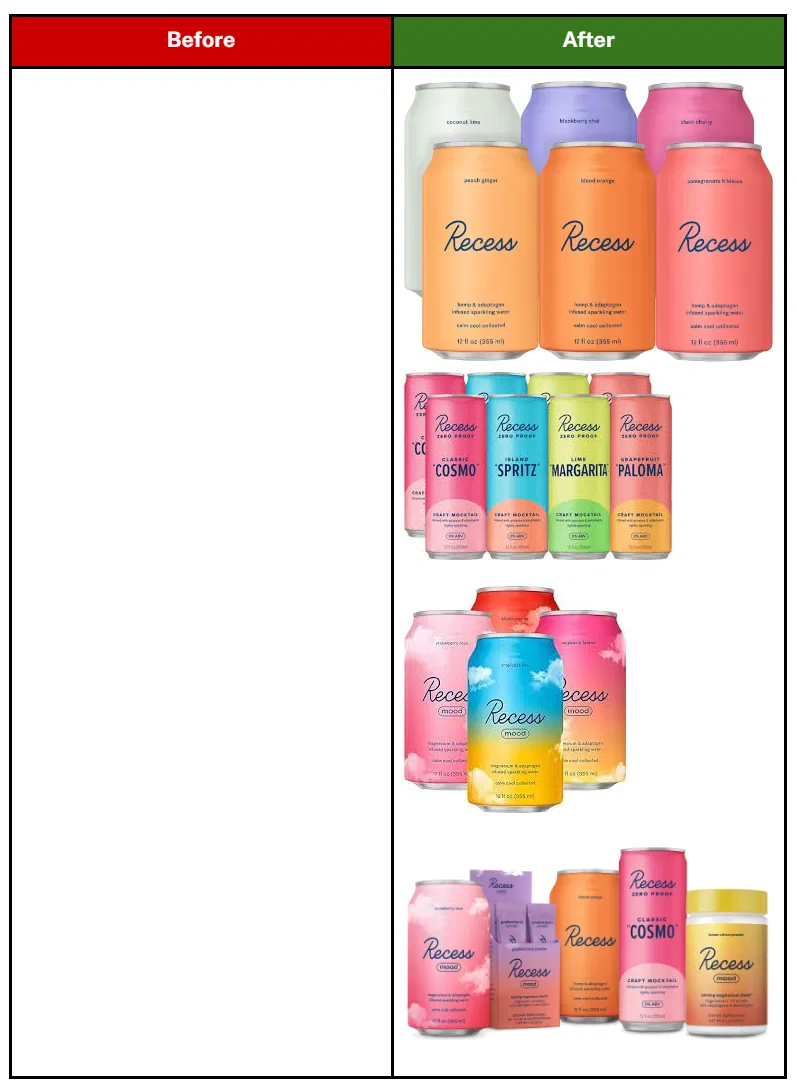
Before Rebrand: Recess started as a CBD-infused sparkling water without a clear market position.
After Rebrand: The company rebranded with a focus on wellness and creativity, adopting a pastel-colored aesthetic with messaging that emphasized stress relief, productivity, and "feeling calm, cool, collected." Recess positioned itself as a lifestyle brand, not just a beverage.
Impact: The rebrand helped Recess create a loyal customer base, expand into retail, and establish a distinctive presence in the crowded functional beverage space, with revenue surpassing $10 million annually.
#32.) Dirty Lemon
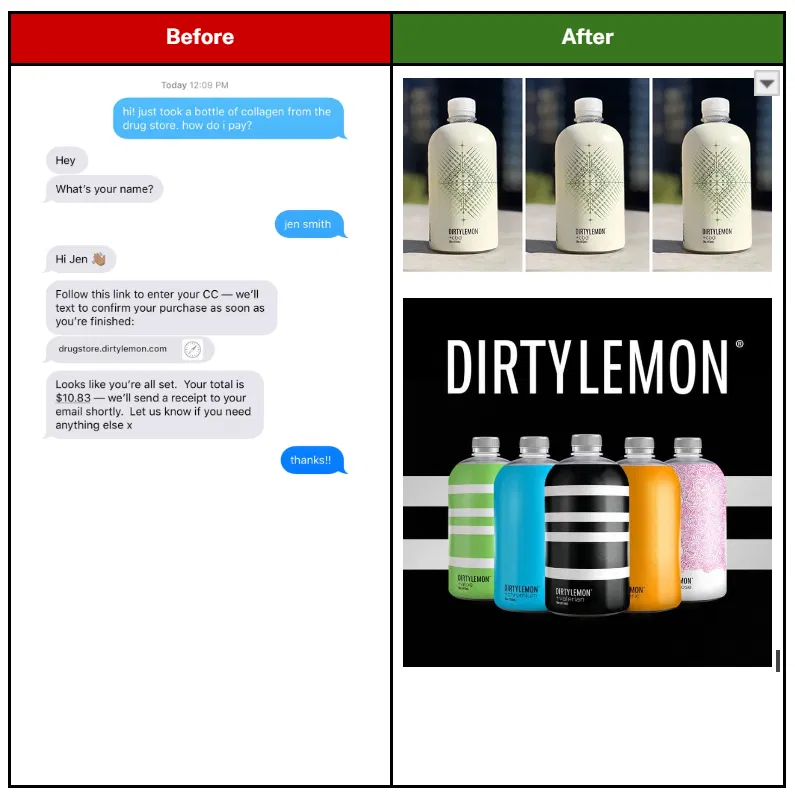
Before Rebrand: Dirty Lemon launched as a functional beverage company with a focus on health drinks, but initially struggled to create a unique identity.
After Rebrand: They rebranded with a sleek, millennial-focused aesthetic that emphasized transparency and edgy branding. They also pioneered SMS-based ordering, making the customer experience tech-forward.
Impact: The rebrand and SMS-driven ordering process helped Dirty Lemon generate $10 million in annual revenue and gain significant traction, eventually leading to its acquisition by beverage startup Iris Nova.
#33.) Hims
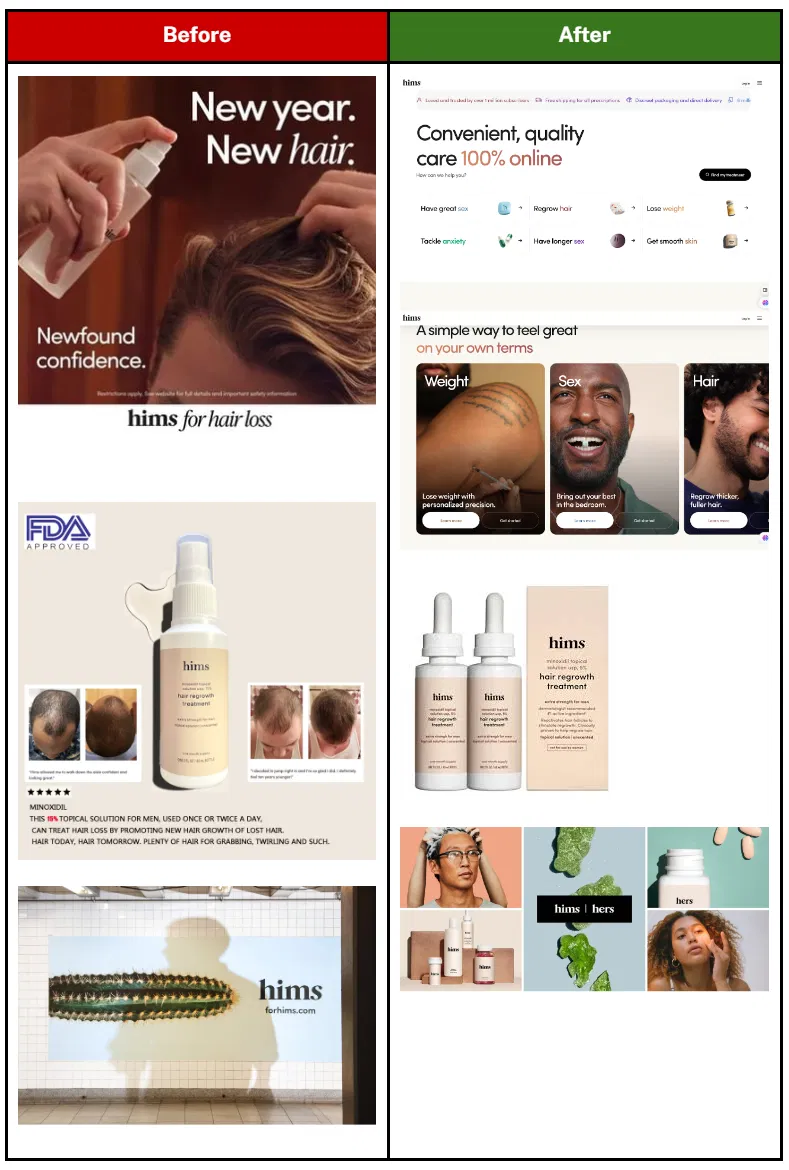
Before Rebrand: Hims started as a small men's wellness company with a basic focus on hair loss and erectile dysfunction.
After Rebrand: The company rebranded with sleek, millennial-friendly branding that was modern, approachable, and destigmatized men's health. Hims expanded to address broader wellness categories like skincare, mental health, and sexual wellness.
Impact: The rebrand helped Hims grow into a well-known telehealth brand, achieving $83 million in revenue within two years and eventually going public in 2021 at a valuation of $1.6 billion.
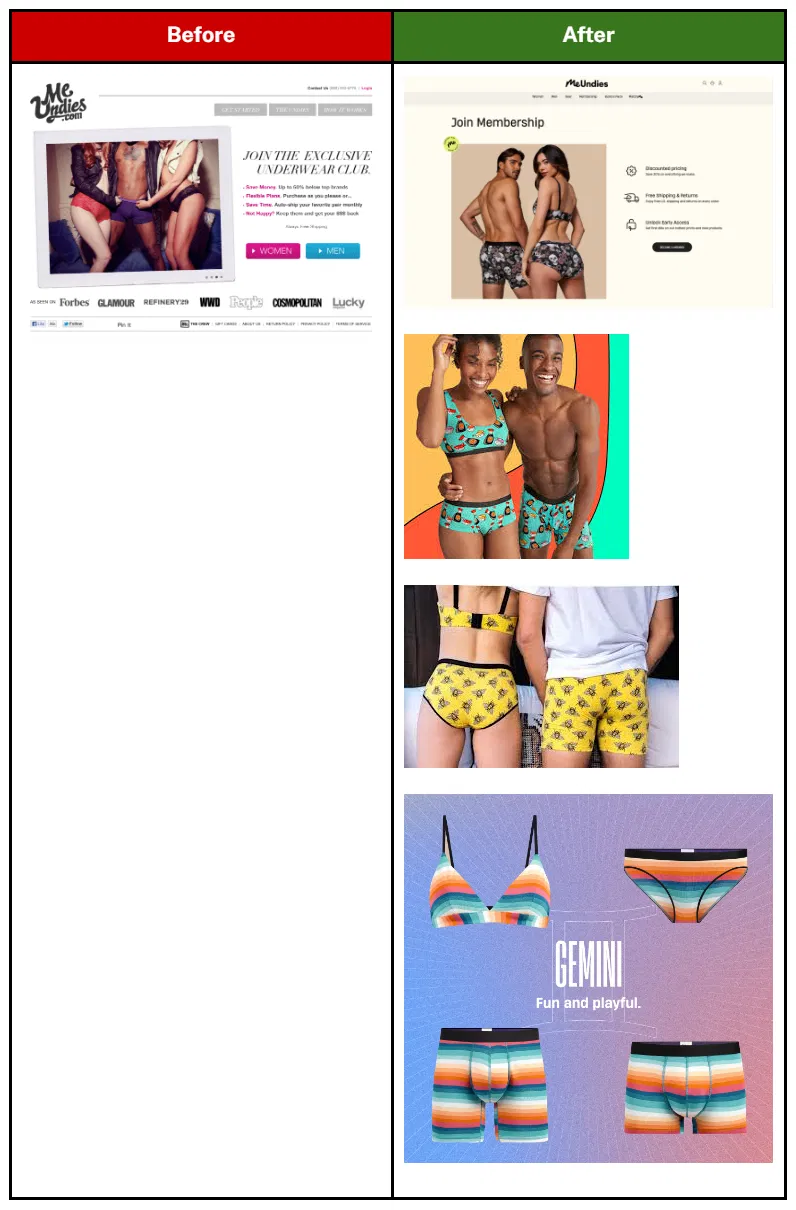
#34.) MeUndies
Before Rebrand: MeUndies started as an underwear subscription company without much differentiation in the crowded basics market.
After Rebrand: The company shifted its focus to vibrant colors, quirky patterns, and a fun, inclusive brand voice that emphasized body positivity and comfort. They leveraged a subscription model and strong community-building through social media.
Impact: The rebrand helped MeUndies achieve $50 million in annual revenue by 2018, and it continues to grow as a leading subscription-based underwear brand known for its bold and playful identity.
#35.) Allbirds
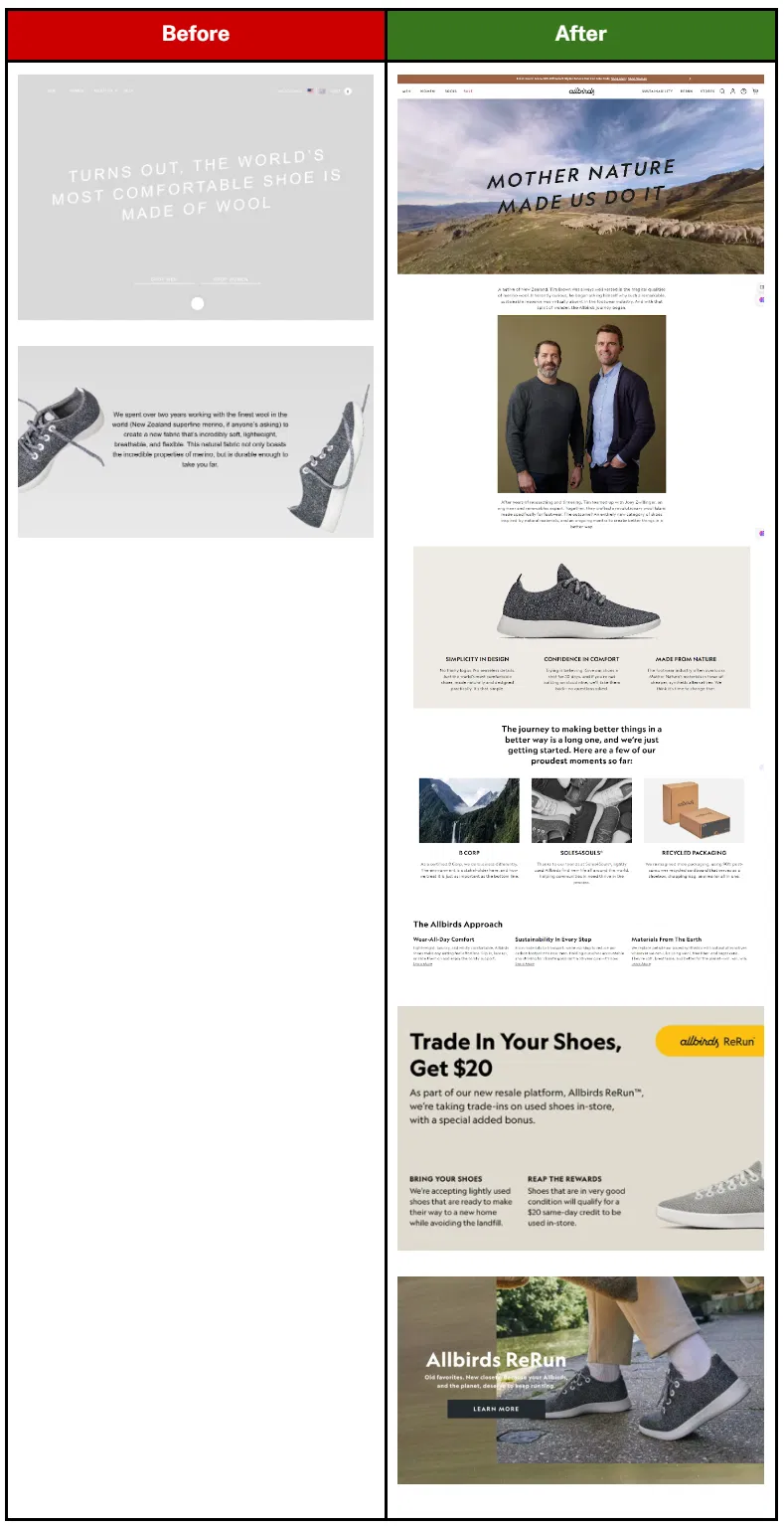
Before Rebrand: Allbirds initially struggled to differentiate itself as just another eco-friendly footwear brand.
After Rebrand: The company rebranded with an emphasis on simplicity, comfort, and sustainability, with messaging that highlighted their use of natural materials like wool and eucalyptus. They built an aspirational brand narrative around a "better, more comfortable shoe" with minimal environmental impact.
Impact: The rebrand helped Allbirds grow from a niche player to a well-known name in footwear, reaching $100 million in annual revenue within two years and eventually going public in 2021.
Hope you enjoyed all these re-brand examples!
Sincerely,
Neville Medhora
Analyzed by Swipebot
Loading analysis...