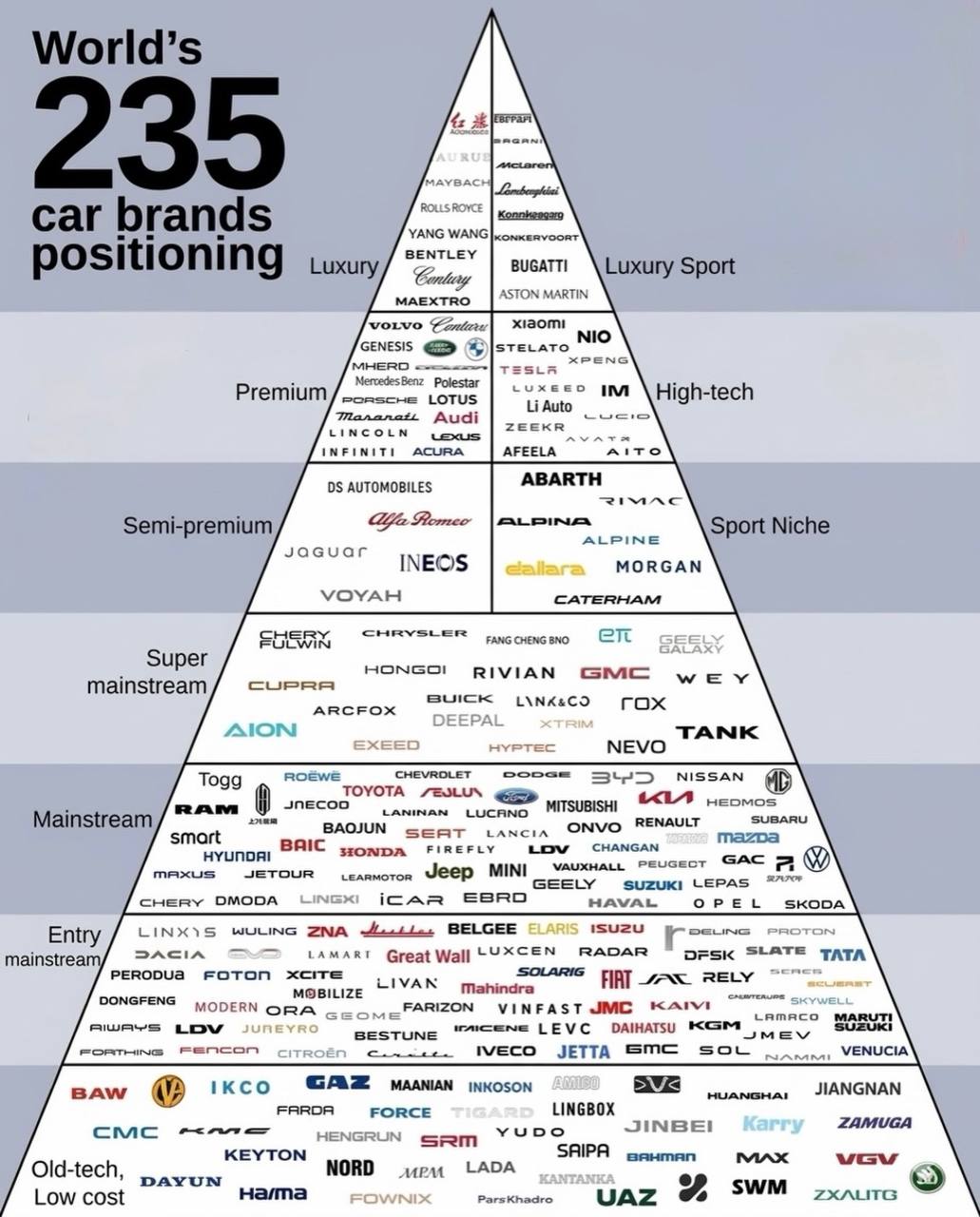
This brand positioning pyramid crams 235 car makers into one brutal truth: your logo always sits somewhere in the customer’s head. From ultra‑luxury at the tip to old‑tech, low‑cost brands at the base, this chart is a cheat sheet for how perception ladders up in the auto world. Use it as x‑ray vision for your own brand: where would you land, and who are you really fighting for attention against?
How to steal this for your brand
Forget cars for a second and redraw this pyramid for your own market. Put the ultra‑premium players at the top, the budget options at the bottom, and then fill in the layers between. Once you see the gaps, you can decide: do you climb a layer and justify higher prices, or dominate a crowded middle with a sharper promise? The power move is choosing your layer on purpose instead of drifting into one by accident.
What this pyramid screams about positioning
- The higher you go, the fewer brands there are, which instantly makes the luxury tip feel scarce and special.
- Middle layers like “Mainstream” and “Super mainstream” are crowded, making it obvious why mid‑market brands must differentiate harder.
- Labels such as “High‑tech,” “Sport Niche,” and “Old‑tech, Low cost” show that price is only one axis; story and tech level are just as important.
- Each band tells a different emotional tale: status at the top, practicality in the middle, pure utility at the bottom.
Real‑world plays from the pyramid
Tesla uses the “High‑tech” tier positioning to command premium pricing while still speaking to a mass audience.
Rolls‑Royce owns the top “Luxury” tip by selling craftsmanship, rarity, and customization instead of transportation.
Dacia leans into the “Entry mainstream” layer with a blunt, low‑cost value story that doesn’t pretend to be premium.
Creative Variations
Analyzed by Swipebot
Loading analysis...