Design Marketing Around Dopamine Triggers
Published on
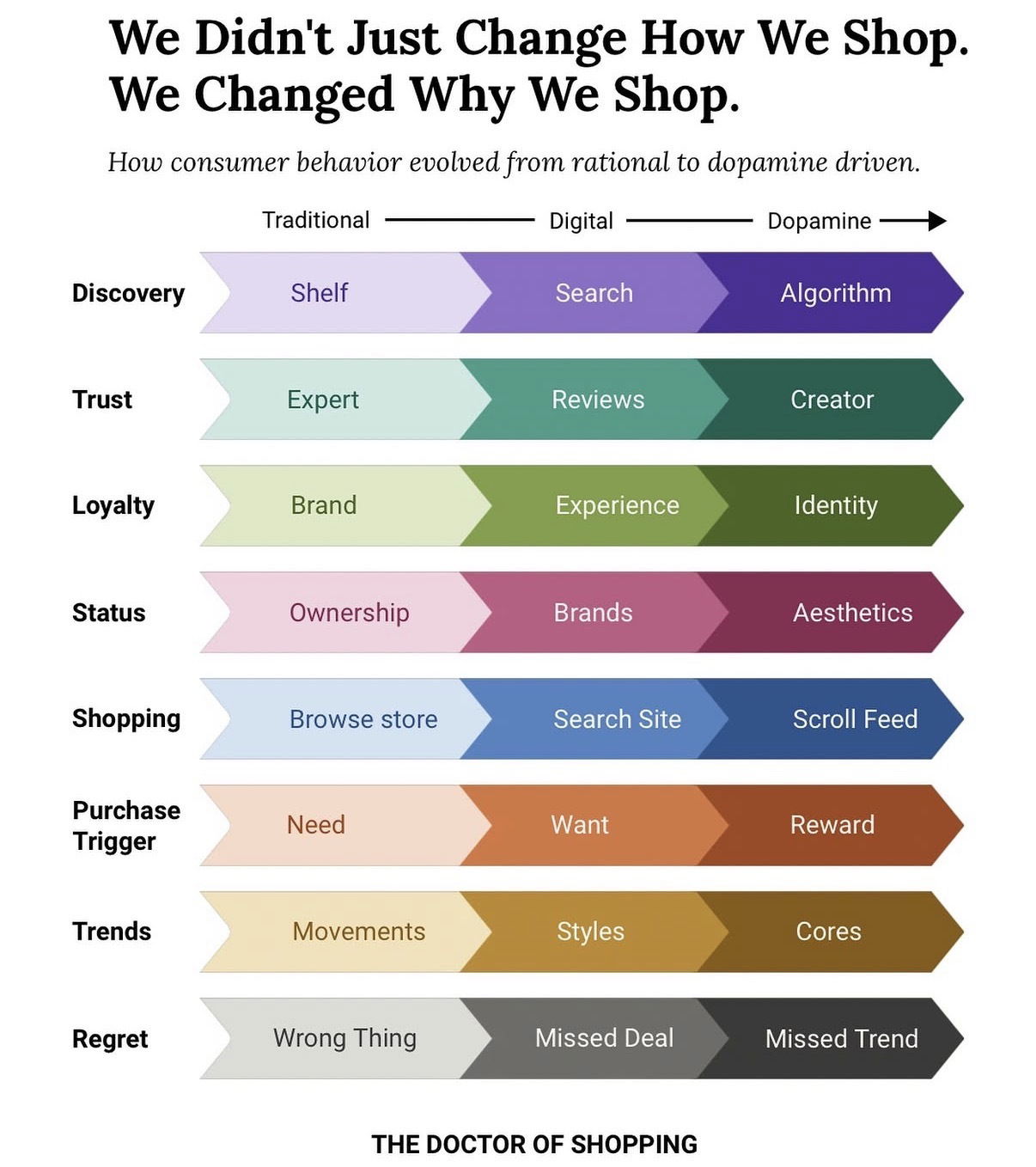
This chart nails the shift from logical shopping to dopamine shopping. We didn’t just move from shelves to screens; we moved from calm decisions to tiny chemical hits. If your marketing still talks to the old rational shopper, you’re getting ignored by the new algorithm‑fed, feed‑scrolling, reward‑chasing customer.
From Rational Rows To Dopamine Arrows
The visual walks line‑by‑line through the journey: discovery, trust, loyalty, status, shopping behavior, purchase trigger, trends, and even regret. Each row shows a slide from Traditional → Digital → Dopamine. Your job is to move your copy and offers into that right‑hand column without becoming manipulative or sleazy.
How To Design Marketing Around Dopamine Triggers
- Discovery: Stop hiding on the shelf and engineer content that algorithms love to surface.
- Trust: Borrow creator credibility instead of only waving expert badges and certifications.
- Loyalty: Sell identity, not just a better experience—let buyers say, “people like me use this.”
- Status: Make the product visually flex-worthy so screenshots and selfies become free ads.
- Shopping: Optimize for the scroll—hooks, short loops, and instant clarity beat big feature lists.
- Purchase Trigger: Attach a fast, obvious reward to every action, even a simple click or signup.
- Trends: Name and frame “cores” your audience can join, so missing you feels like missing the culture.
- Regret: Remind them what future-them will miss out on, not just what they might waste today.
Brands Already Playing The Dopamine Game
TikTok builds discovery around an endless algorithmic feed where every swipe promises a new dopamine hit.
Cash App turns mundane money tasks into identity and status with creator partnerships, emojis, and shareable screenshots.
Gymshark sells belonging and aesthetics first by pushing creator content and community identity over technical fabric specs.
Creative Variations
Analyzed by Swipebot
Loading analysis...