Digg.com re-launched, then closed down bc of AI spam
Published on
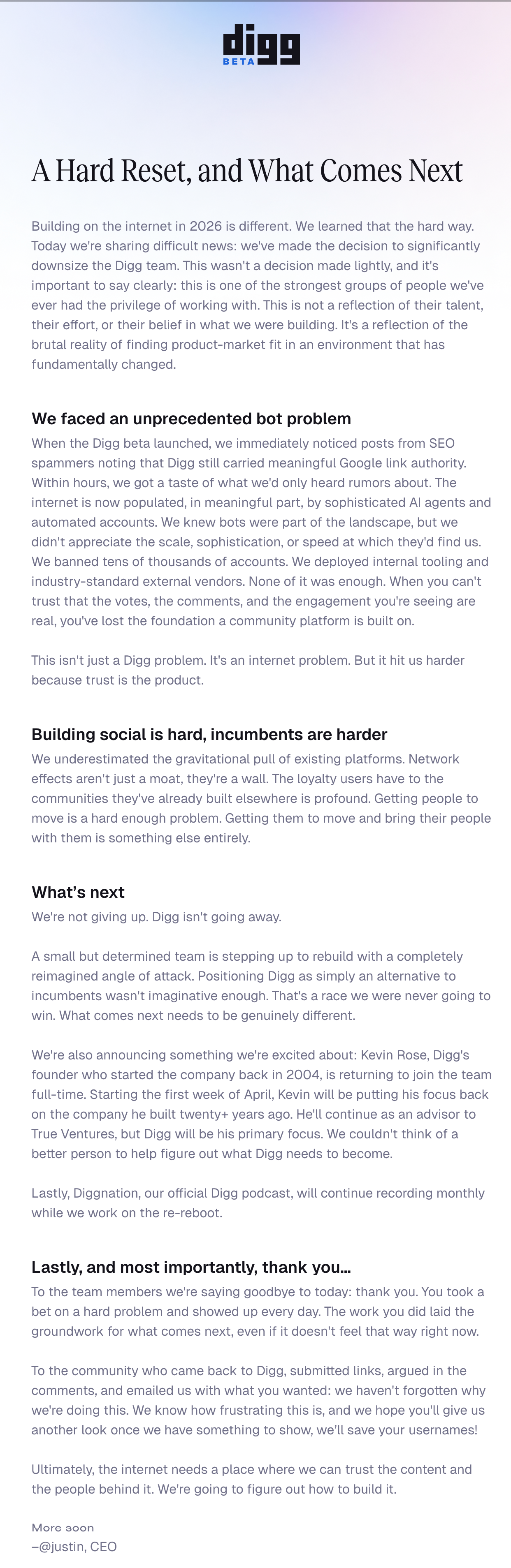
When you can't trust that the votes, the comments, and the engagement you're seeing are real, you've lost the foundation a community platform is built on.— Justin, Digg CEO
Digg - People. Places. Things.
Digg just published a brutal post-mortem: bots ate their reboot. Tens of thousands of fake accounts, AI spam everywhere, and suddenly every vote and comment was suspect. Their conclusion is the new law of social: when you cannot trust the engagement, you do not have a product. In a bot-infested 2026, the real feature users pay attention to is whether the people and signals are actually human.
Designing Social For A Bot World
If you are rebuilding social after bots, ship proof-of-human first and features later. Anchor everything on verified identity, visible moderation, rate limits, and friction that annoys bots more than people. Make authenticity the core promise in your headline, your onboarding, and your roadmap. Trust is not a line item; it is the product.
The Psychology Behind It
- People use social sites as a shortcut for: what are real humans paying attention to right now.
- Bots break that shortcut, so every metric (likes, votes, comments) becomes emotionally worthless.
- Once users suspect fakeness, they mentally mark the product as rigged and stop investing effort.
- In 2026, the winning pitch is not more content; it is verifiable, auditable, obviously-human interaction.
Brands Treating Trust As The Product
Digg publicly admitted their AI spam problem, downsized, and reframed the entire reboot around rebuilding a smaller, trust-first community.
Beehiiv pushes human-written newsletters over algorithmic feeds, selling creators on owned audiences instead of opaque social metrics.
Analyzed by Swipebot
Loading analysis...