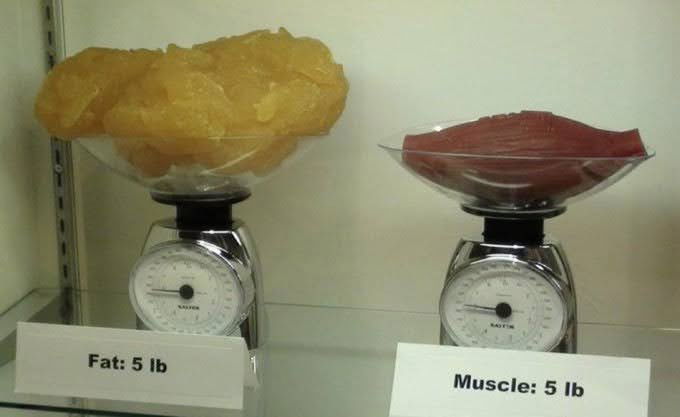
Fat vs Muscle visualization

Here’s a photo that fitness marketers have nailed for years. Two identical scales. Both hold five pounds. One’s filled with fat, the other with muscle. The point? Volume and density change perception, even if the weight stays the same.
Marketing Analysis
This image shows a transformation instead of telling about it. It turns an abstract concept (weight vs. body composition) into something instantly understandable. No stats, just a quick visual punch that sticks in your memory.
Why It Works
- Visual contrast makes the message obvious at a glance
- Simple, side-by-side comparison builds clarity fast
- It combines science with emotional impact
- It tells a “before and after” story instantly
Examples
- Dollar Shave Club’s “old way vs. new way” visuals
- Apple’s “thinner, lighter, faster” product side-by-sides
- Toyota Prius ads showing gas savings compared to normal cars
Analyzed by Swipebot
Element Detection
This is how AI such as ChatGPT and Gemini see this image.

Text Statistics & Scores
An elementary to middle school score is best since it’s simple to understand.
Grade Elementary
44
Total Words
2
Total Sentences
22.0
Words / sentence
85
Flesch Score
Copywriting Frameworks
Analyze the frameworks of the text
The copy highlights an undesirable outcome (looking fatter from fat gain) and contrasts it with a more favorable alternative (muscle gain that “doesn’t look bad”), implicitly positioning the latter as the solution to the stated problem.
- Problem – “if you gain a bunch of fat it makes you look fatter”
- Solution – “but gaining a bunch of muscle doesn’t look bad”
The text describes a core feature (physical volume difference between 5 lb of fat vs. 5 lb of muscle) and ties that feature to an implied benefit (gaining muscle changes appearance far less negatively than gaining fat).
- Feature – “5 pounds of fat is HUGE, whereas 5 pounds of muscle is much smaller.”
- Benefit – By implication, adding muscle mass will not visually bulk you up the way fat will, so you won’t “look fatter.”