From Barrel To Road Fuel Breakdown
Published on
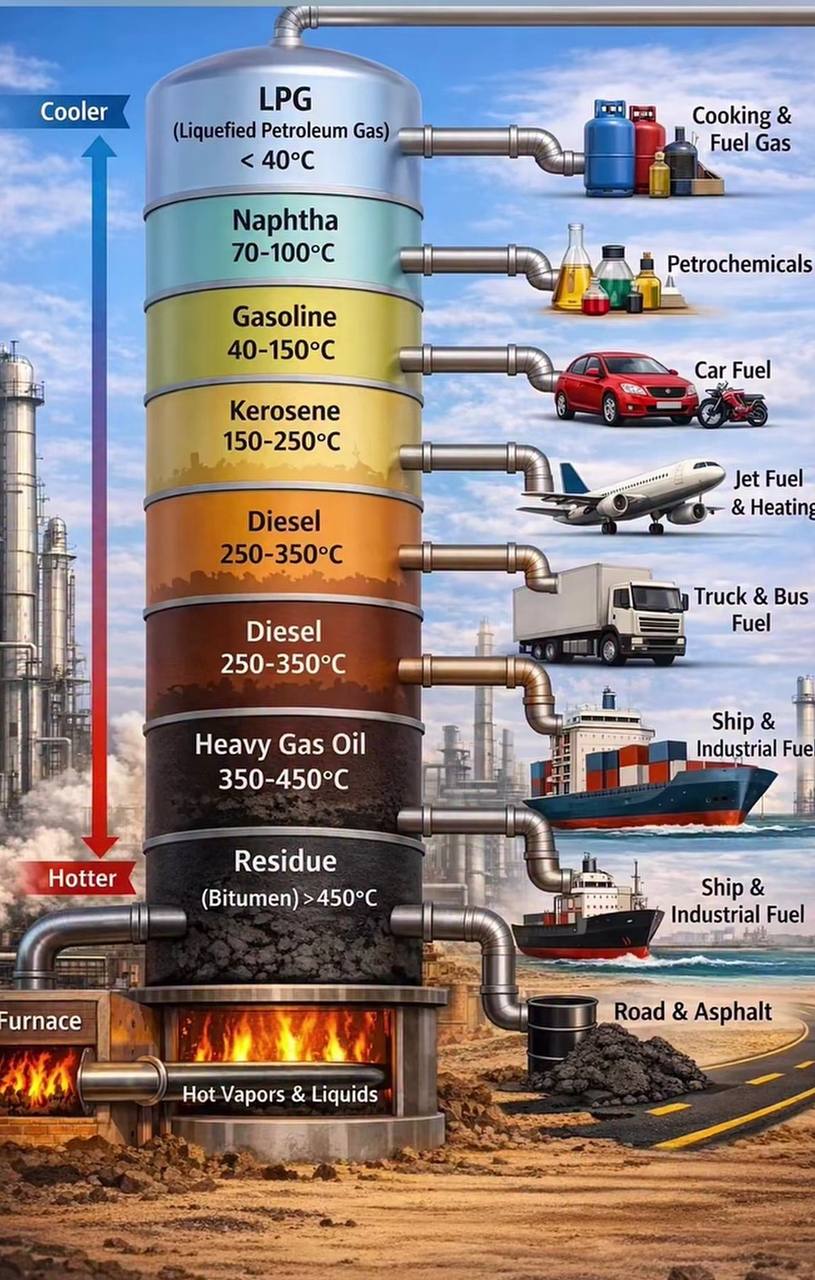
That barrel of crude oil in the picture is not just “gasoline.” It’s a whole menu of fuels and materials, neatly sliced by temperature inside a tall distillation tower. Follow the image from the fiery furnace at the bottom to the cool top, and you’ll see exactly how one barrel becomes road fuel, jet fuel, ship fuel, and even asphalt under your tires.
From Fire to Freeway
Crude oil is heated in a furnace until it turns into hot vapors. Inside the tower, different parts of that vapor condense at different heights. Heavy, sticky stuff like residue (bitumen) falls out near the bottom and becomes asphalt for roads. Lighter fractions higher up become diesel for trucks and buses, kerosene for jets, gasoline for cars, and LPG at the very top for cooking gas.
The Psychology Behind This Visual
- Stacked layers turn a complex refinery into an easy “oil organ” your brain can play from bottom to top.
- Temperature labels (cooler vs hotter) quietly teach you that weight and boiling point control where each fuel lands.
- Clear product images (car, truck, ship, road) connect each slice of the barrel directly to real-world uses.
How Energy Brands Can Use This Breakdown
Shell uses layered refinery diagrams like this to explain why only a slice of each barrel becomes gasoline, setting up conversations about fuel efficiency and pricing.
BP shows a similar barrel-to-products image in its education hub to link everyday things like roads, buses, and cooking gas back to one crude-oil input.
Analyzed by Swipebot
Loading analysis...