How popular candies got their name
Updated on
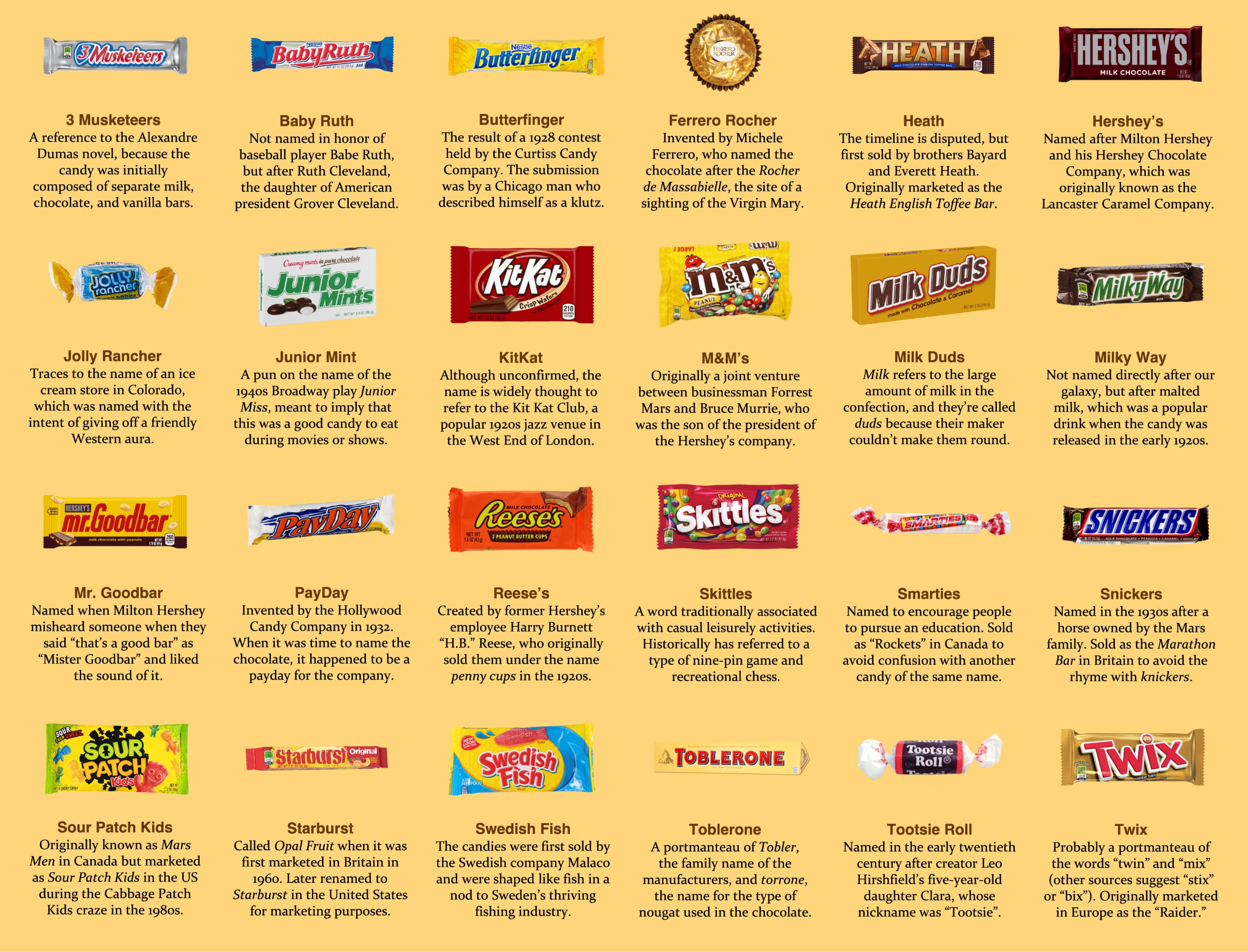
Ever wonder why your favorite candy has its name? The secret is, those names weren’t random. Each one hides a story, personality, or clever pun that makes it sticky in your brain—literally and figuratively.
Marketing analysis
This chart is a masterclass in naming. From “M&M’s” (Mars + Murrie) to “Butterfinger” (a clumsy fan’s nickname), every candy uses history, humor, or heritage to create emotional stickiness. The names are short, memorable, and easy to say—a brand’s dream combo.
Why it works
- Taps into storytelling and nostalgia
- Uses puns or wordplay for memorability
- Embeds product traits (like “Milk Duds” or “PayDay”)
- Creates a sense of belonging or fun
Examples
- Reese’s: Named after its creator, building legacy.
- KitKat: Possibly tied to a 1920s London club—social prestige baked in.
- Sour Patch Kids: Leveraged the Cabbage Patch craze for instant recognition.
- Twix: Combines “twin” + “mix,” reinforcing the two-cookie format.
Analyzed by Swipebot
Loading analysis...