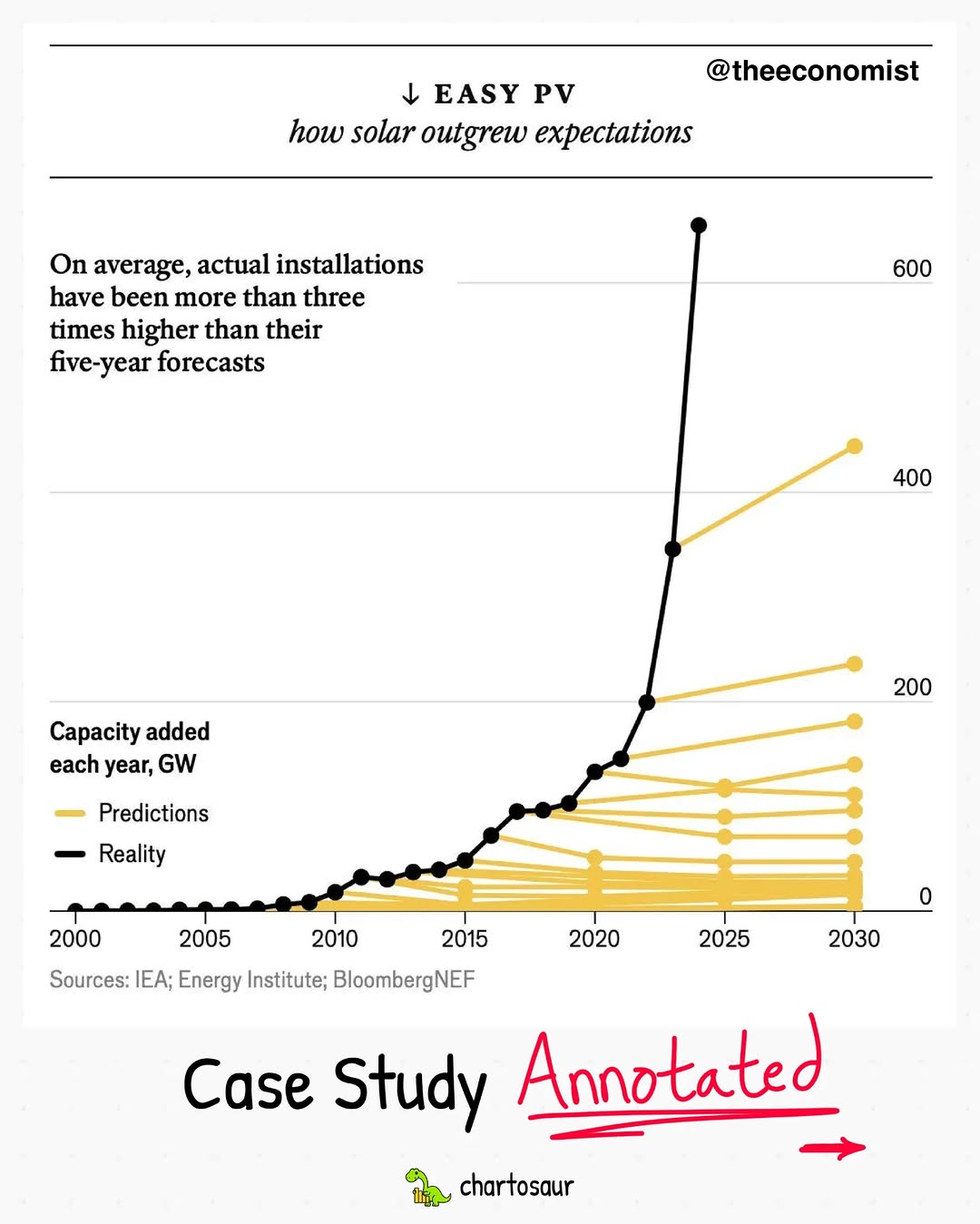
How solar outgrew expectations chart
Published on

1/5
1.8K
15
chartosaur I've seen this chart go viral on every platform it's been posted on, and there's a reason! So I made...
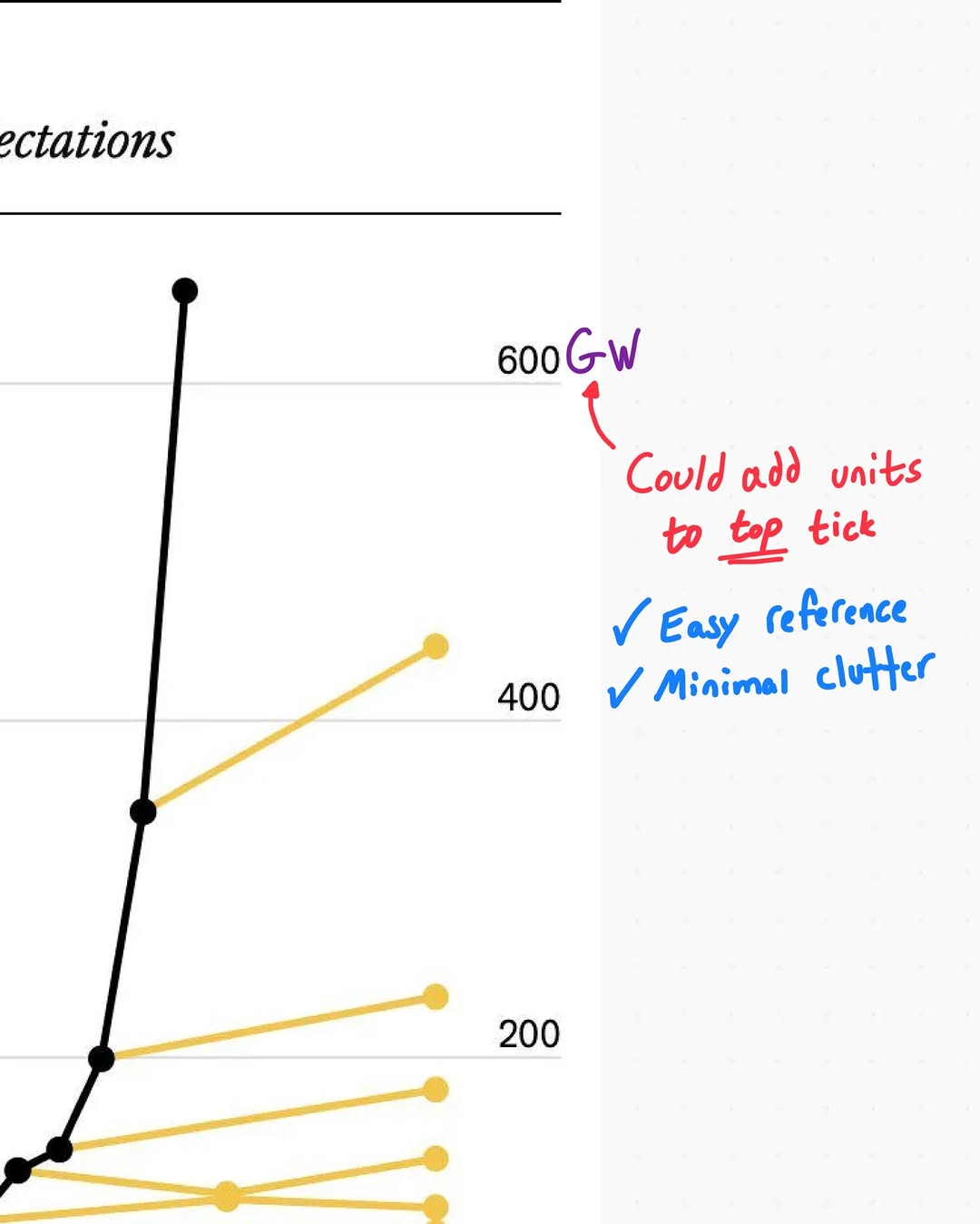
This solar chart keeps going viral because it does something most data graphics never do: it tells a story at a glance. You do not have to squint at axes or read a legend paragraph. The design quietly shoves your brain toward one conclusion: forecasts missed reality by a mile.
The psychology behind it
Your eye first grabs the bold claim, then traces that black curve shooting past the timid yellow forecasts. The design makes the emotional punch (wow, they underestimated solar) arrive before the analytical details. That order is what turns dry energy data into a share-worthy chart.
Why this chart exploded
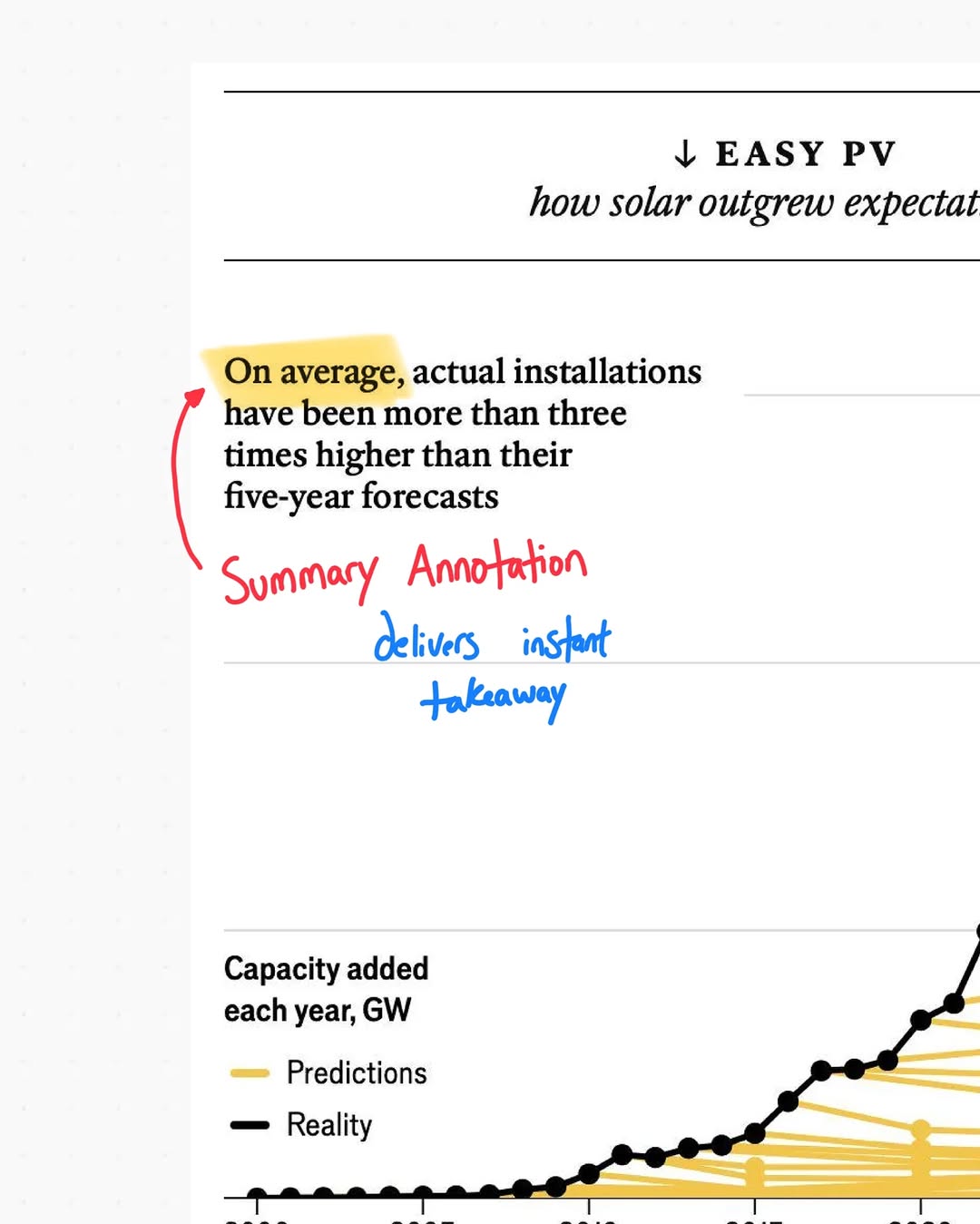
- Big summary sentence up top gives the takeaway before you even look at the lines.
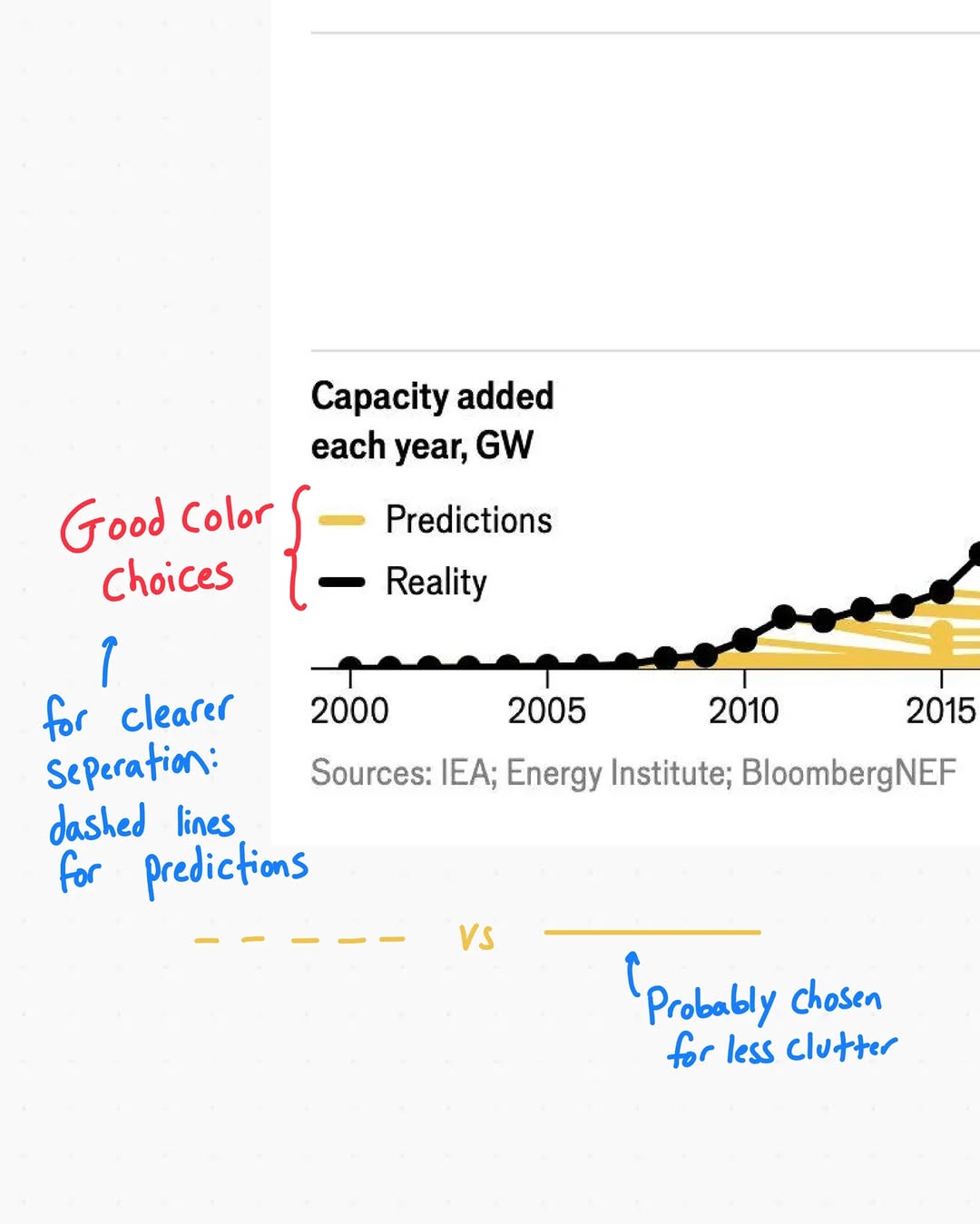
- Reality is a thick black rocket; predictions are thin yellow noodles, so the contrast screams who was wrong.
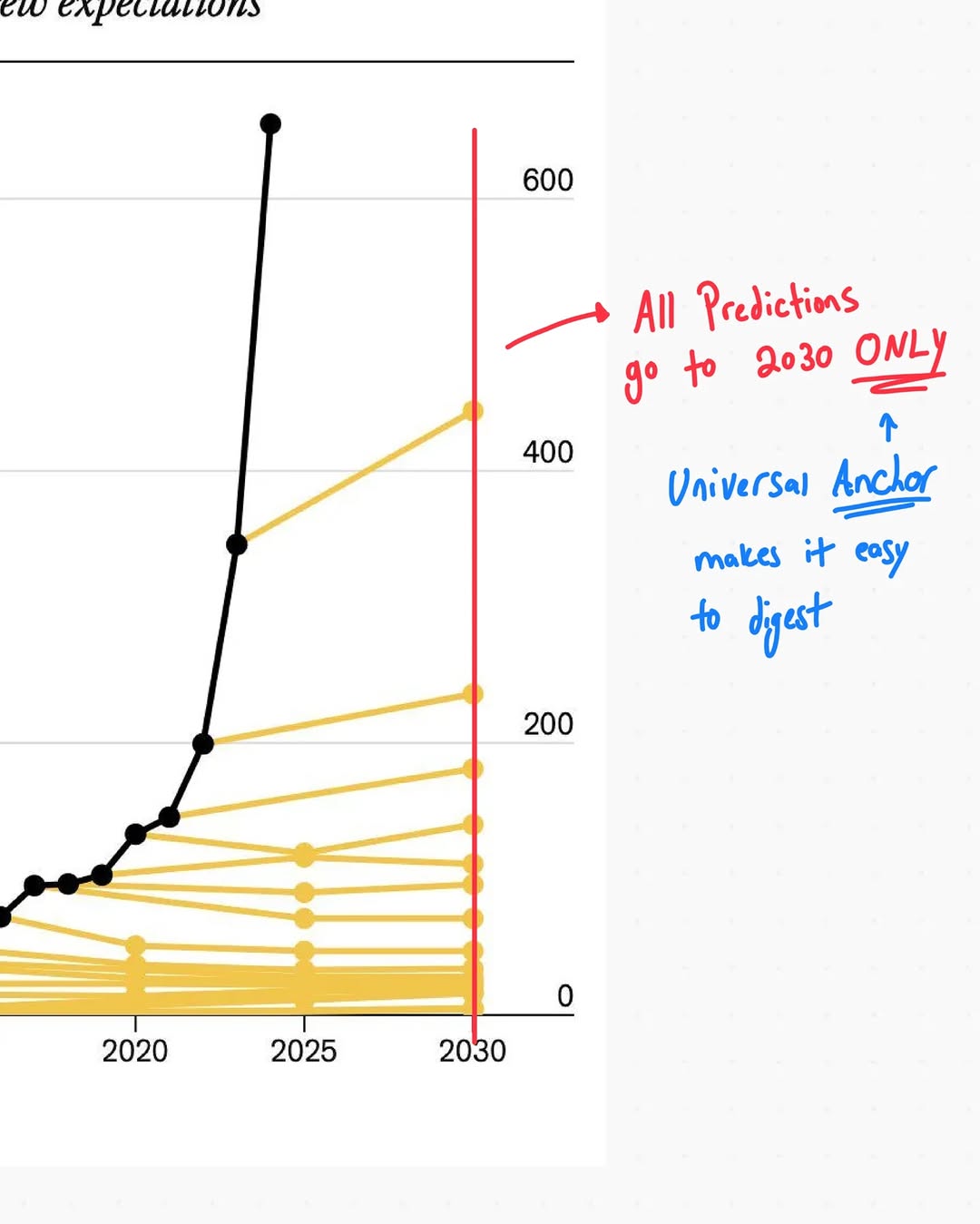
- Every forecast ends at the same 2030 red anchor, making dozens of lines instantly comparable.
- Minimal labels and gridlines keep the focus on the huge gap, not on chart furniture.
Who is using this style well
The Economist pairs clean typography with ruthless simplification so the central comparison dominates every chart.

Chartosaur breaks down popular charts with hand-written annotations, teaching creators exactly which micro-design choices drive virality.
Creative Variations
Analyzed by Swipebot
Loading analysis...