Pick The Lever Decisions, Ignore The Noise
Published on

1/3
114
3
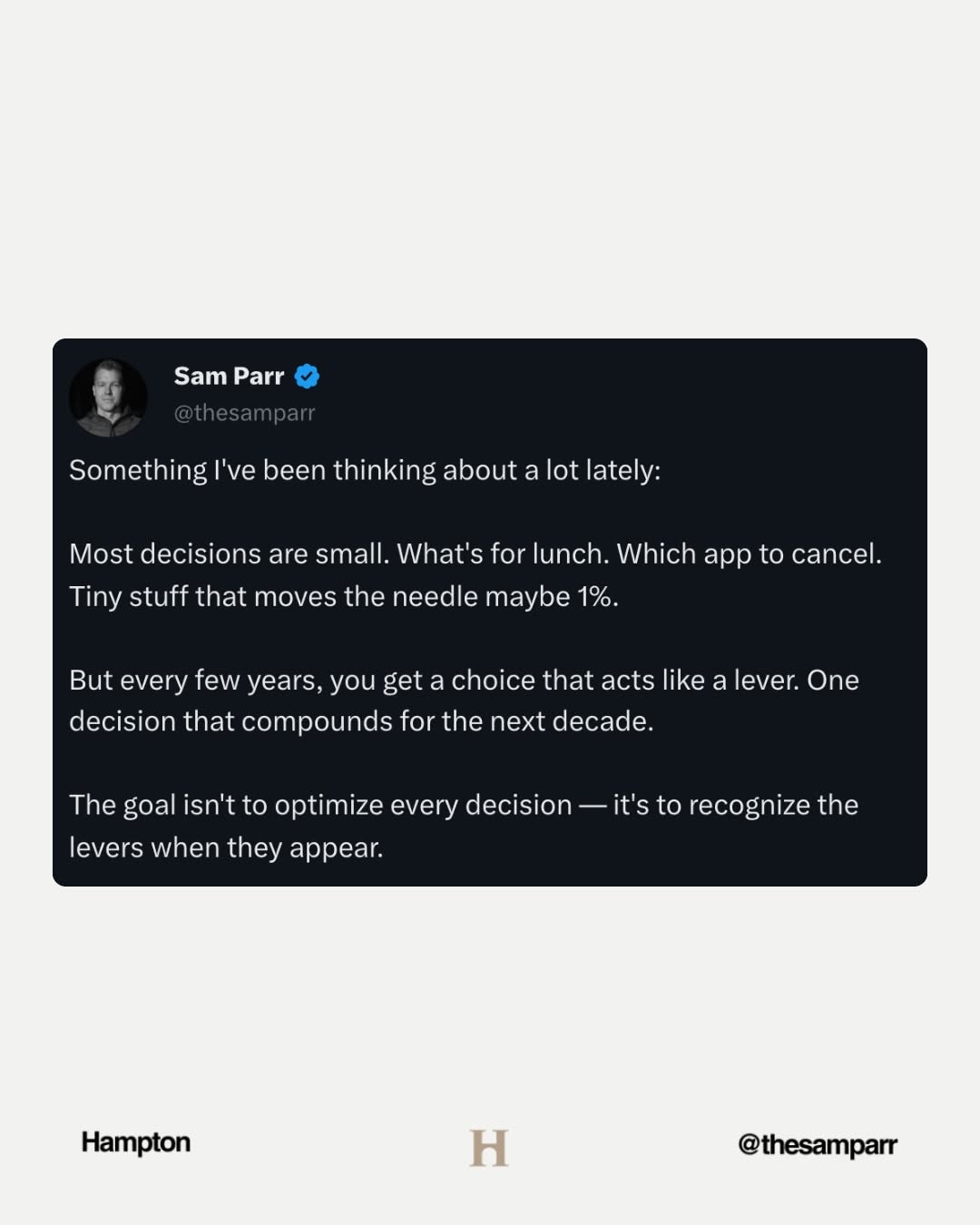
thesamparr Something I've been thinking a lot about lately: Most decisions are small. What's for lunch. Which...
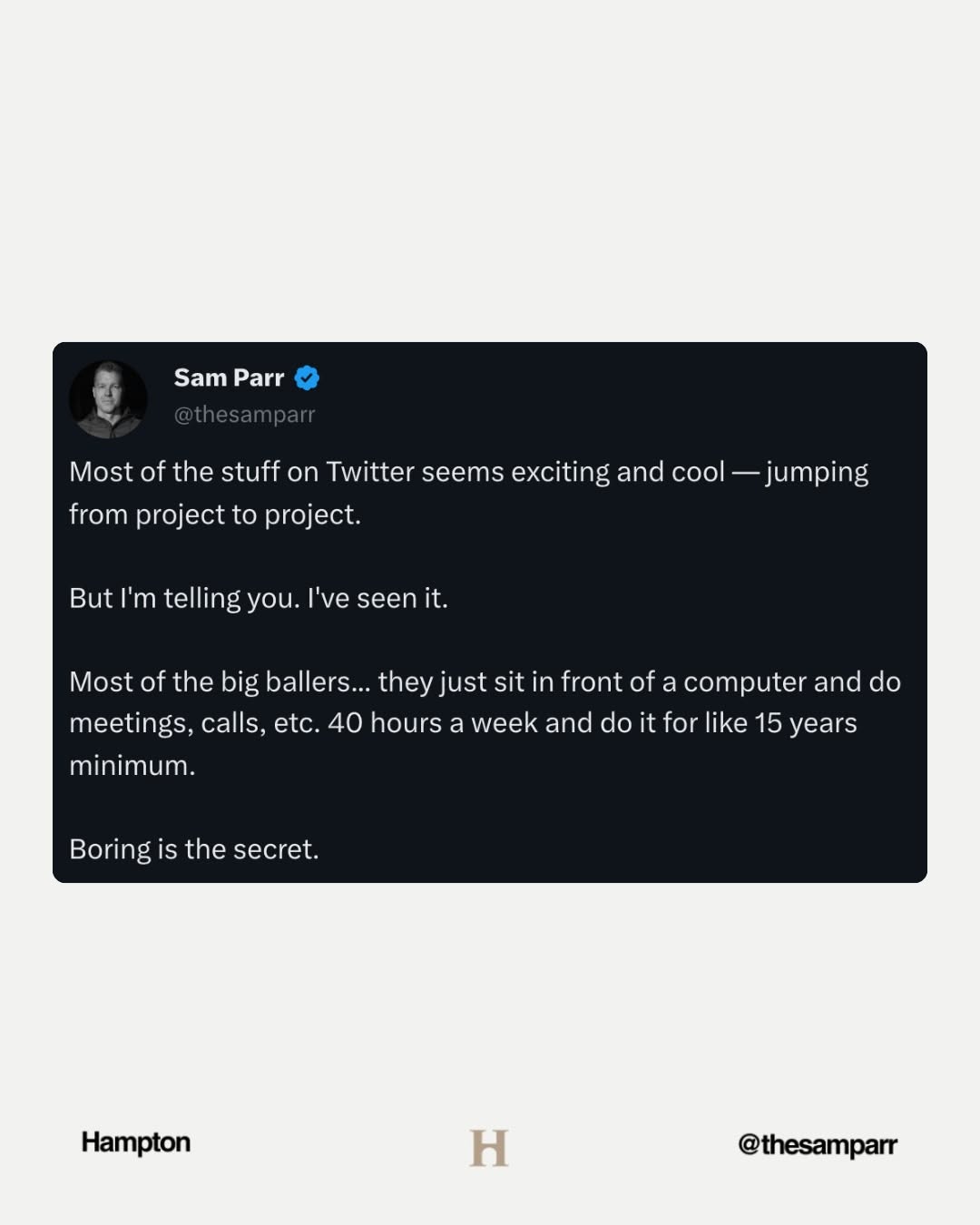
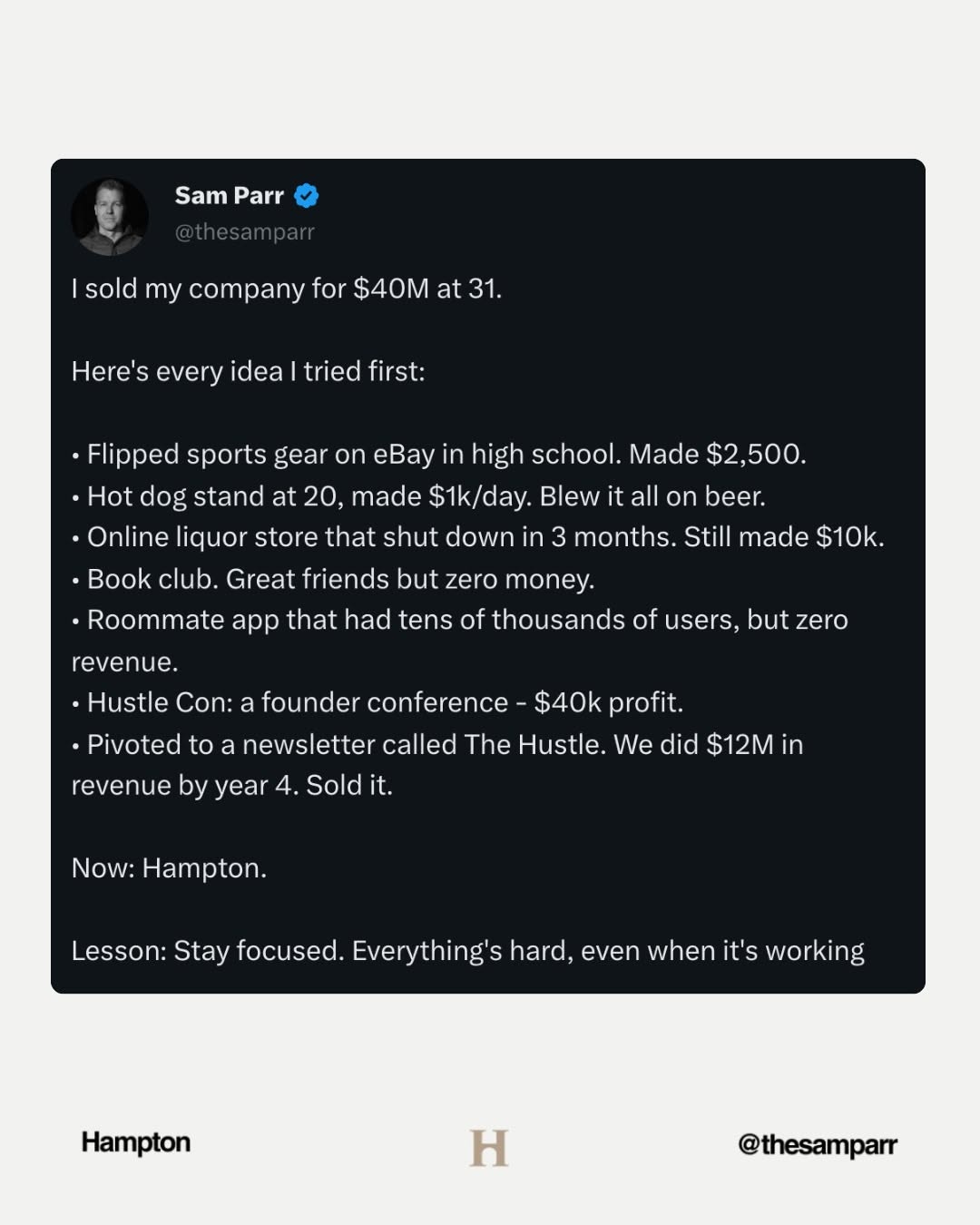
Those three slides look like simple screenshots, but they’re a mini-MBA in decision making. You see a decade of experiments, one lever decision, and then years of boring, focused execution. That’s the game: not obsessing over lunch orders, but spotting the rare choice that can swing your life or business by 10x. Pick the lever decisions, ignore the noise, then grind on that lever till it pays.
The Boring Execution Behind Big Outcomes
Look at the final slide: a graveyard of fun side hustles, then the decision to double down on one thing that eventually sells for eight figures. That wasn’t a perfect idea; it was a lever choice reinforced by brutal focus. Most of the real work was not sexy—meetings, calls, and consistency over 15 years. If you want similar results, spend less energy optimizing tiny choices and more energy choosing the one thing you’re willing to be bored with for a very long time.
How to Spot a Lever Decision
- It clearly changes your trajectory: new market, new skill, or new relationship that expands your surface area of luck.
- It creates compounding effects: the longer you stick with it, the easier and bigger the results get.
- It demands sacrifice: you must say no to dozens of cool side quests to fully ride this one bet.
- It survives boredom: you can picture yourself doing the unsexy work behind it for 10+ years.
Real-World Lever Decisions In Action

Amazon committed to the lever decision of prioritizing customer obsession and fast shipping, which justified billions invested into Prime and logistics that now lock in long-term loyalty.
Basecamp chose the lever decision to stay intentionally small and product-focused, avoiding endless feature creep so their software remains simple and profitable.
Analyzed by Swipebot
Loading analysis...