7.3K
125
data__is__beautiful “Music when we were growing up was the best. Everything these days is so terrible.” Turns out...
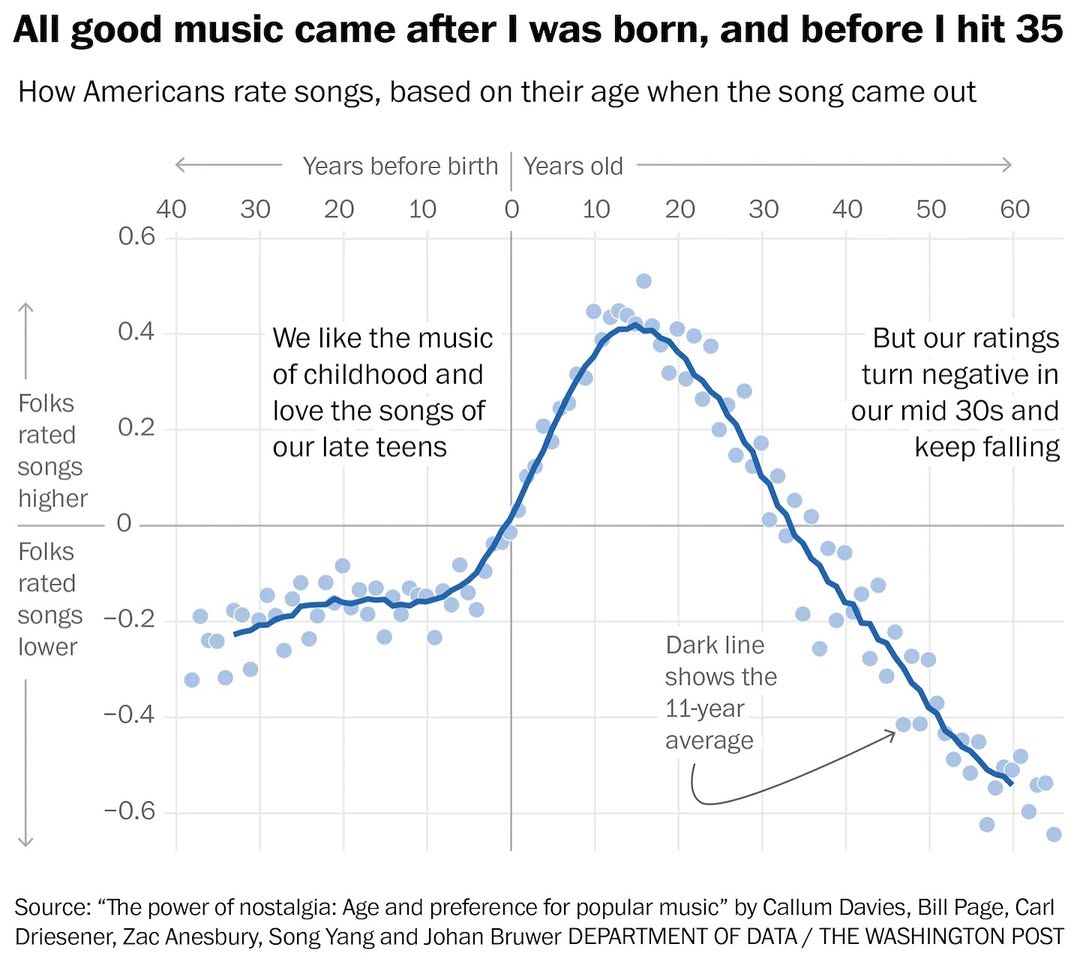
That chart basically screams one thing: if you want people to feel something, play the songs they loved at 17. The curve spikes in late teens, then crashes hard after our mid‑30s. Translation: the music from those years becomes our lifelong soundtrack. Smart marketers don’t fight it…they plug straight into it.
How To Aim Your Soundtrack
Figure out your audience’s current age. Subtract 17. That year range is your hit list. Selling to 40‑year‑olds today? Think 2000–2004 anthems. Ads, product videos, events, even on‑hold music work better when the backing track quietly whispers, “This was your life.”
The Psychology Behind It
- The graph peaks around age 17, meaning songs from late teens get the highest “this is great” ratings.
- Childhood tracks score OK, but the emotional rocket fuel clearly starts in adolescence.
- After 35, ratings for new music slide below zero and keep dropping, so “today’s hits” feel worse and worse.
- Those peak‑emotion years are tied to big identity moments: first car, first love, first real freedom.
Real‑World Plays On 17‑Year‑Old Songs
Peloton loads early‑2000s pop and hip‑hop into rides targeting Millennial members who were teens when those songs ruled TRL.
McDonald’s revives classic 90s and 2000s jingles and hooks in campaigns that nudge Gen X and Millennials back to their high‑school snack runs.
Netflix packs nostalgia‑driven shows with era‑perfect soundtracks so viewers feel like they are back in their teenage bedrooms again.
Creative Variations
Analyzed by Swipebot
Loading analysis...