1
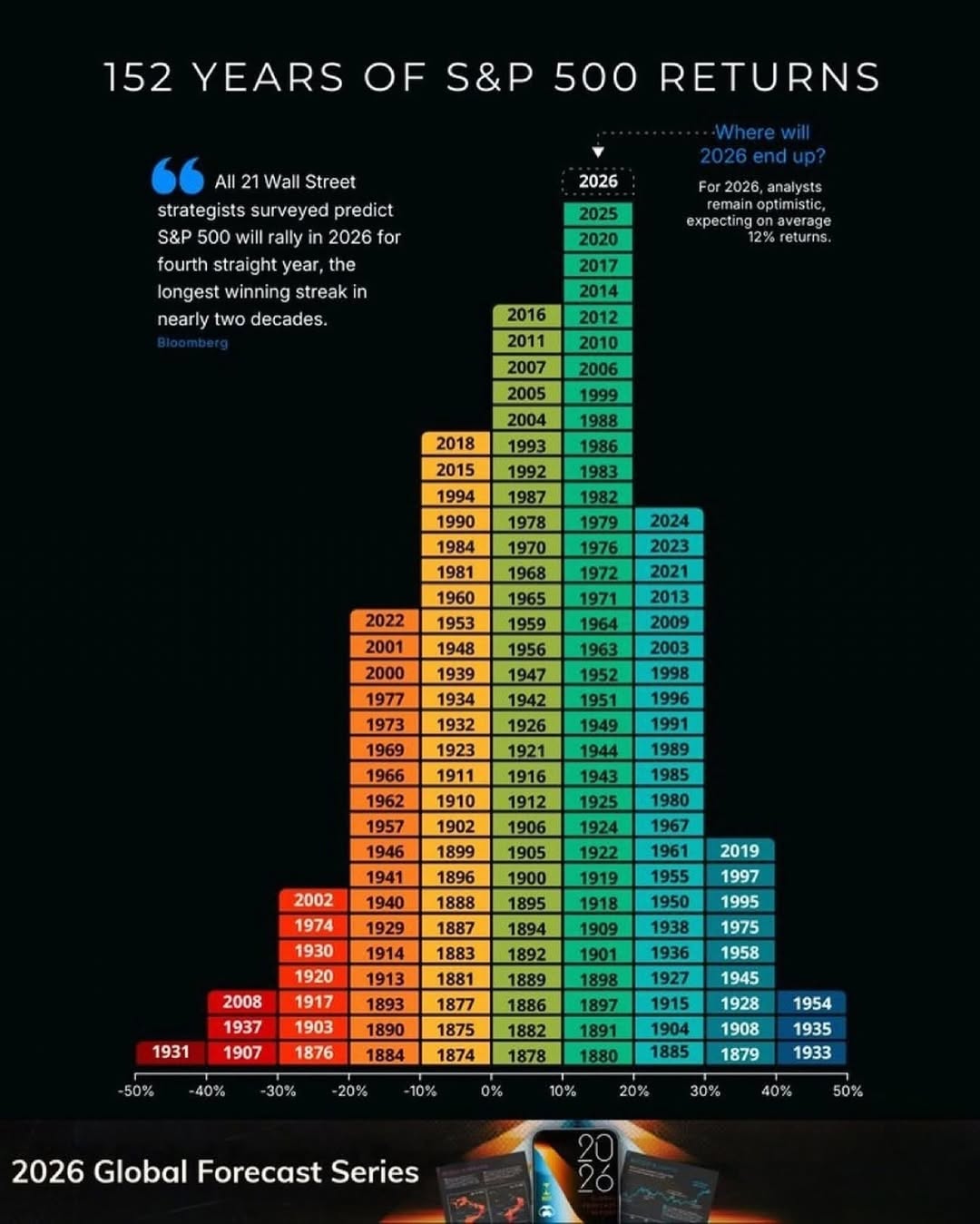
cervknowledge This chart puts market history into perspective. Over 152 years, the S&P 500 has delivered positive...
Look at that pyramid of S&P 500 returns in the image: a tiny red base of ugly years, and a huge skyscraper of green and blue gains. One glance and you see why day-trading headlines are noise. Over 152 years, most squares are above zero, some way above. The lesson: the market rewards people who stay strapped in, not the folks trying to jump on and off the ride.
Why Time In Market Wins
The colored blocks stack like a Vegas slot machine tilted in your favor. Every time you skip a year, you risk missing one of those fat green or blue jackpots that make the math work. Volatility is just the ticket price. Compounding is the ride. Your edge is not being smarter than Wall Street strategists about 2026; it is refusing to get shaken out during the inevitable red years.
What This Chart Really Says
- Bad years are rare, brutal, and very obvious in hindsight.
- Normal years are positive and totally boring in real time.
- Monster up years show up only if you were already invested.
- Guessing the next square is gambling; owning the whole pyramid is strategy.
Who Actually Invests This Way
Vanguard builds its core index funds around owning the market for decades, not months.
Fidelity shows in long-term studies that missing just a handful of best days crushes investor returns.
Dimensional Fund Advisors designs portfolios around market history, accepting short-term pain for long-term probabilities.
Creative Variations
Analyzed by Swipebot
Loading analysis...