9-Step Playbook to Make Processes AI-Native
Published on


Alex Lieberman
@businessbarista·Mar 10
9 steps of making a process or product AI-native: https://t.co/msNHyiAl9m
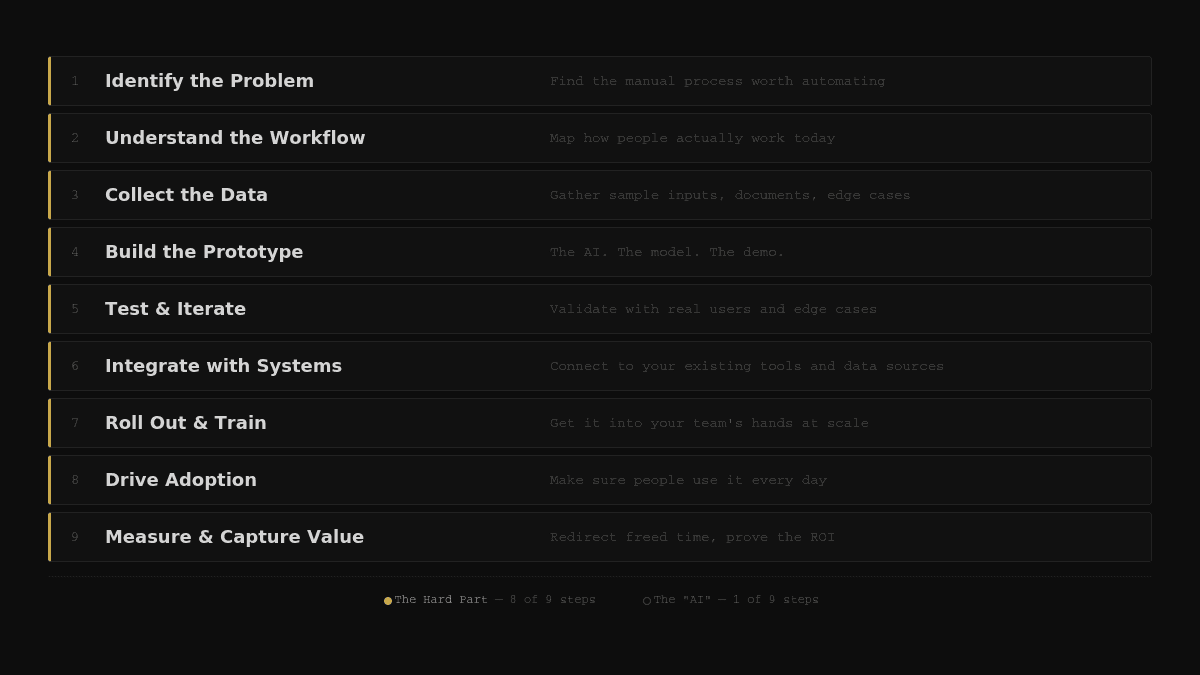
Most teams jump straight to playing with models and wonder why their AI project stalls. The image breaks down a smarter way: only one of nine steps is actually about the AI itself. The rest is unsexy, operational work. Use this playbook to turn random experiments into repeatable, ROI-producing systems.
How to Use This Playbook Tomorrow
Print the image and run a one-hour workshop. In the first 15 minutes, list your clunkiest manual processes, then vote on one to attack. Spend 30 minutes mapping the current workflow and listing the data you already have. Use the last 15 minutes to sketch a v1 prototype and define a single success metric. Now you have a concrete AI-native project instead of another vague “we should use AI” idea.
The Psychology Behind the 9 Steps
- Steps 1–3 force you to slow down and pick a painful, clear problem before writing a single line of prompt.
- Step 4 (Build the Prototype) is the only pure AI step, which keeps you from over-engineering the model.
- Steps 5–7 shift focus from tech to people: testing, integration, and training make the workflow real.
- Steps 8–9 treat adoption and measurement as first-class citizens, so usage and ROI are baked in, not bolted on.
Real-World Plays in Action
Zapier used the Identify the Problem and Understand the Workflow steps to turn repetitive user-support macros into an AI assistant that drafts replies for human review.
HubSpot followed the Test and Iterate and Drive Adoption steps to roll out AI email subject line suggestions that sales reps actually use every day.
Analyzed by Swipebot
Loading analysis...