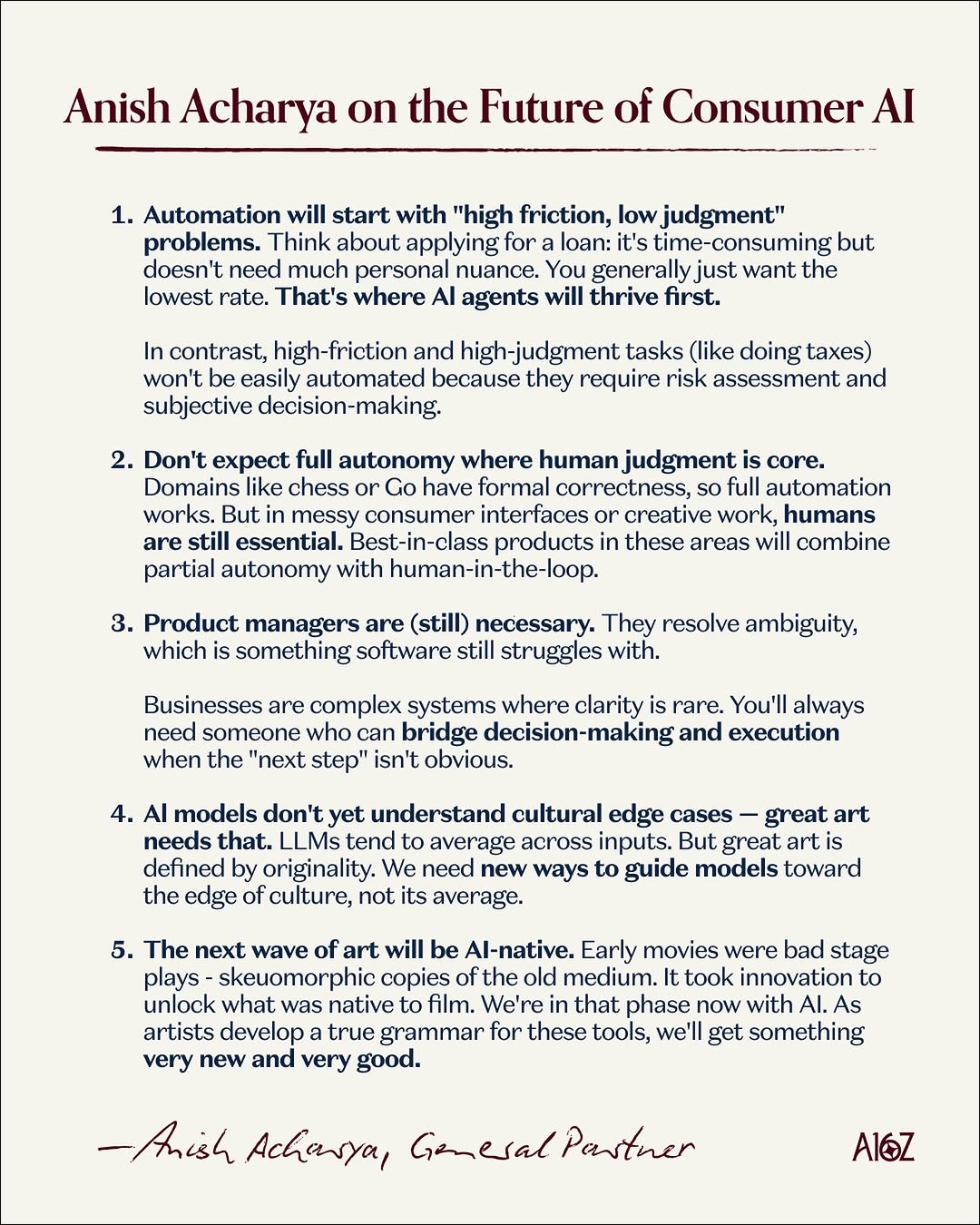
If you want AI to actually ship value in your business, stop fantasizing about fully autonomous magic and start with the boring stuff. Anish Acharya’s breakdown of consumer AI makes one thing painfully clear: the wins show up first where work is annoying, repeatable, and low on nuance. That means your best ROI is hiding in the tasks everyone hates but no one needs a genius to do.
How To Apply This In Your Product
Make a list of every step in your user journey that feels like waiting at the DMV: forms, uploads, verifications, status pings, approvals. Circle the ones where a smart high-schooler with a checklist could do the job. Those are your AI beachheads. Automate the hand-offs, validations, reminders, and next-step suggestions first. Keep humans in the loop for ambiguous calls, but let agents chew through the sludge. Ship that, and your users will feel the upgrade immediately.
The Psychology Behind Automating High-Friction, Low-Judgment Work
- People happily hand off tasks they dislike (forms, follow-ups, status updates) as long as the outcome is predictable, not perfect.
- High-friction steps like gathering documents, checking boxes, and routing requests are rule-based, so AI agents can run them reliably today.
- When judgment is low, trust is easier: users just want the lowest rate, fastest answer, or next best step, not a deep strategic opinion.
- Freeing humans from drudgery creates capacity for the ambiguous, high-judgment calls that AI still fumbles.
Real-World Plays That Follow This Rule
Ramp automates the nasty, high-friction parts of expense management like receipt chasing, coding, and policy checks so finance teams spend time on real decisions instead of paperwork.
Lemonade uses AI bots to collect claim details, verify simple cases, and pay out instantly, removing the friction of forms and phone calls while humans handle edge cases.
Front plugs AI into inbox triage and routing, killing the friction of sorting and tagging email while keeping humans in charge of nuanced customer replies.
Creative Variations
Analyzed by Swipebot
Loading analysis...