Entrepreneurship as Escape: The Immigrant Hustle
Published on
by  Sam Parr
Sam Parr
Sam Parr
@thesamparr·Jun 16
One of my favorite non-business books is “The Warmth of Other Suns" by Isabel Wilkerson.
In the early 1900s, even though slavery had ended, it still existed in the South. Blacks were farmers and paid virtually nothing and were killed if they tried to flee, organize, or complain.
So for the next ~30 years, roughly six million Black Americans fled the South for cities across the North and West (New York, Chicago, LA).
Many of them became entrepreneurs and survived by starting businesses.
- One lady escaped and because she knew how to sew, started a sewing business that afforded her the ability to be free.
- Another guy put himself through school and opened his own doctor practice in California (one of the first).
They had this “immigrant hustle” mentality that I love (they weren't really immigrants, but similar mindset), which I find incredibly inspiring.
They were able to create new lives, in part, because of entrepreneurship.
This is why starting a business is a very spiritual thing for me. It’s a small way to bend reality the way you want it. Which to me is very cool.
I love stories like this as much as I love people creating billion dollar companies because it reframes capitalism and entrepreneurship as something more meaningful to me than just money.
9/10 book.
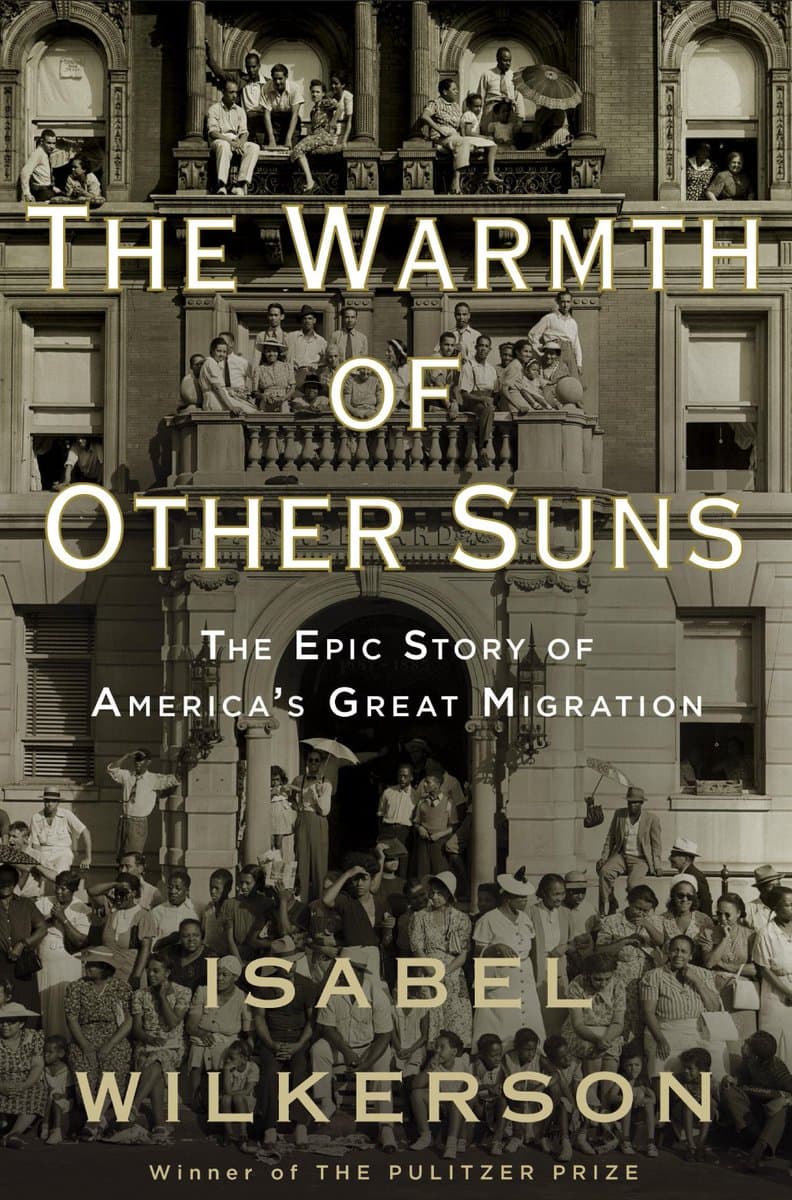
The cover of “The Warmth of Other Suns” looks like a simple old photograph, but it’s really a sales page for escape. Packed balconies, crowded stoops, people hanging out of windows—all crammed into one city building. That’s what entrepreneurship-as-escape actually looks like: bodies stacked into a new place, trying to stack the odds in their favor. This isn’t a polished tech campus; it’s the visual origin story of the “immigrant hustle” mindset.
What This Book Cover Really Sells
The building on the cover is overflowing with people, yet nobody looks like they’re relaxing. They’re lingering—resting between pushes. Every face represents someone who left terror in the South for a cramped, risky shot at something better in Northern and Western cities. Entrepreneurship here wasn’t about freedom of time; it was about freedom, period. Sewing skills became invoices. Medical school became a clinic. A one-way train ticket plus a monetizable skill was the business plan.
Turning Your Skill Into an Escape Plan
If you zoom out from the photo, you’re basically looking at a wall of potential client lists: tailors, barbers, cooks, cleaners, shop owners, doctors. The “immigrant hustle” is taking whatever boring, tiny skill you have and asking, “Could this buy my way out of where I am now?” For modern founders, that might be a newsletter, agency, or SaaS—not as a vanity project, but as an exit ramp from a life you refuse to stay stuck in.
The Psychology Behind the Immigrant Hustle
- You’re not chasing riches, you’re fleeing a worse reality—so failure isn’t just embarrassing, it’s dangerous.
- Constraints force creativity: if all you own is a skill, that skill becomes your startup.
- Community is your first market; neighbors in the new city become customers, referrals, and protection.
- Capitalism becomes spiritual: every extra dollar is proof you successfully bent reality away from what was trying to crush you.
Small Businesses as Exit Doors
One woman in “The Warmth of Other Suns” escapes the South and turns her ability to sew into a sewing business that literally funds her new life.
One man in the book puts himself through school during the Great Migration and opens one of the first Black-owned medical practices in California.
Analyzed by Swipebot
Loading analysis...