Features Are Demos; Workflows Are Moats
Published on

1/14
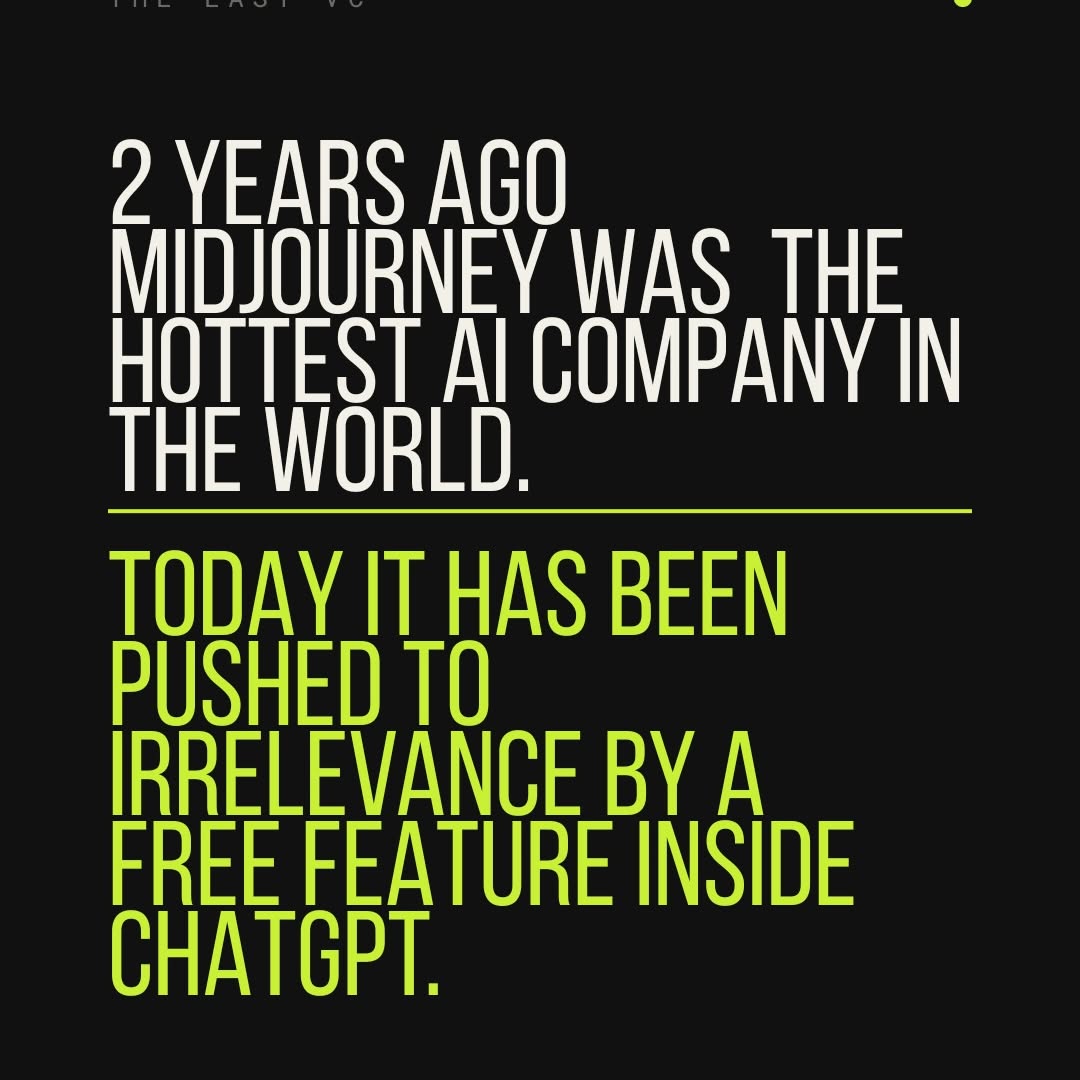
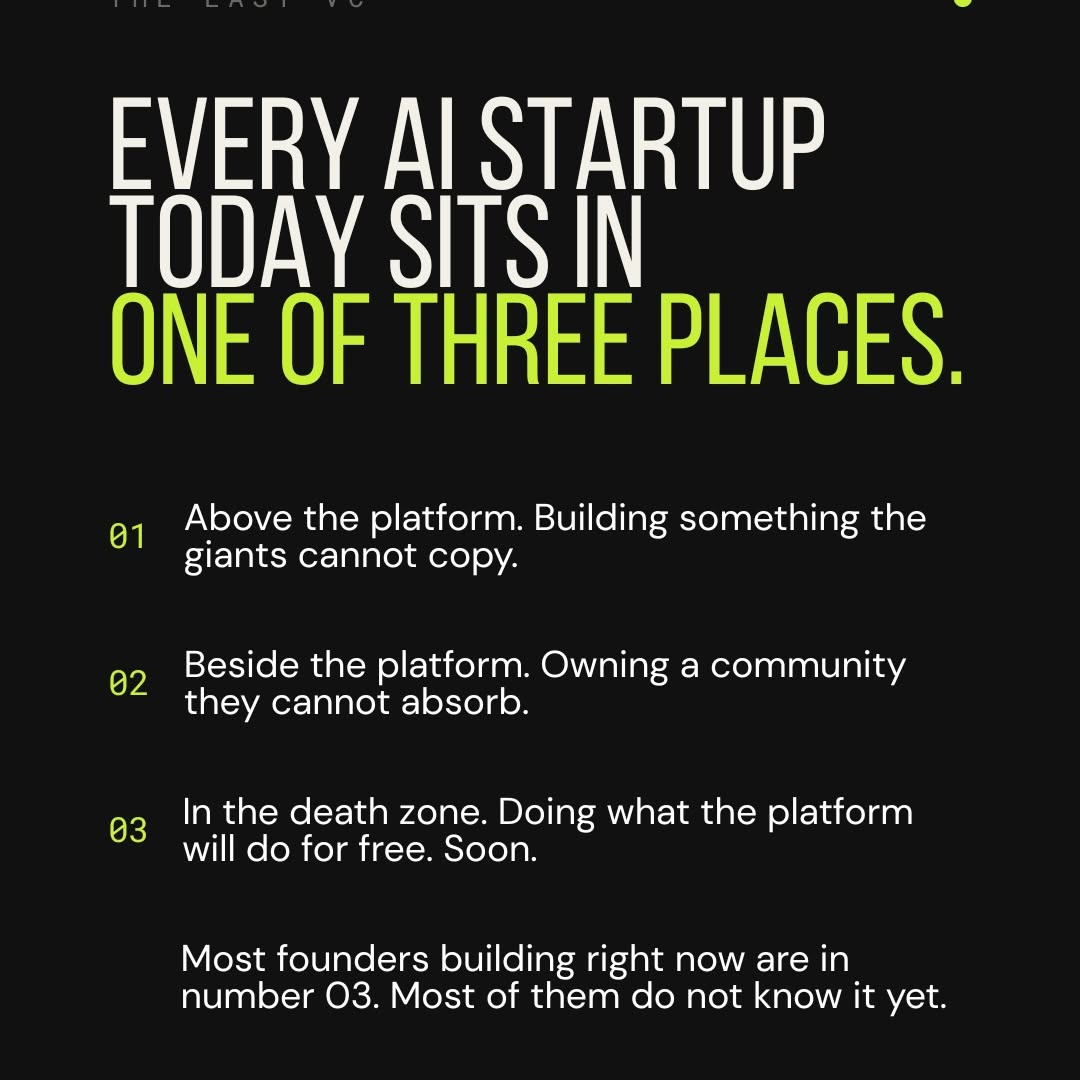
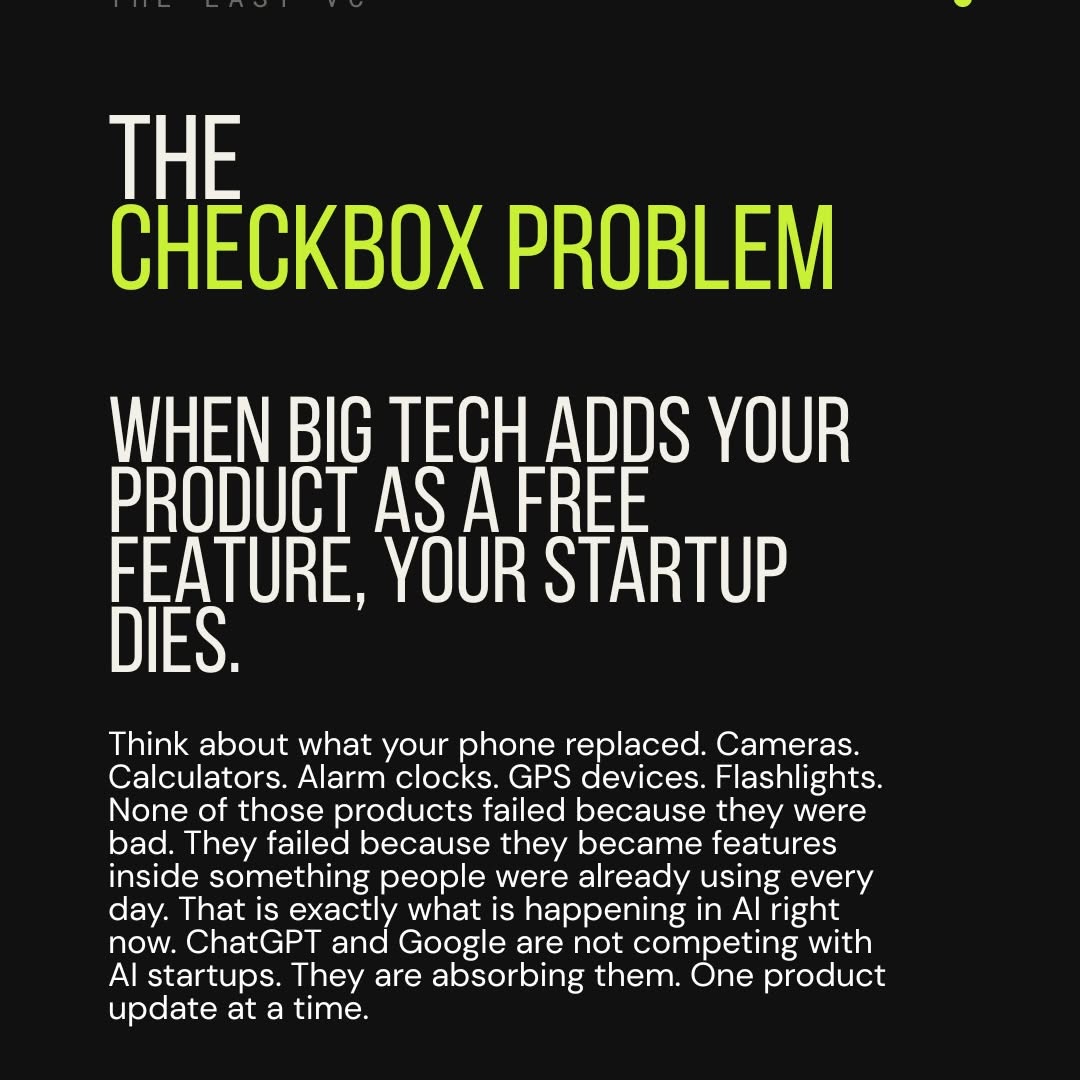
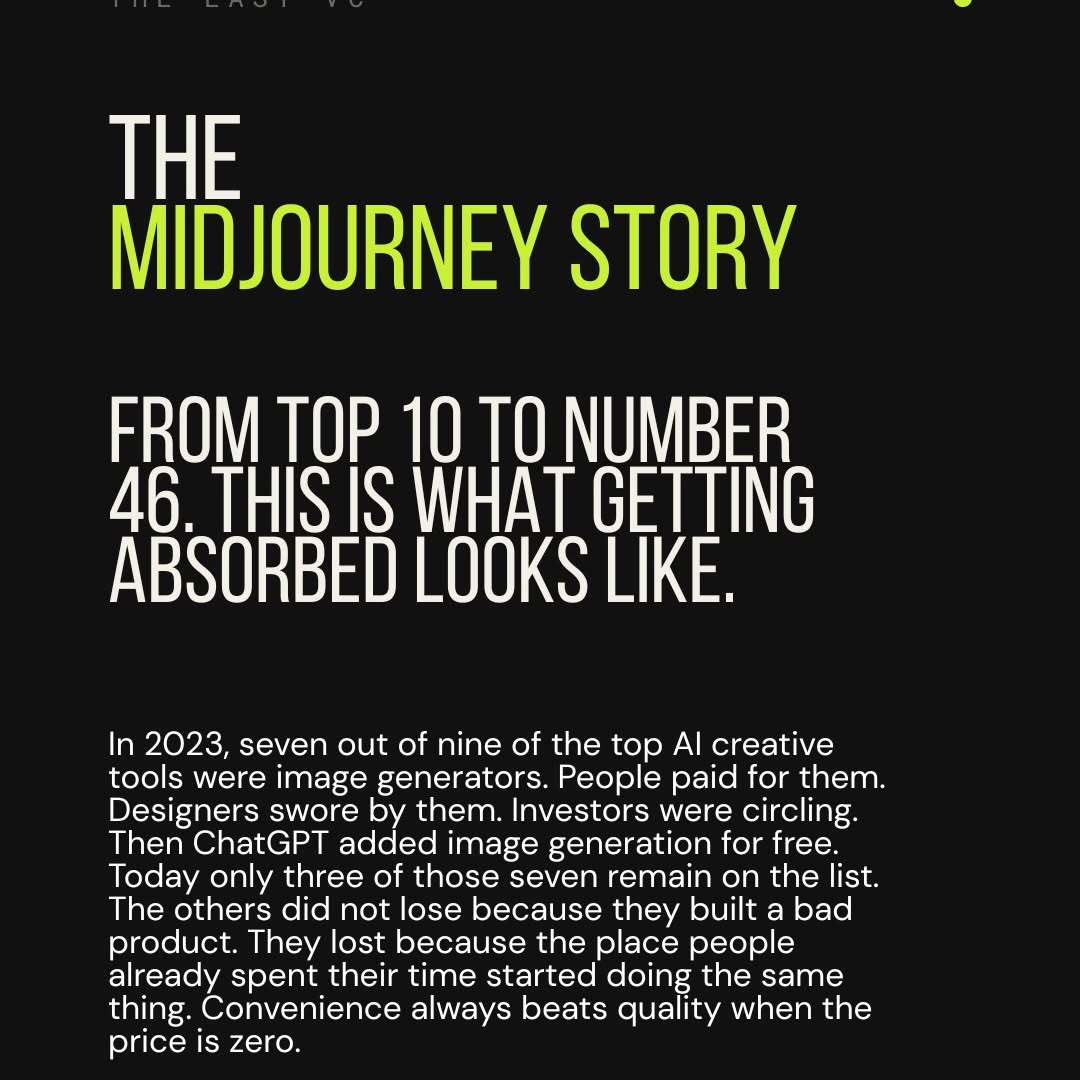
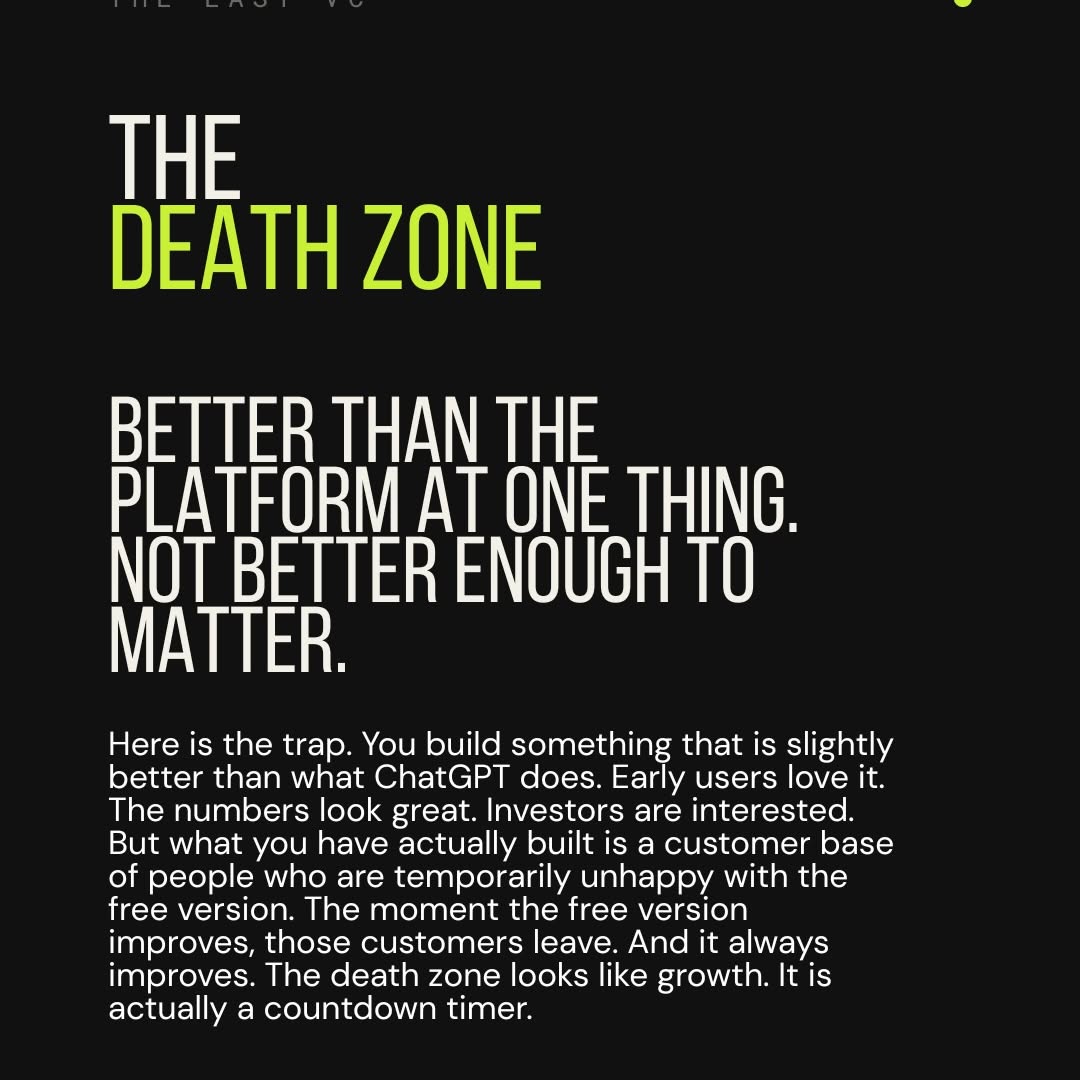
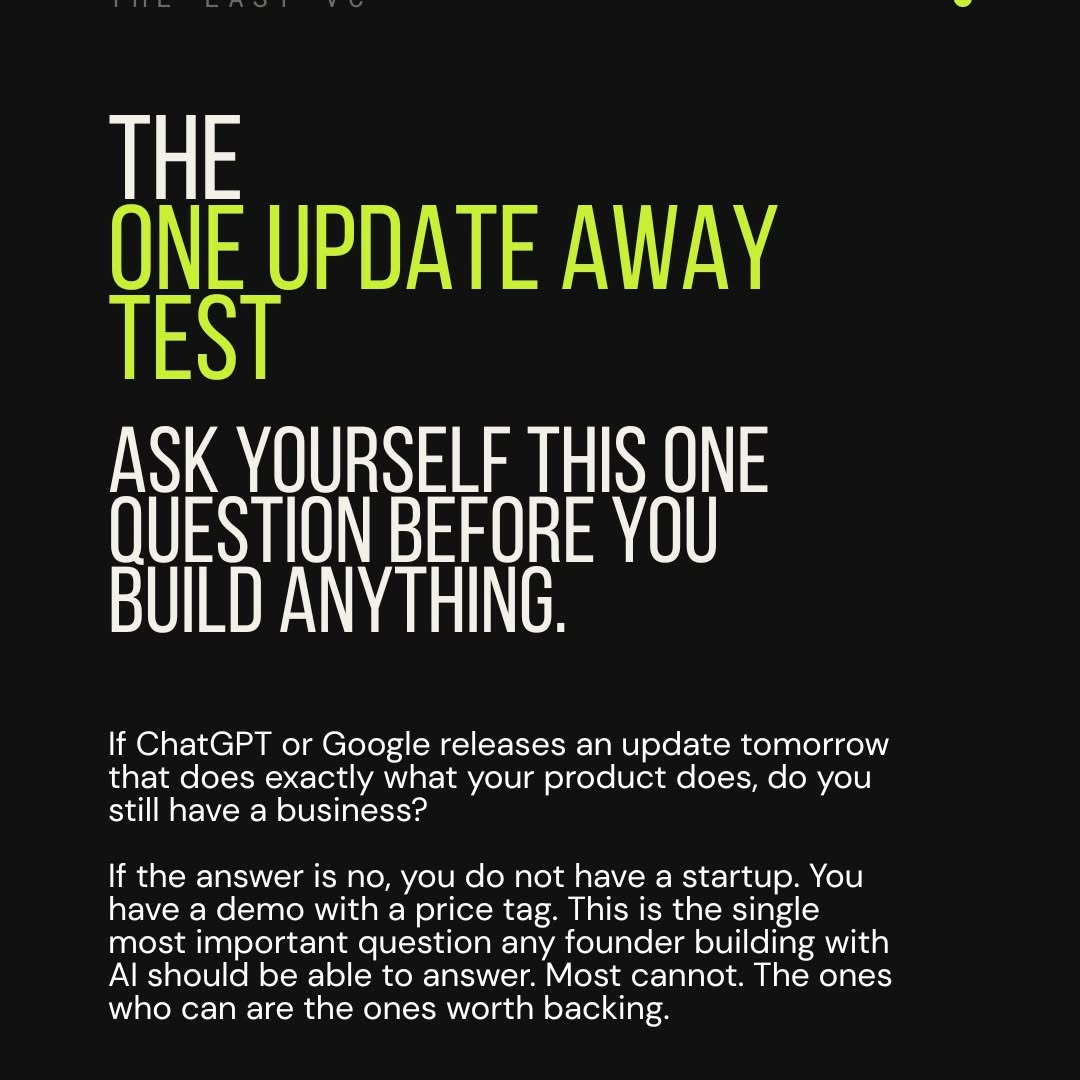
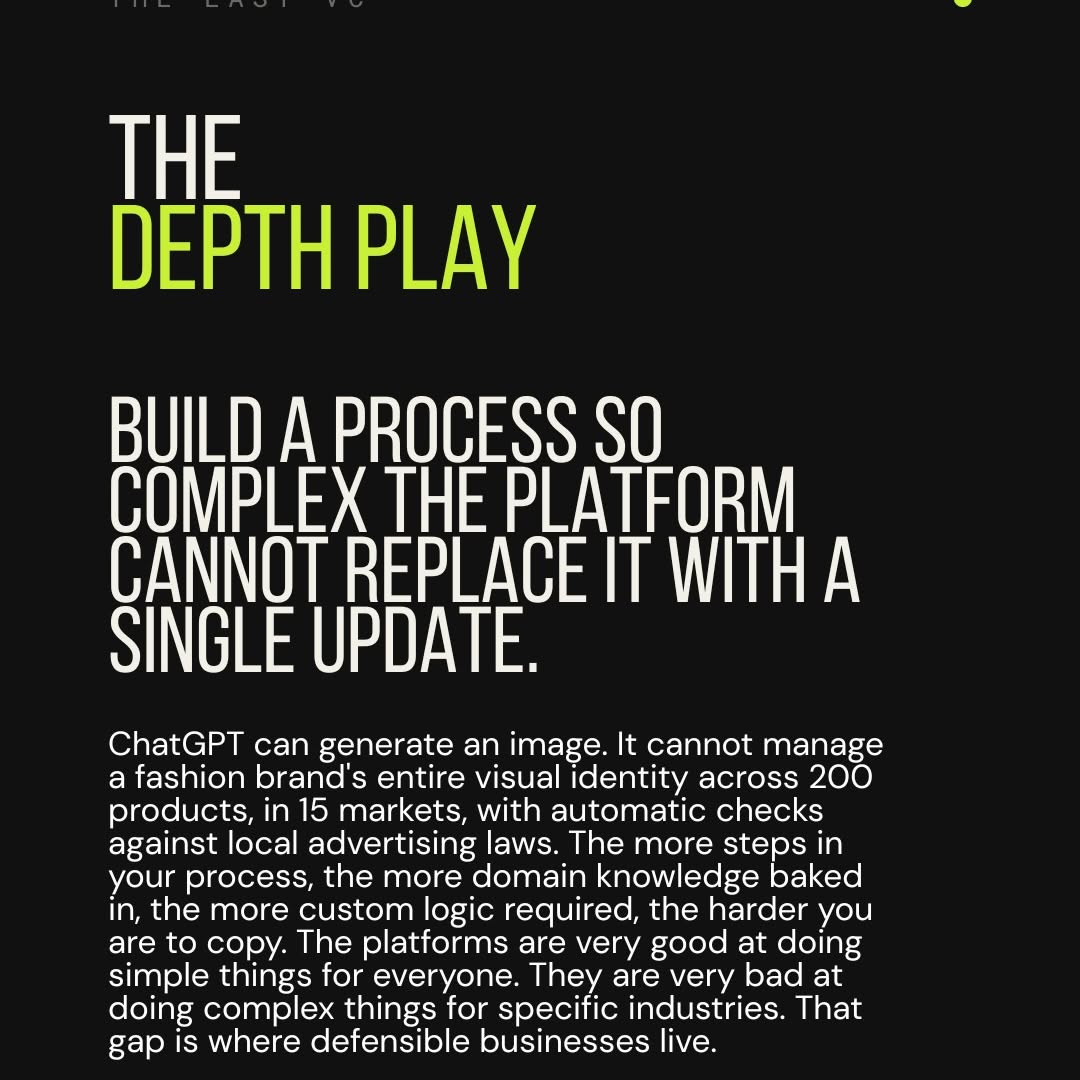
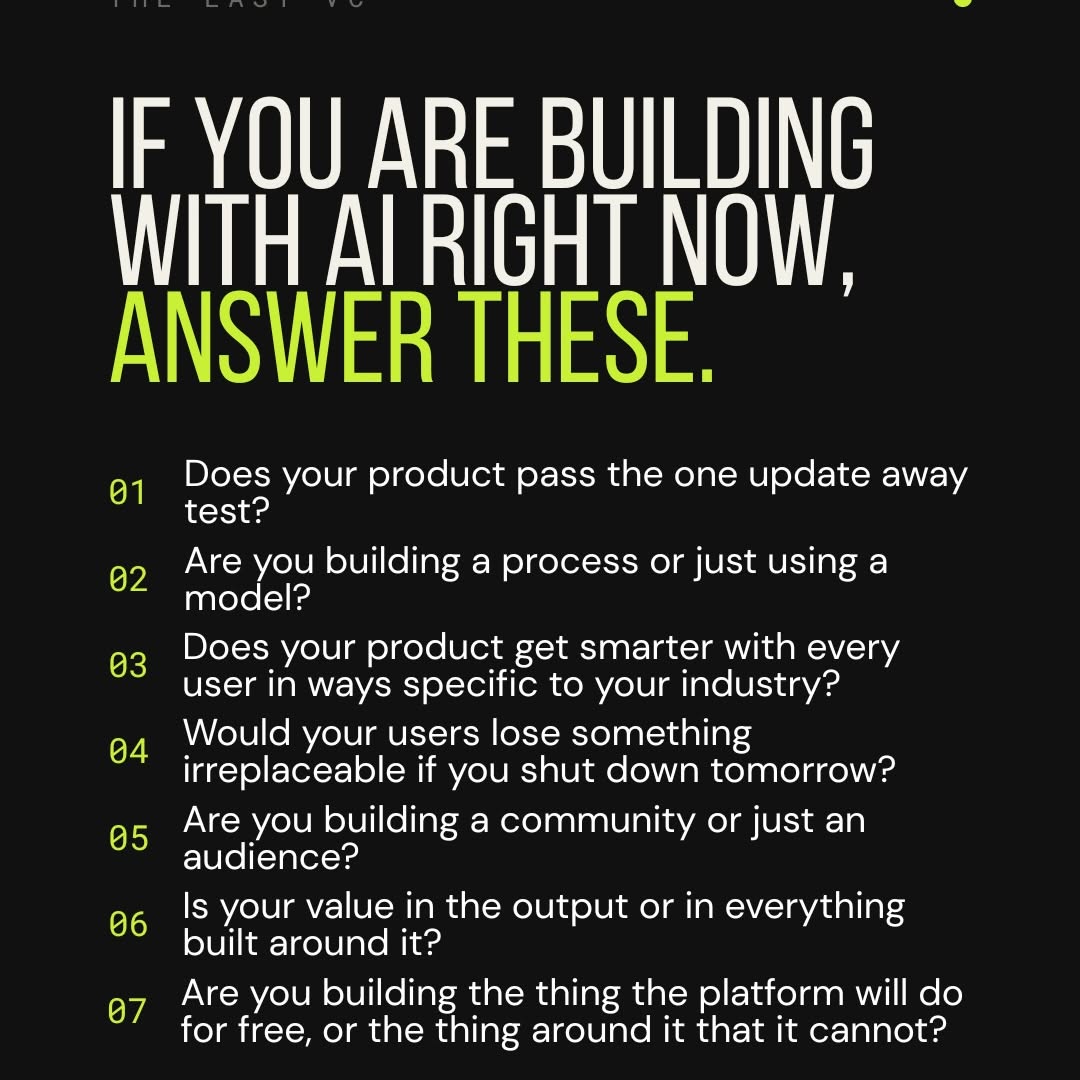
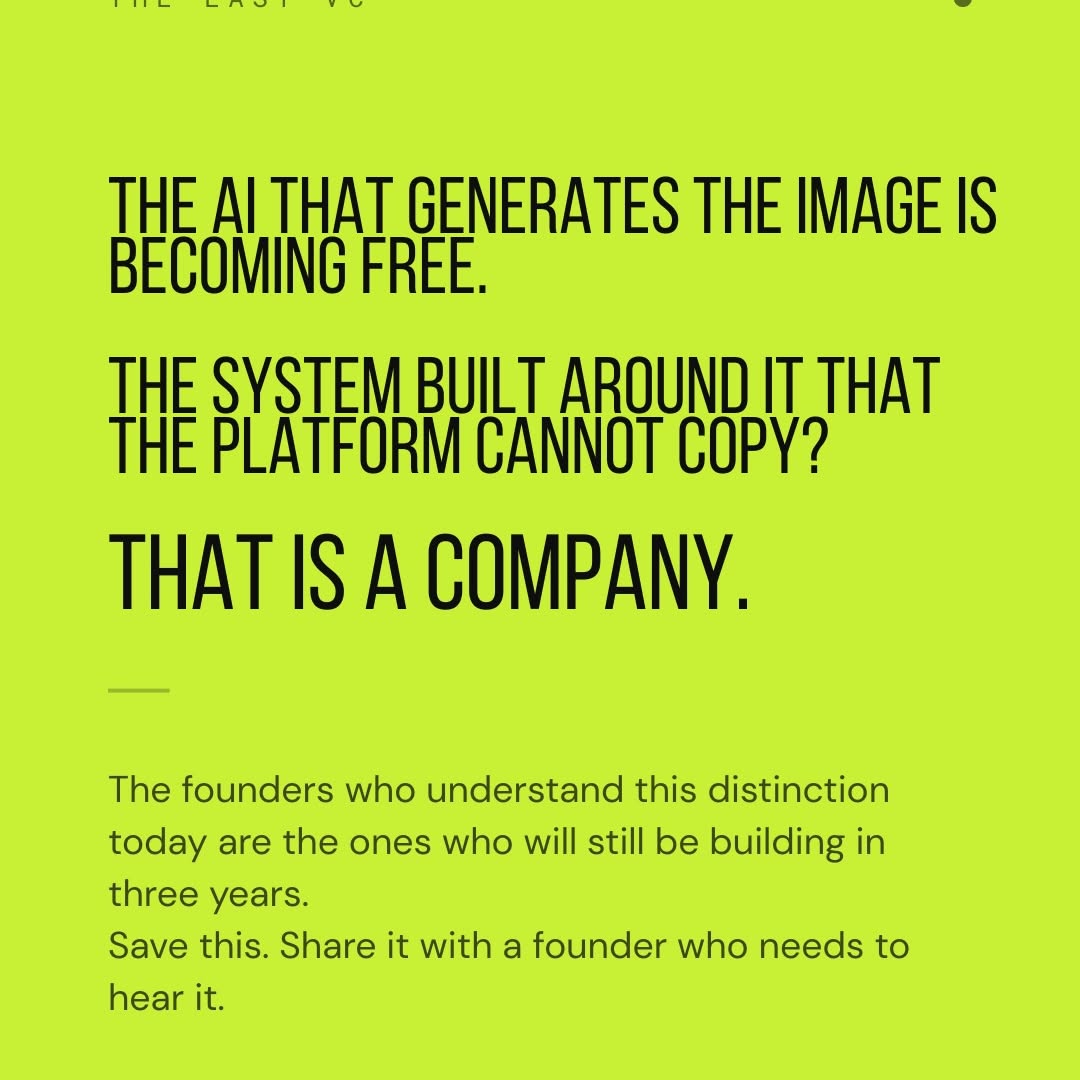
Most AI startups are accidentally building the world’s fanciest product demo. One model update later… poof. The feature they charge for shows up free inside a platform people already live in. The Instagram carousel above breaks down this “AI startup death trap” in brutal detail. Let’s translate it into something practical: how to turn flimsy features into workflow moats investors actually care about.
Turn Your Feature Into A Workflow Moat This Week
Take the single thing your product does best and map the 5–15 real-life steps that surround it: approvals, compliance, collaboration, handoffs, reporting. Then ask: where does domain knowledge, custom logic, or proprietary data belong in each step? Productize that system, not just the model call sitting in the middle. Features are screenshots for your deck. Workflows are what keep customers—and investors—from treating you like a temporary upgrade to ChatGPT.
Features Are Demos; Workflows Are Moats
- If OpenAI can wipe you out with one release, you are selling a feature, not a business.
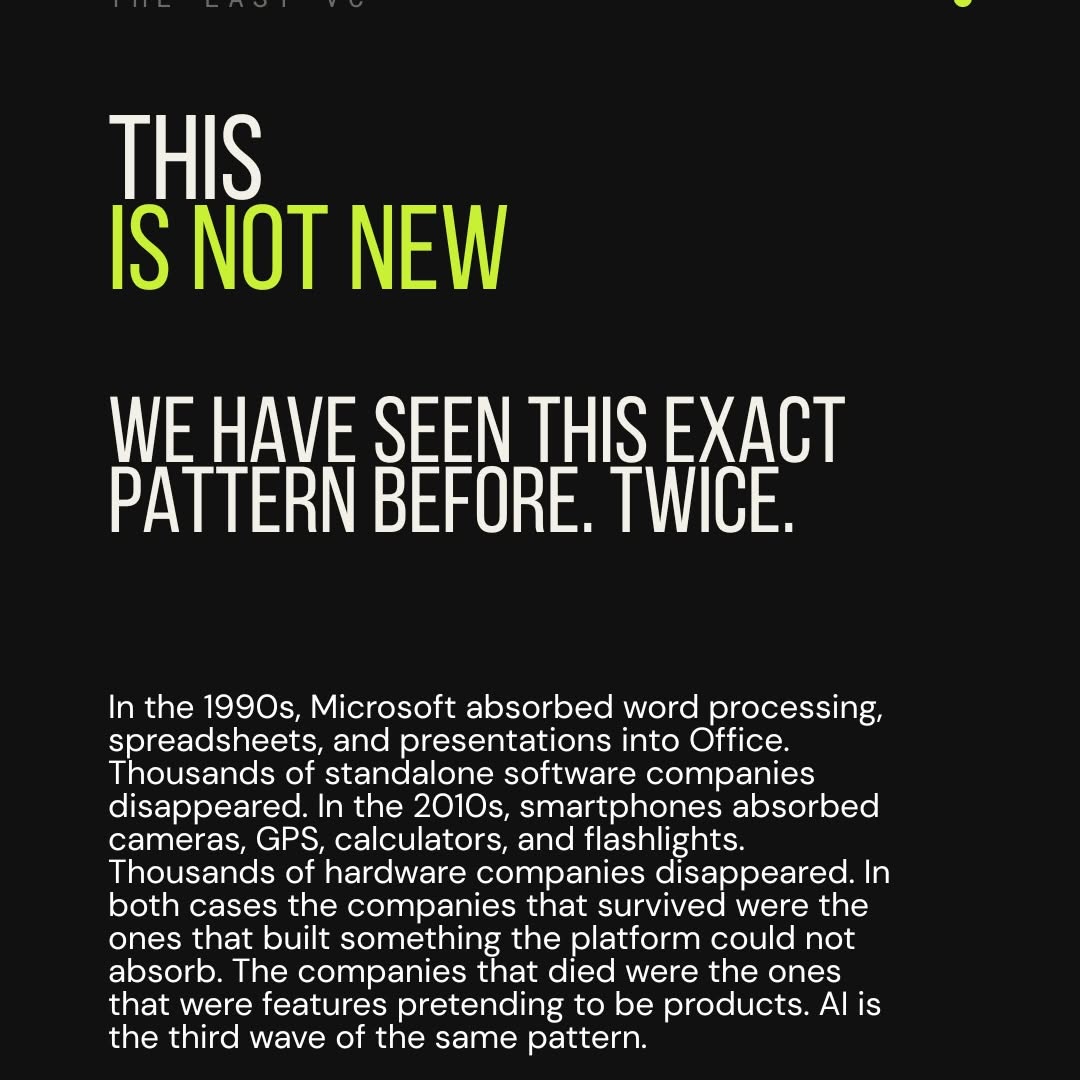
- Platforms are great at simple, one-click tricks; they are terrible at messy, multi-step, industry-specific workflows.
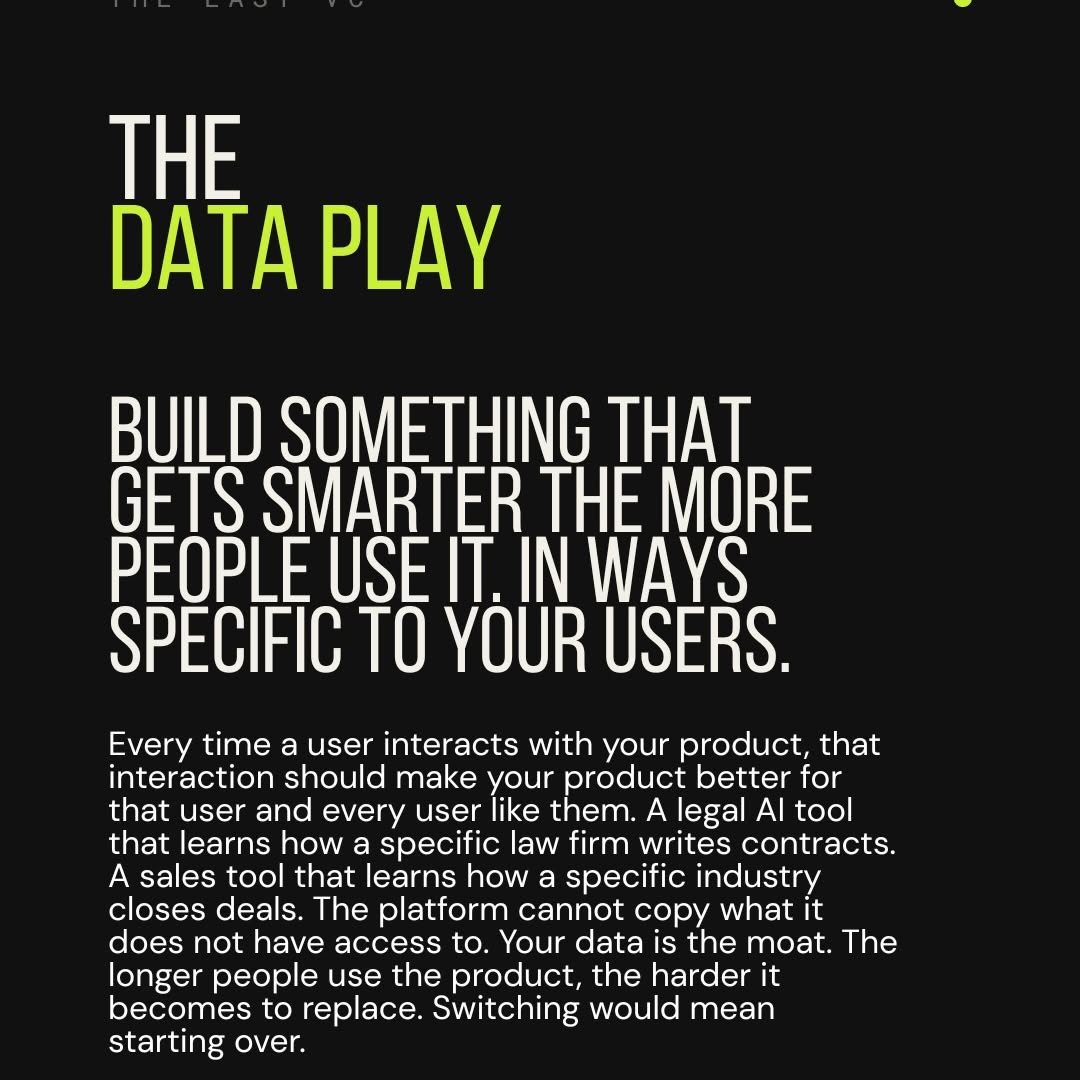
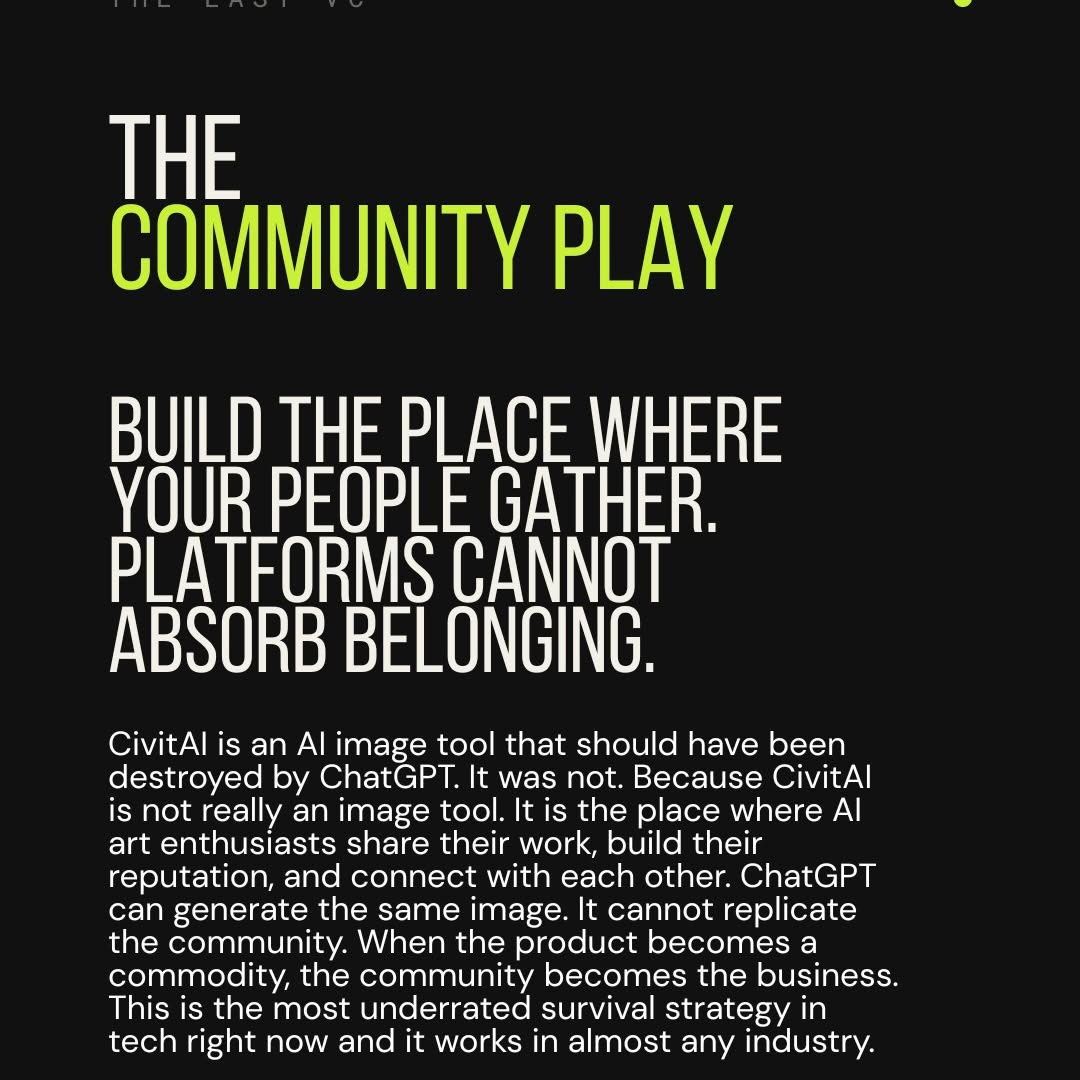
- Real defensibility lives in depth (complex processes), data (compounding learning), and community (people who would miss each other, not just the tool).
- Your job is to wrap the interchangeable model in a system the platform cannot cheaply absorb: rules, integrations, approvals, compliance, collaboration, and habit.
7 Rapid Checks To See If You Have A Moat (Not A Demo)
- Passes the “one update away” test: survive if the same core feature becomes free tomorrow.
- Builds a process, not just a UI on top of a model.
- Gets smarter with every user in ways specific to one niche or industry.
- Would be genuinely painful for customers to lose next week.
- Grows a community that interacts with each other, not just with your feature.
- Puts the real value in the workflow, data, and ecosystem around the output.
- Focuses on what the platform cannot easily do at scale, not what it obviously will do for free soon.
Who Is Winning With Workflow Moats?
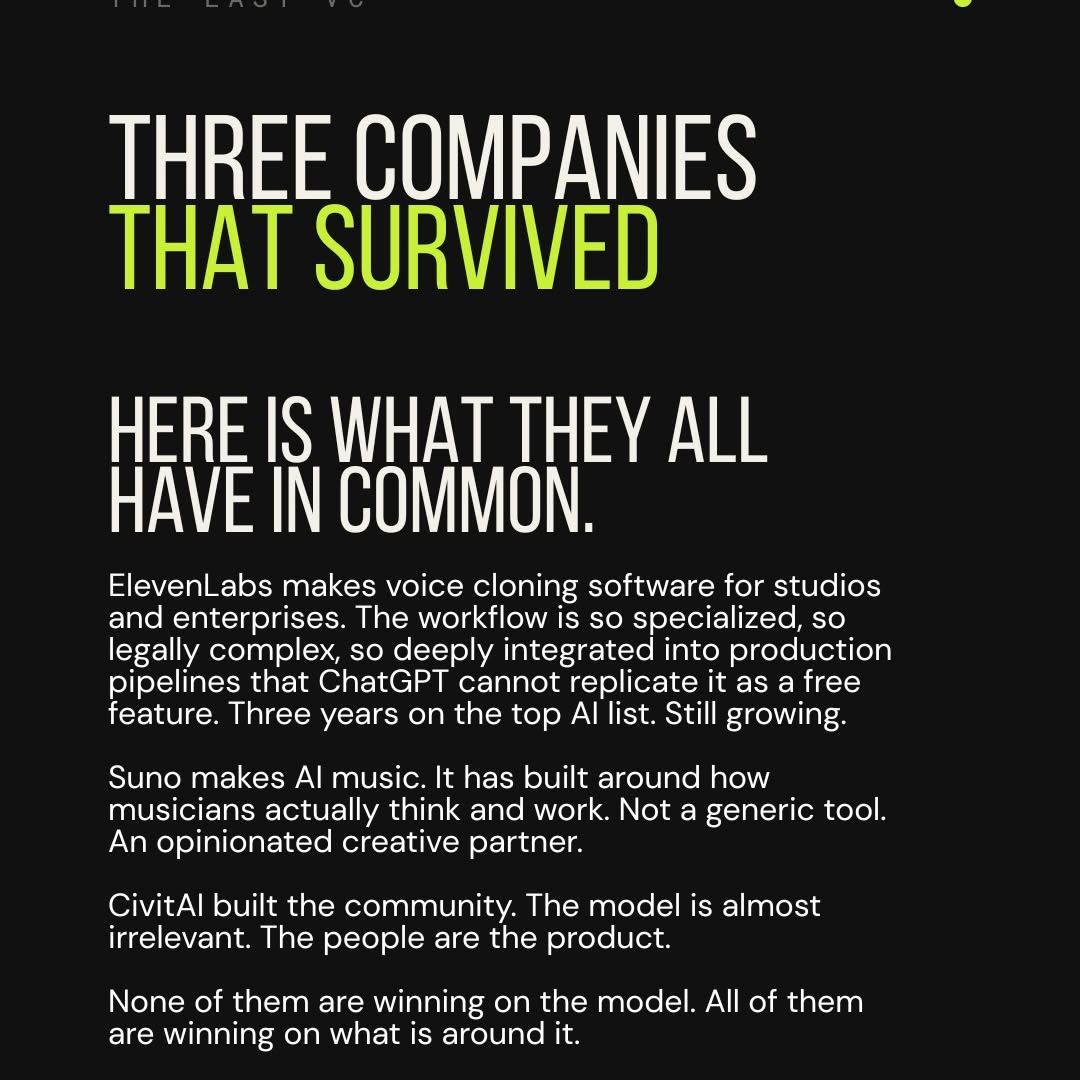
ElevenLabs sells a deeply integrated, legally messy voice-cloning workflow that is too specialized to be shipped as a casual platform checkbox.
Suno wraps music models in the actual creative workflow of musicians so it feels like a partner in song creation, not a generic sound generator.
Civitai wins by being the community and marketplace where AI image creators publish, share, and build reputation, making the model itself almost irrelevant.
Creative Variations
Analyzed by Swipebot
Loading analysis...
.png?width=3840&quality=80)