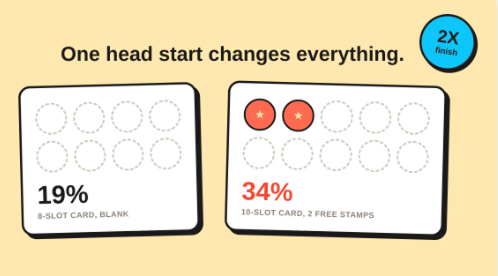
Look at that image: same basic punch card idea, wildly different results. The blank 8-slot card gets a meh 19% completion rate. The 10-slot card that starts with two spots already stamped jumps to 34% completions. Same reward, same effort, but a tiny psychological tweak doubles how many people finish.
The Psychology Behind the Head Start
People don’t crave “rewards” as much as they crave “finishing something they already started.” When you hand someone a loyalty card that’s completely blank, it screams, “You’re at zero.” When you hand them a card with a couple of spots already stamped, it screams, “You’re already on your way—might as well finish.” That little illusion of early progress flips customers from casually interested to quietly committed.
How to Build Head Starts Into Your Offers
- Give loyalty cards or progress trackers with 10 slots but pre-fill 2 of them before the customer even buys.
- Start trials or onboarding flows at “Step 2 of 5” so visitors feel like they’re already moving, not starting from scratch.
- Reward existing customers retroactively ("We’ve credited you with your first 3 points based on past orders") to activate the need to complete the set.
- Visually show partial completion in dashboards or emails to nudge people to hit 100% instead of sitting at zero.
Real-World Uses of the Head Start Effect
Starbucks shows customers a nearly-filled star meter in its app, making that final coffee purchase feel like completing an almost-finished card.
Duolingo starts new users with a half-completed progress bar and an instant streak badge, nudging them to keep coming back to “not break it.”
Creative Variations
Analyzed by Swipebot
Loading analysis...