Make Value Obvious: Price It Against Pizza
Published on
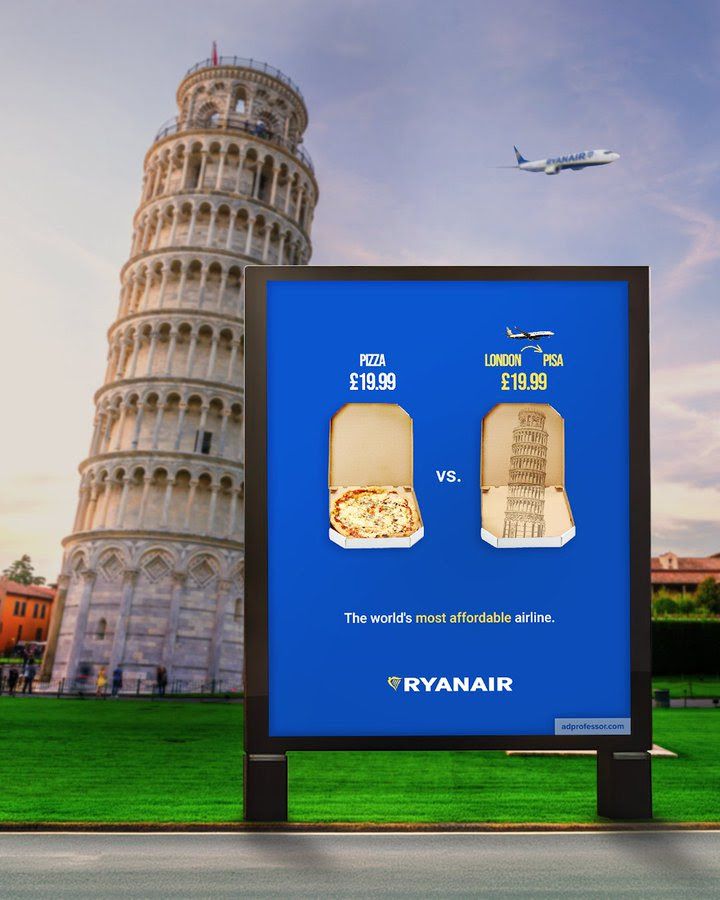
Ryanair pulled a simple magic trick near the Leaning Tower of Pisa: they made their price feel stupidly cheap by comparing it to pizza. Same £19.99. One buys you a forgettable takeaway, the other flies you to Italy to see the real tower. This is how you sell with context, not features.
The Visual Gut Punch
The billboard is split in two pizza boxes. Left box: an average-looking pizza labeled “PIZZA £19.99.” Right box: a cardboard Leaning Tower of Pisa labeled “LONDON → PISA £19.99.” Underneath: “The world’s most affordable airline.” The viewer’s brain does the math instantly—same money, wildly different value—without needing a paragraph of copy.
Why This Framing Works
- Anchors the fare to an everyday purchase people barely think about: a takeaway pizza.
- Uses side‑by‑side visuals so the value comparison is seen, not explained.
- Keeps copy microscopic: two labels, one line, one logo—zero cognitive load.
- Makes the price feel almost irresponsible to refuse: “If I can afford pizza, I can afford this flight.”
Steal This Move For Your Own Offers
Spotify compares its Premium price to the cost of a single coffee to make unlimited music feel like a no‑brainer subscription.
The New York Times often frames digital access as costing less than a weekly newspaper to make the online subscription feel underpriced.
Creative Variations
Analyzed by Swipebot
Loading analysis...