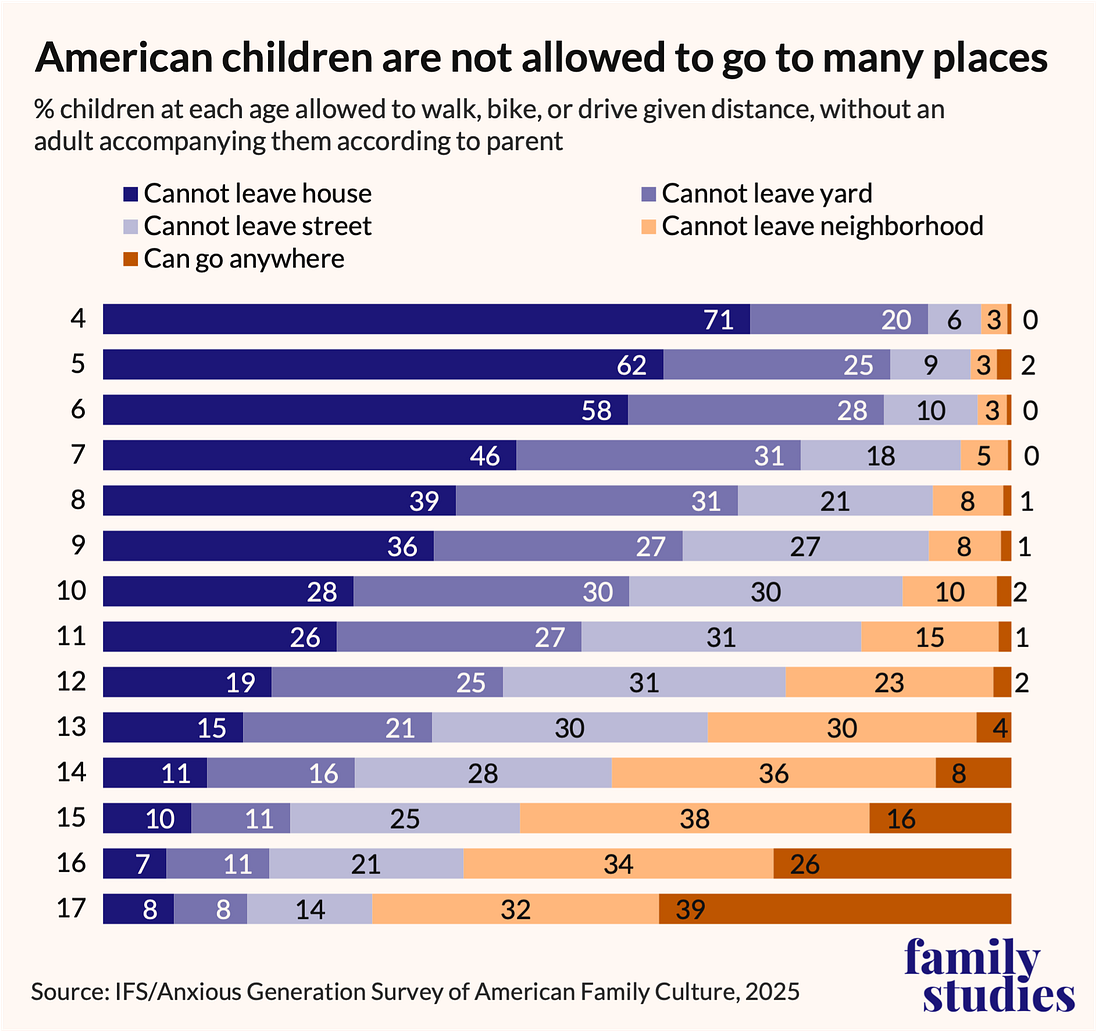
That chart is a gold mine. It shows American kids basically living inside invisible fences: at age 10, only 2% can go “anywhere” alone, and even at 17 most are still restricted to the neighborhood. If your marketing assumes kids freely roaming malls, streets, and stores, you’re selling to a world that barely exists. Smart brands now design for kids who are stuck at home and parents who control every gate.
How to market to kids who can’t roam alone
Design campaigns that start where kids are actually allowed: screens, couches, and car seats. Use video, games, and challenges that kids beg to participate in, then give parents crystal‑clear reasons to say yes: skill‑building, safety, and simplicity. Make every product easy to buy from a phone, schedule to a home, and supervise from a distance. You’re not just selling fun; you’re selling safe independence in a world where most kids can’t cross the street without an escort.
Read the chart like a marketer, not a worrier
- Ages 4–11 are homebound: build products discovered in living rooms, cars, and backyards, not out‑of‑home billboards.
- Parents are the gatekeepers: your real buyer is the adult who decides how far the kid can go and what apps they can open.
- Freedom spikes at 12–17: sell “tiny tastes of independence” that still feel safe and supervisable.
- The neighborhood is the new frontier: think porch delivery, QR codes on packages, and hyper-local experiences parents can chaperone.
Creative Variations
Analyzed by Swipebot
Loading analysis...