
1/2
1.5K
3
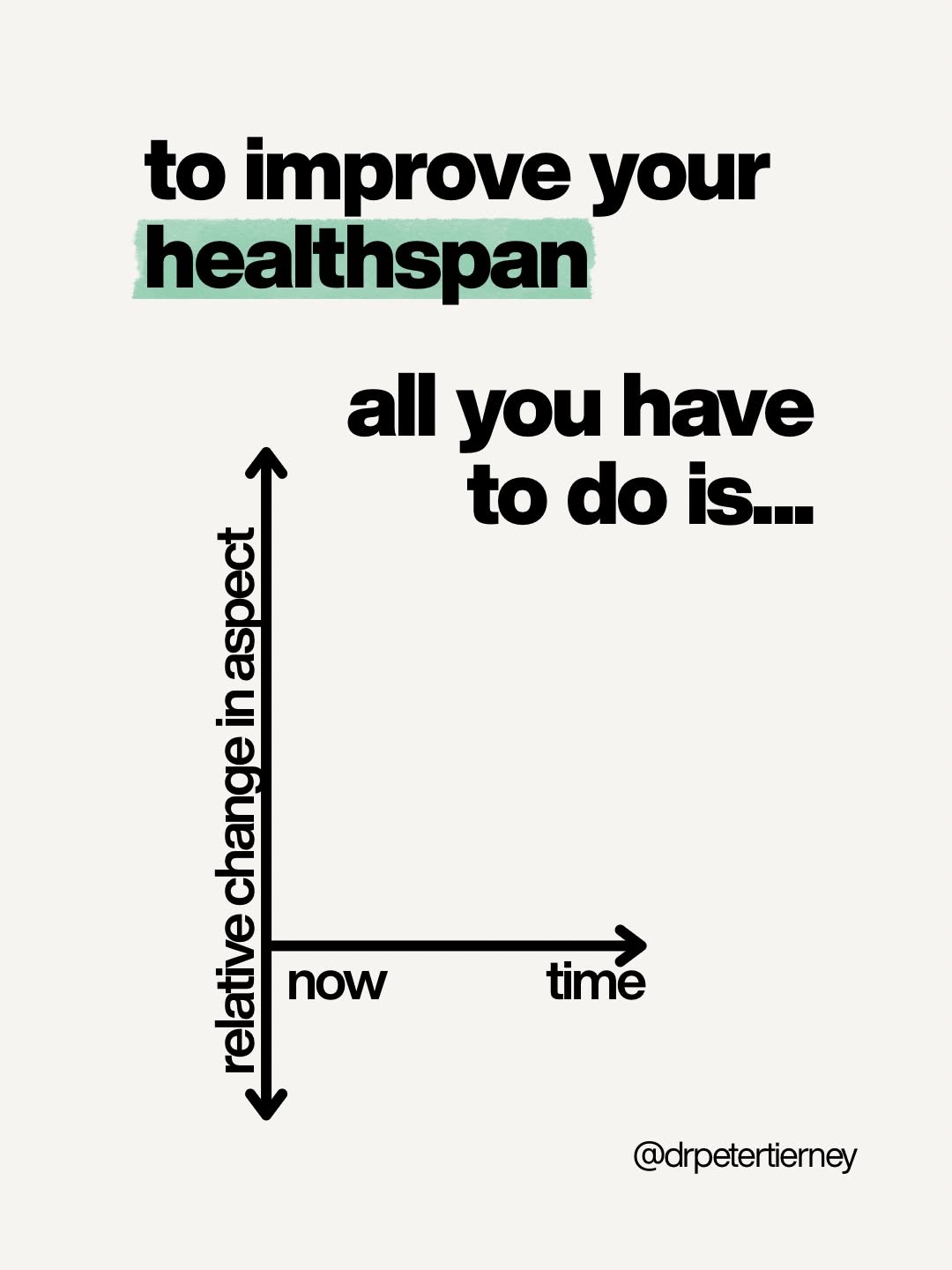
drpetertierney Increasing your healthspan is easy, all you have to do is: This is a visual representation of...
Healthspan isn’t about living forever; it’s about squeezing more good years out of the ones you’ve got. This post breaks down @drpetertierney’s simple chart so you can turn a few tiny daily upgrades into huge long‑term gains. Think of it as a cheat sheet for where to invest your health effort for maximum ROI.
Reading the Healthspan Chart
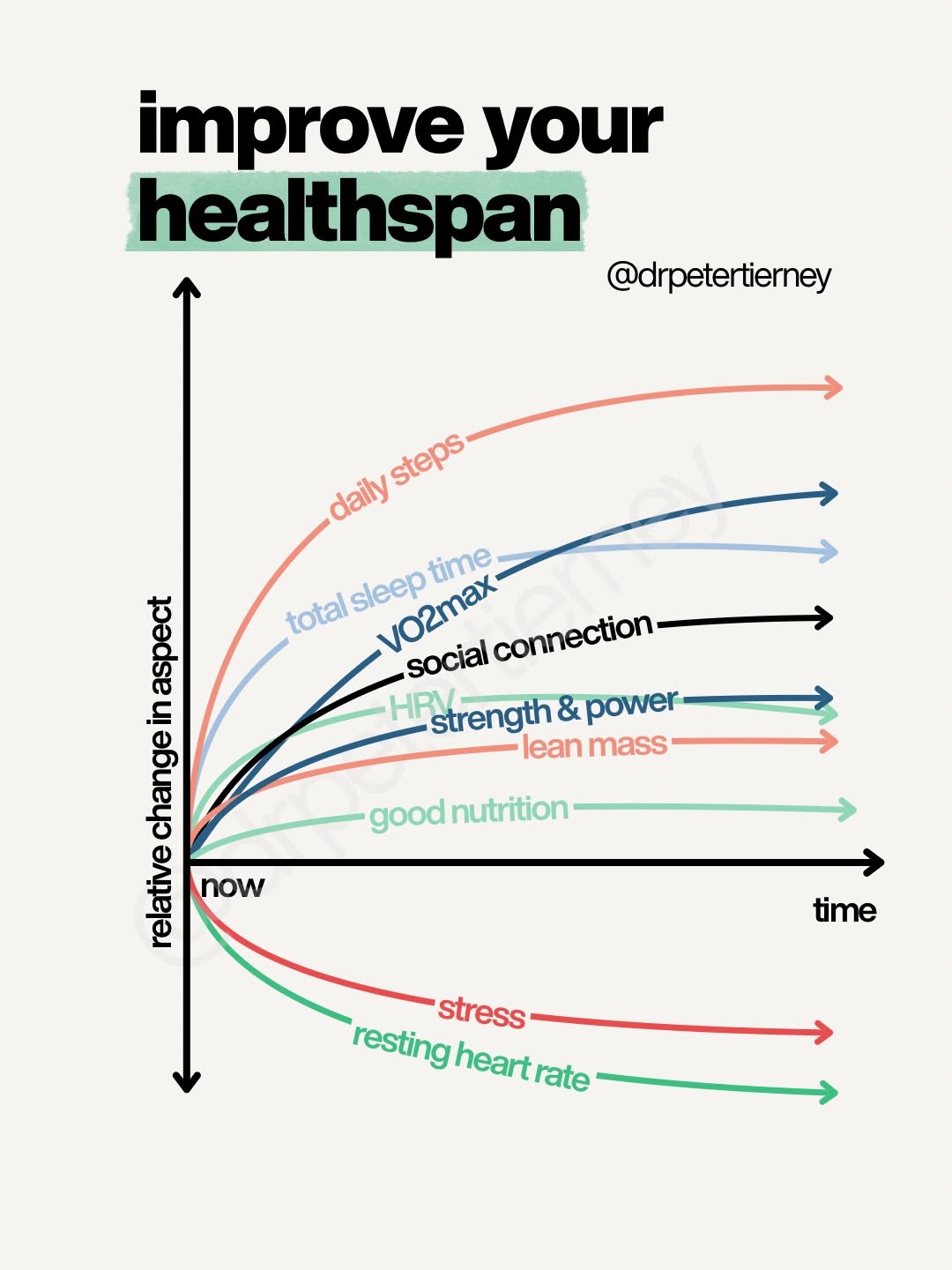
The x‑axis is time. The y‑axis is how much a habit changes from where you are now. Each colored curve shows how a small tweak today compounds: some shoot up fast and then level off (like steps), others creep up slowly but steadily (like strength or VO2max), and a few you actually want trending down (stress, resting heart rate).
Turn the Chart Into a 2‑Week Experiment
Pick one curve that’s currently low. Add one small habit: a 10‑minute walk after lunch, a 30‑minute earlier bedtime, or a weekly strength session. Track it for 14 days. Once that feels normal, layer in the next curve. You’re not chasing optimization; you’re stacking tiny, boring wins that quietly push every line in the right direction.
Small Wins That Compound Hard
- Daily steps: doubling from 4k to 8k is a huge early win, then just maintain.
- Sleep time: nudging from 6 to 7–8 hours gives outsized returns, even if it can’t increase forever.
- Strength, power, and lean mass: slow, steady climbs that protect you as you age.
- VO2max and HRV: better conditioning and recovery that quietly boost resilience.
- Social connection and good nutrition: flat-looking lines that pay off massively over decades.
- Stress and resting heart rate: the goal is a gentle drift downward, not perfection overnight.
How Brands Talk About Small Health Wins
WHOOP emphasizes small daily changes in sleep and recovery scores that compound into better long‑term performance.
Oura highlights how tiny tweaks like a short evening walk or earlier wind‑down can nudge readiness and resting heart rate over time.
Creative Variations
Analyzed by Swipebot
Loading analysis...
.png?width=3840&quality=80)