Turn Ads Into Stories People Join
Published on
How does a tiny horror film go viral? You make people part of the story. Obsession cost under a million. It just passed $230m at the box office. Not because the trailer was scary. Because the… | Tom Pestridge | 155 comments
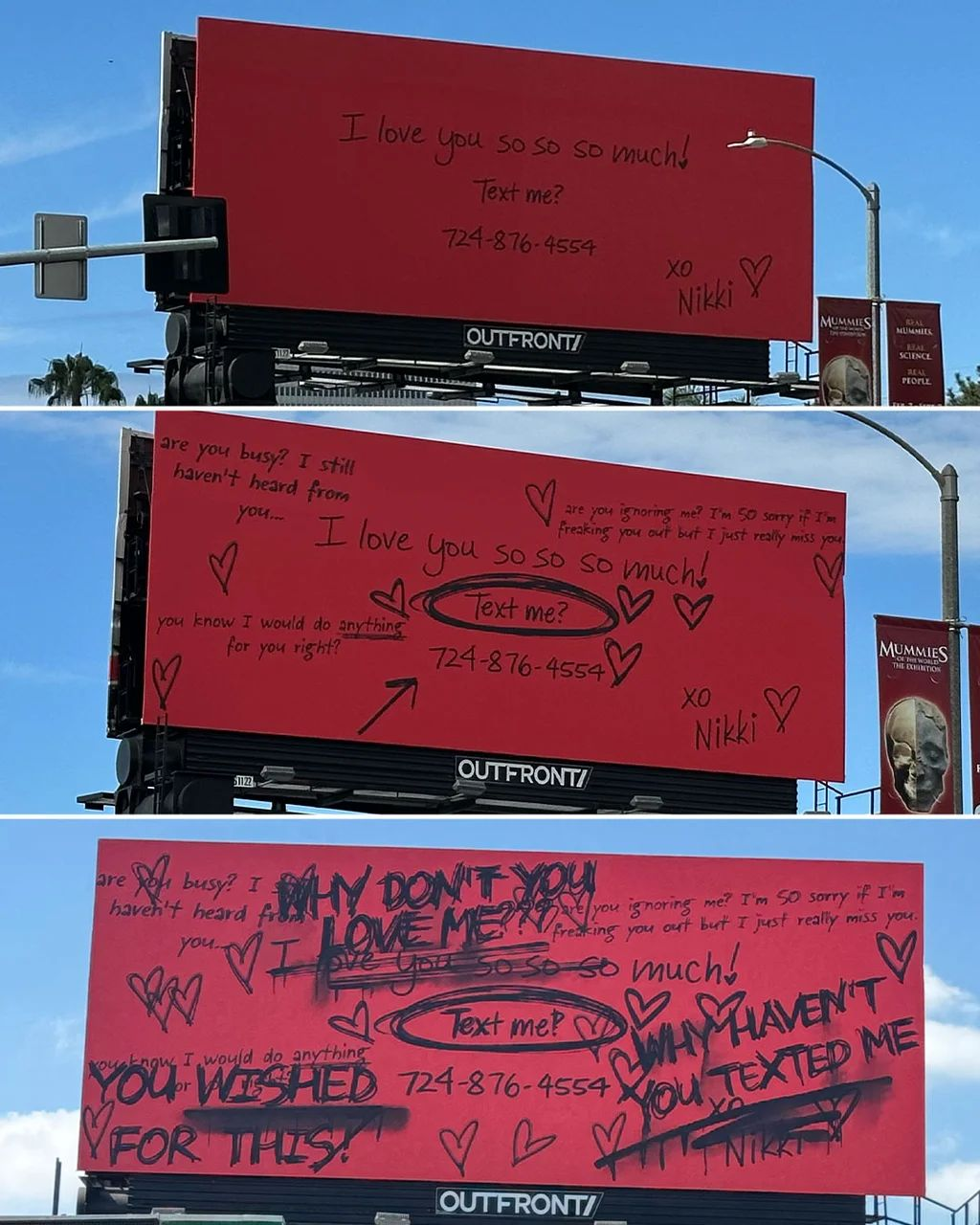
Most ads scream at people from the sidelines. These billboards dragged people onto the field. A tiny horror film called Obsession didn’t go viral because the trailer was scary. It went viral because the marketing behaved like the movie: a love story curdling into obsession, right above a busy street. This is how you turn ads into stories people feel, poke, and join.
From Cute Billboard To Creepy Breakup
The first billboard is just red with a handwritten note: “I love you so so so much! Text me?” plus a phone number signed “Nikki.” A few days later, more handwriting appears: little hearts, “are you busy? I still haven’t heard from you…” and arrows begging you to text. Then it escalates. The third billboard is frantic and scribbled over: “WHY DON’T YOU LOVE ME?” and “YOU WISHED FOR THIS!” splashed in black, the number still begging for a reply. Drivers didn’t just see an ad. They watched a relationship unravel in public, and the phone number turned the whole thing into an invitation to step inside the story.
Why This Campaign Hooked Millions
- It starts as a mystery, not a movie promo, so curiosity does the heavy lifting.
- The evolving billboards create a serial drama you have to keep checking on.
- The phone number turns passive viewers into active participants in the narrative.
- The tone shift from sweet to unhinged mirrors the film’s theme, so the reveal feels satisfying, not random.
- The whole thing is native to real life: it looks like messy human drama, not polished studio marketing.
Other Ways To Make People Join The Story
Spotify turns listeners into the story by emailing "Your Year Wrapped" recaps that people can’t resist screenshotting and sharing.
Duolingo makes users part of the brand lore by sending streak-obsessed push notifications that feel like the owl is personally invested in them showing up.
Liquid Death pulls customers into its horror-comedy universe with tongue‑in‑cheek death‑metal branding that makes every can feel like merch from a cult you just joined.
Creative Variations
Analyzed by Swipebot
Loading analysis...