What I Learned Losing $15M in Real Estate
Published on

1/11
3.2K
575
beardybrandon Tough post to write. My investors are aware, but since everyone else isn’t, and since my goal is to...
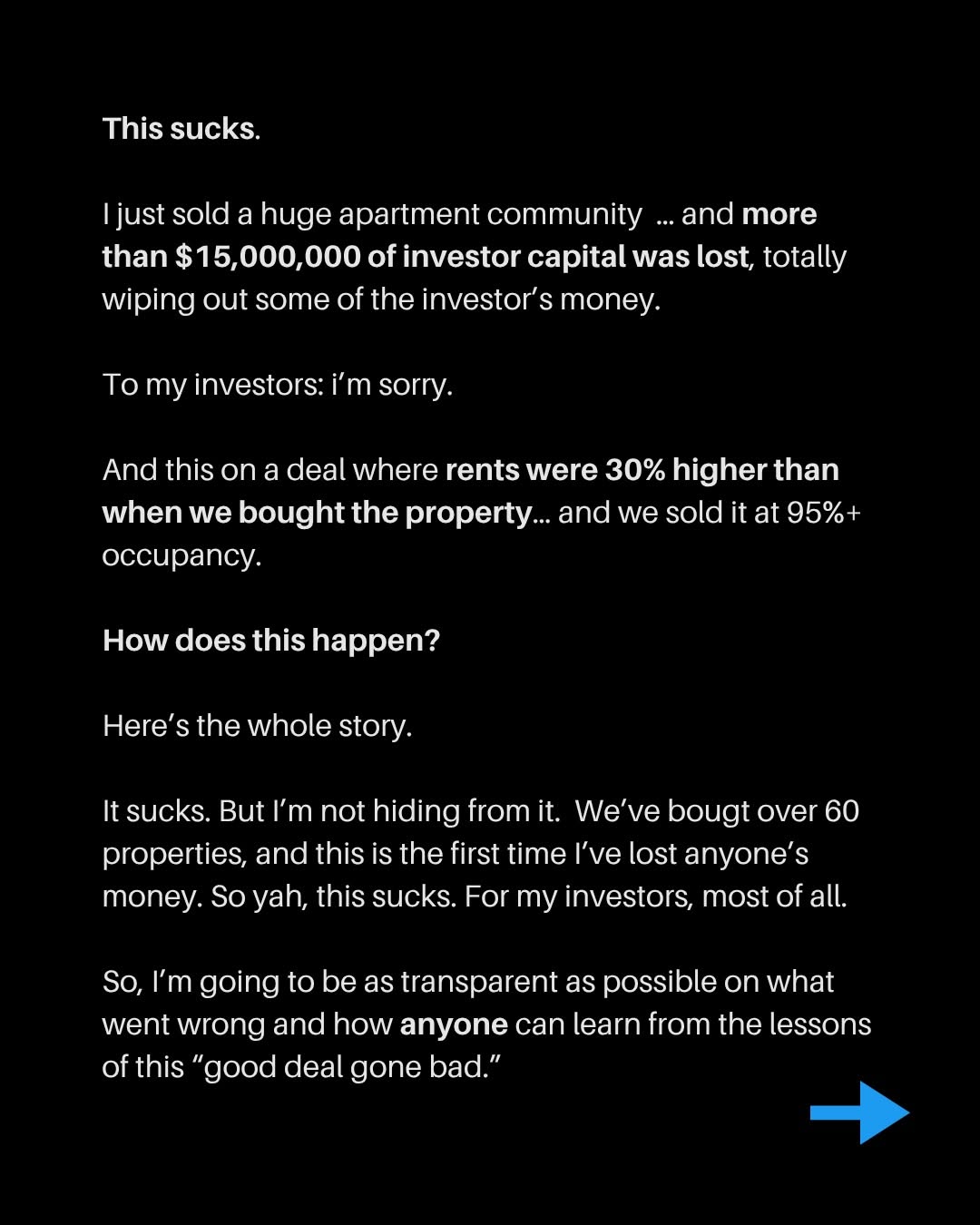
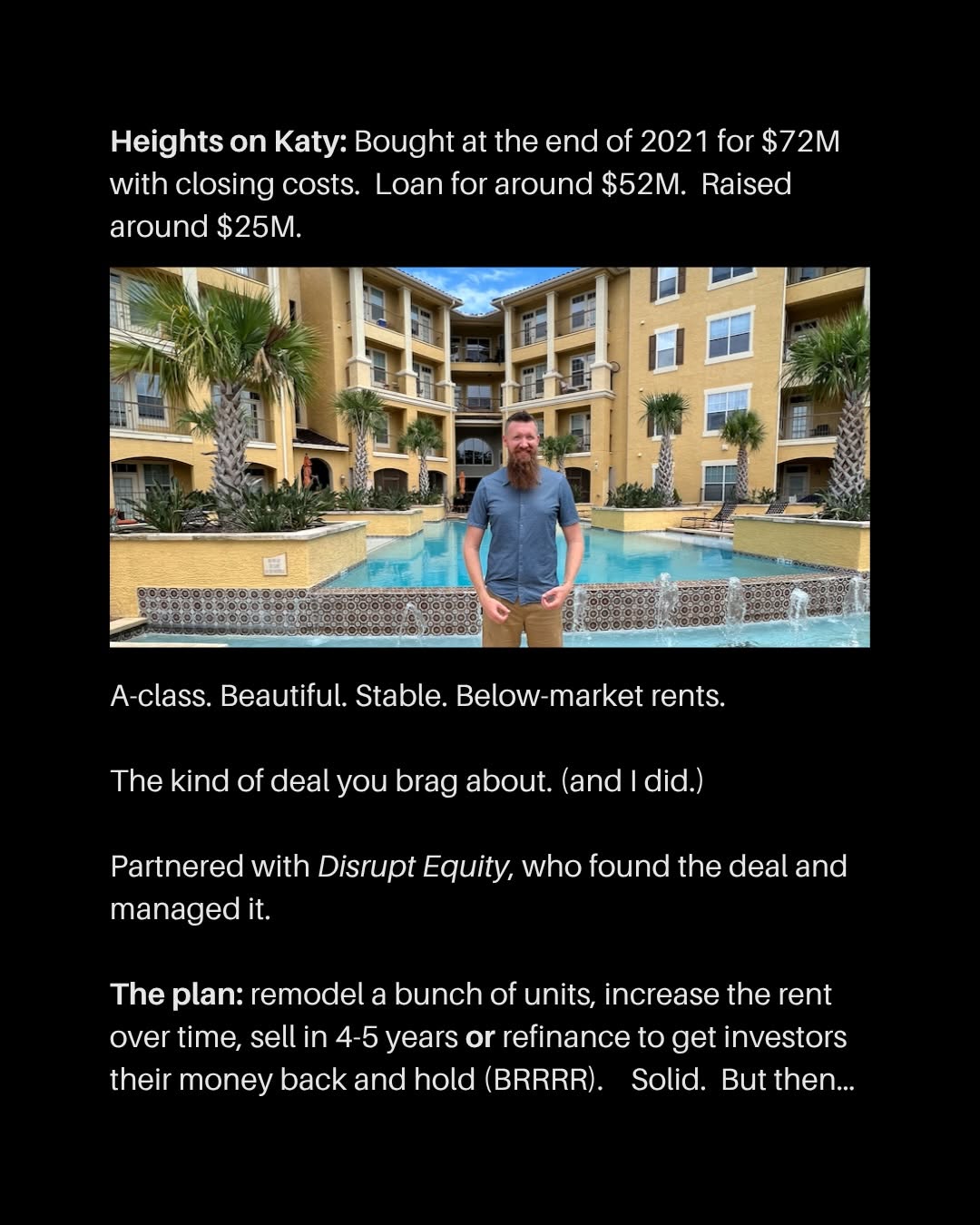
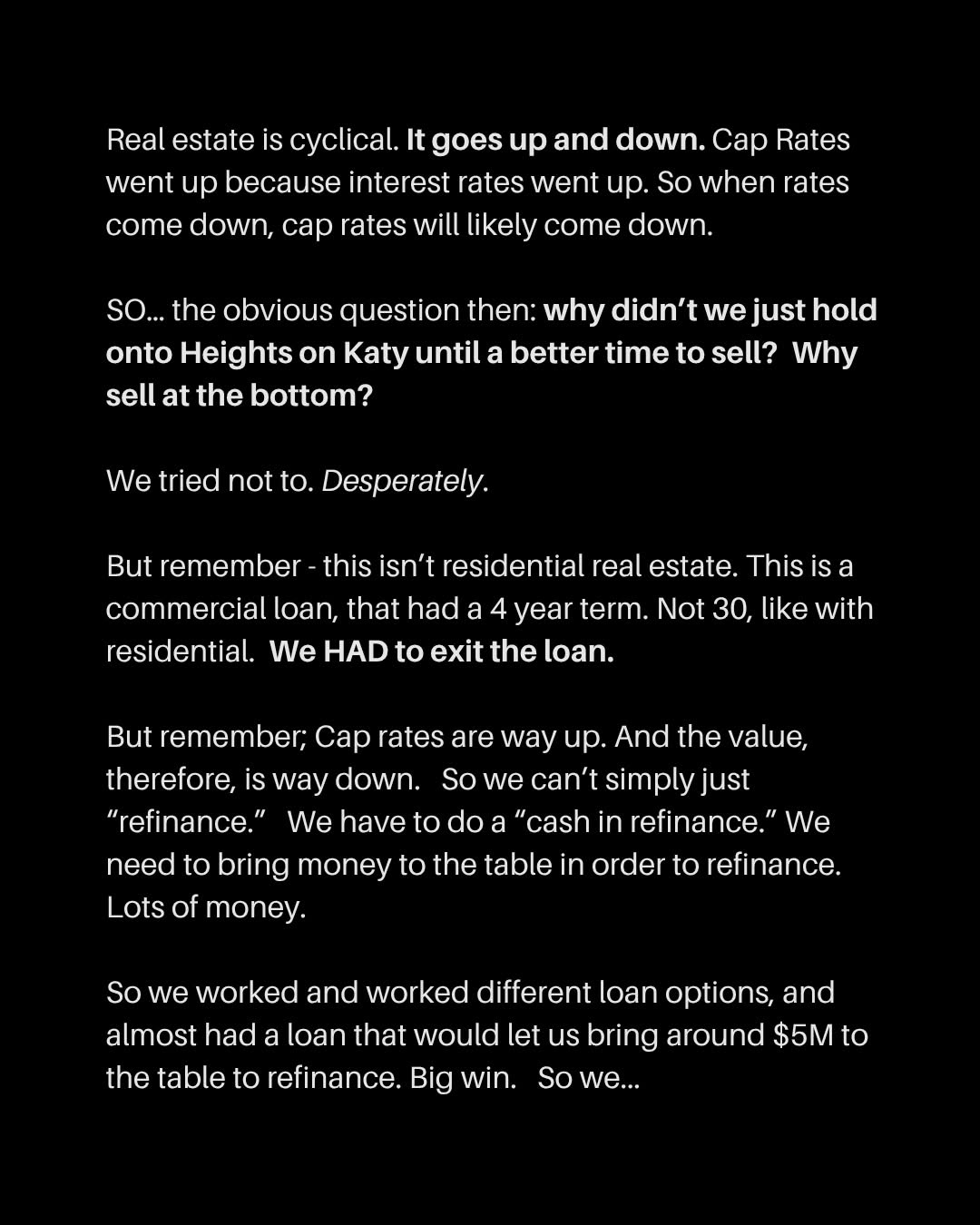
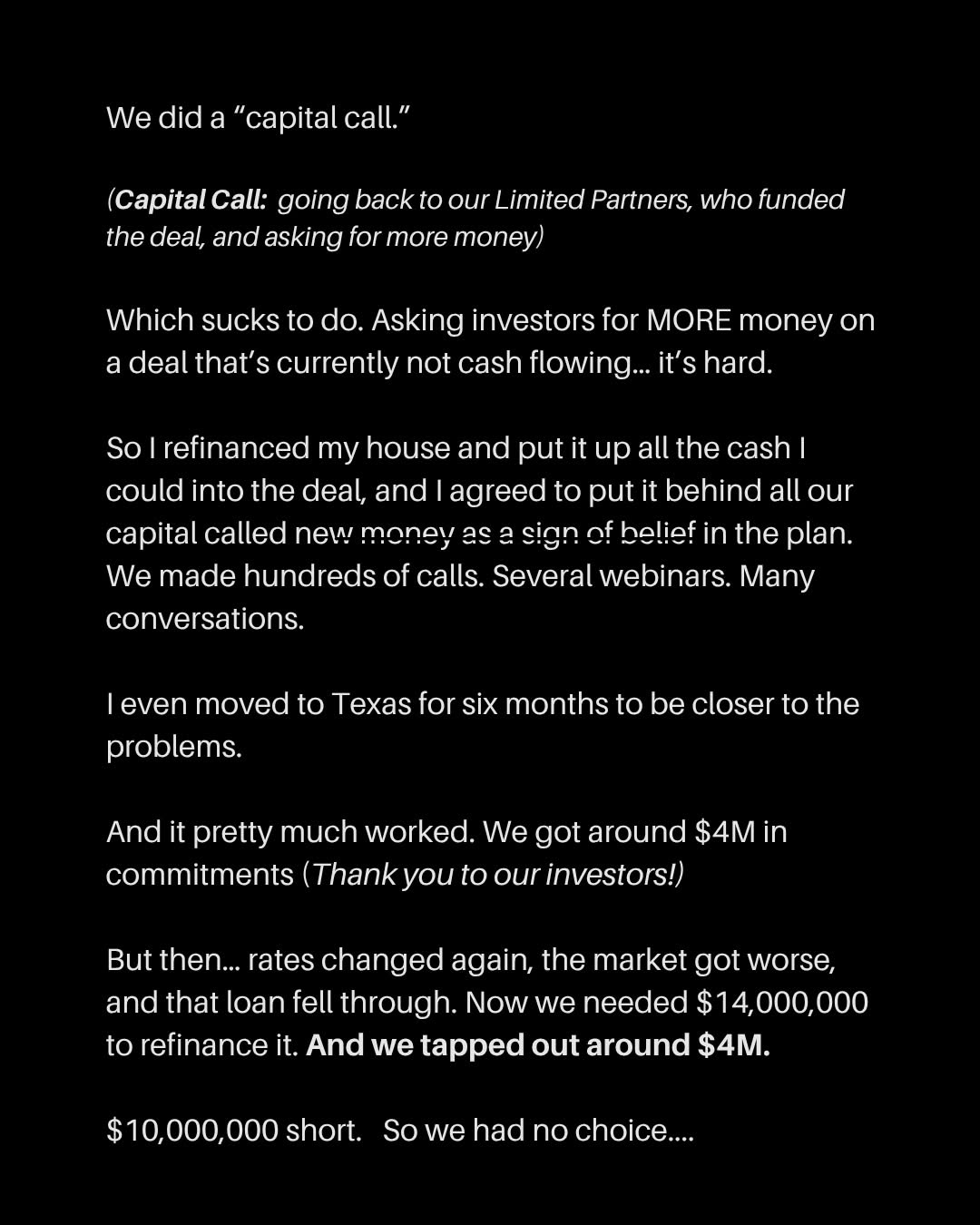
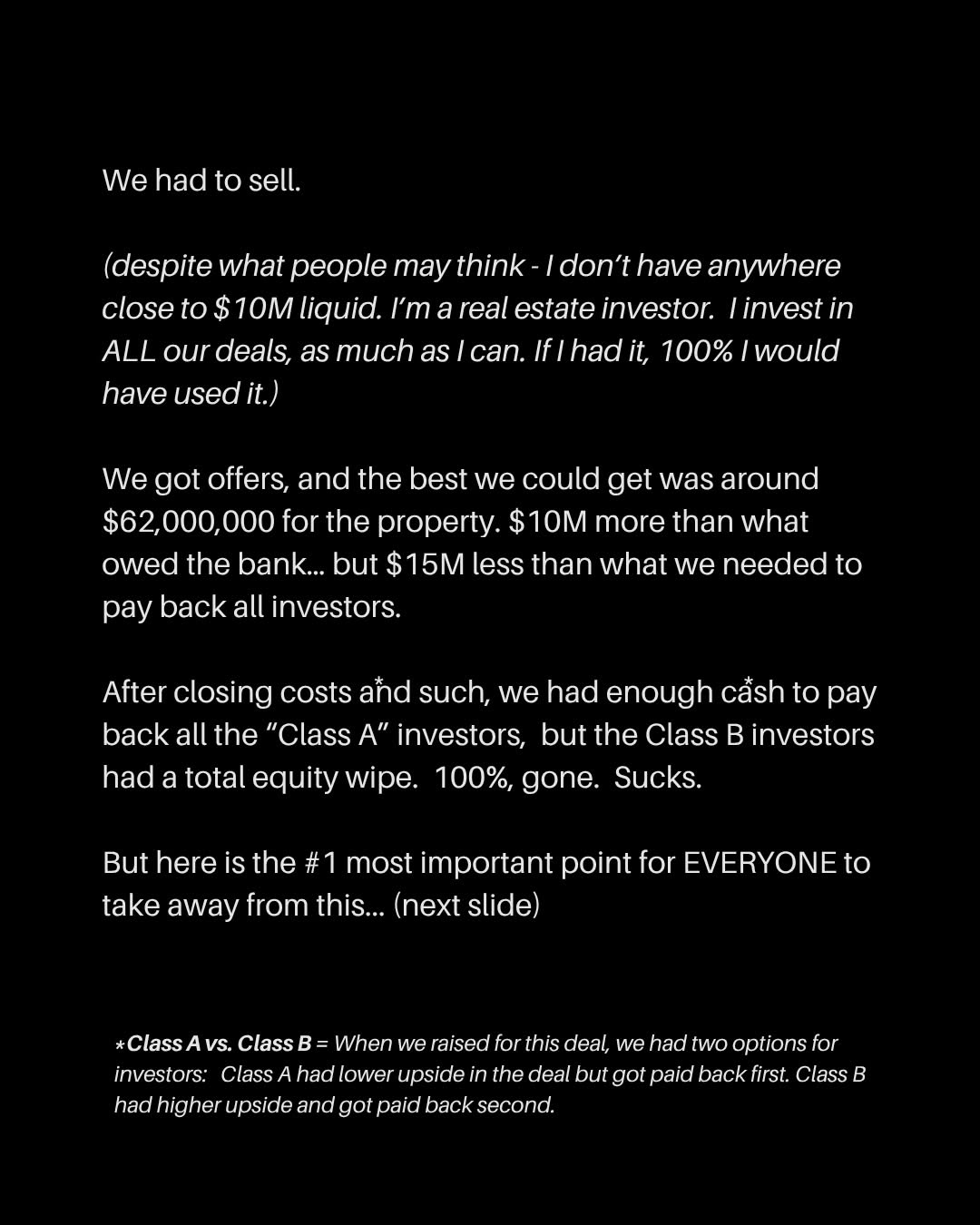
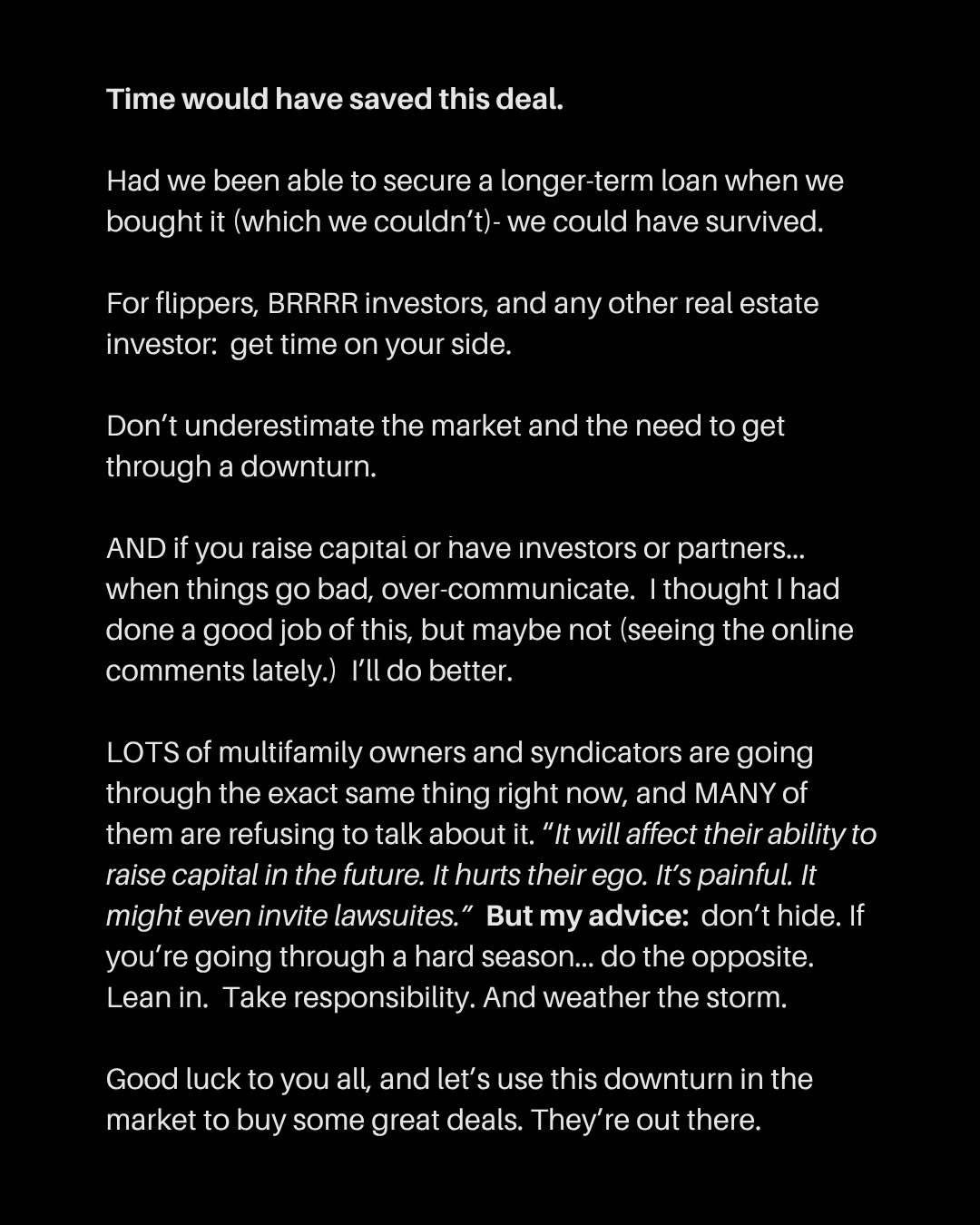
Losing $15M on a deal where rents are up 30% and occupancy is 95% feels impossible… which is exactly why this Instagram breakdown hits so hard. These slides are a masterclass in how a picture-perfect, A-class apartment with a pool and palm trees can still torch investor capital. Let’s dissect what’s actually happening behind those glossy photos so your next “slam dunk” deal doesn’t become a very expensive Instagram carousel.
How to use this $15M mistake in your own deals
When you pitch your next deal, steal the structure of this post but flip the outcome. Show the glossy photos of the property, then immediately walk through worst-case scenarios: rate hikes, bad exits, busted refis. Spell out how long your debt is fixed, what happens if you can’t sell, and who gets hurt first. The more you front-load the ugly possibilities, the more believable your upside sounds—and the less likely you’ll be writing your own “this sucks” post later.
Key lessons hiding in the slides
- Great-looking assets lie: the Heights on Katy looks like a postcard, but debt terms and timing mattered more than the palm trees.
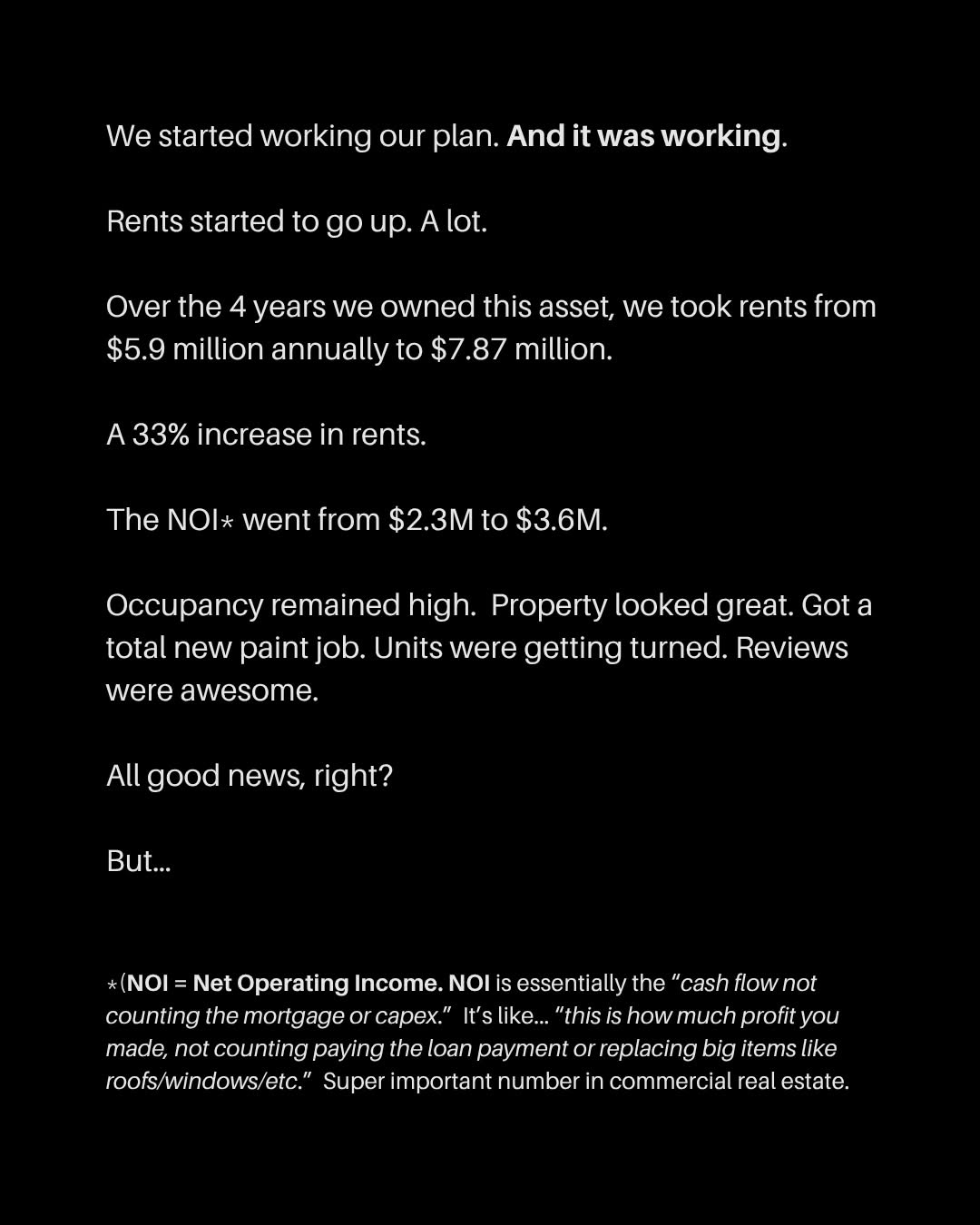
- Performance ≠ profit: rents were higher and occupancy strong, yet leverage and exit conditions still erased $15M of investor money.
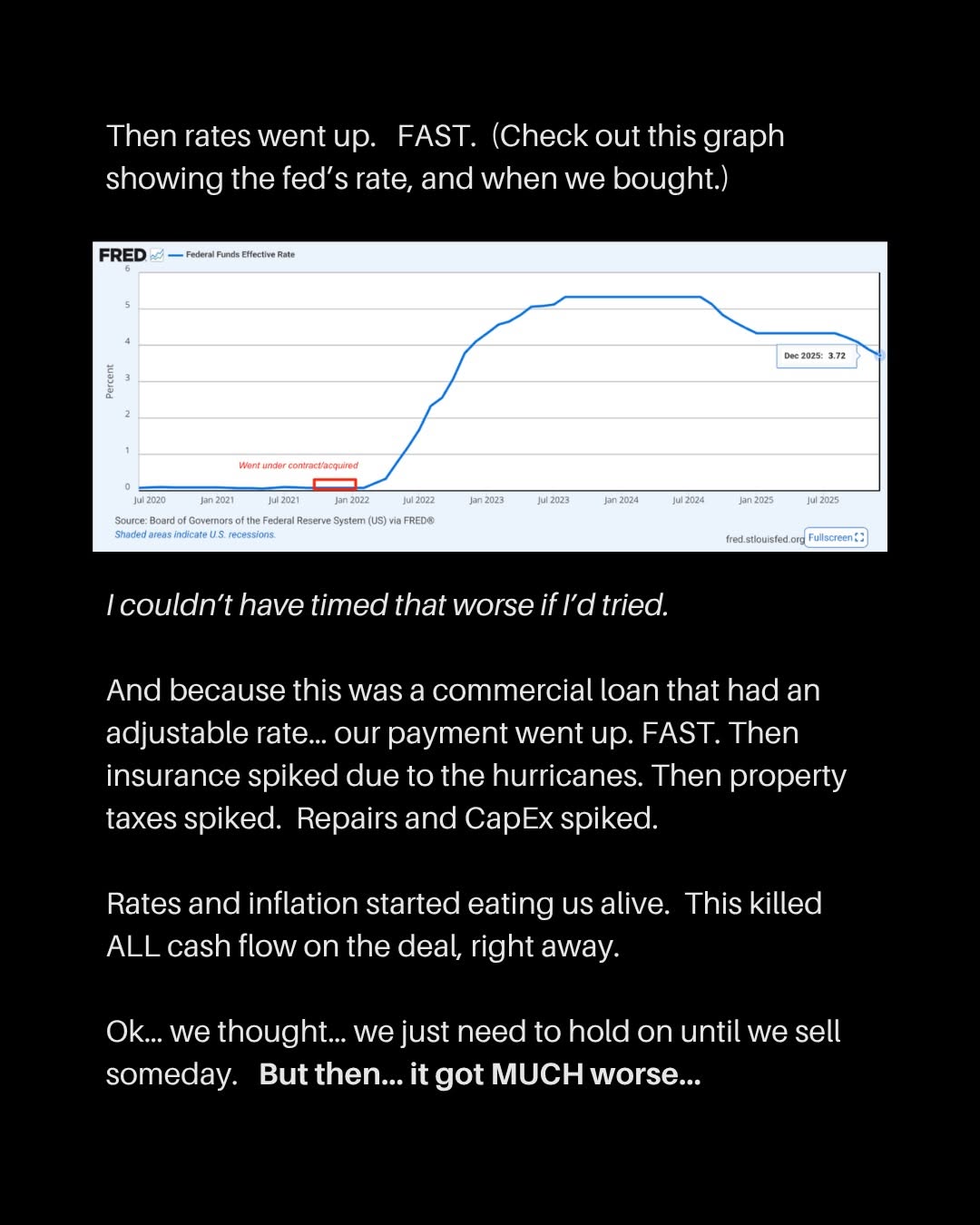
- Short-term debt is a silent killer: plans to remodel, raise rents, and refi only work if the capital markets cooperate.
- Owning the loss builds trust: opening the post with “This sucks” and a clear apology is brutal, honest, and credibility-building.
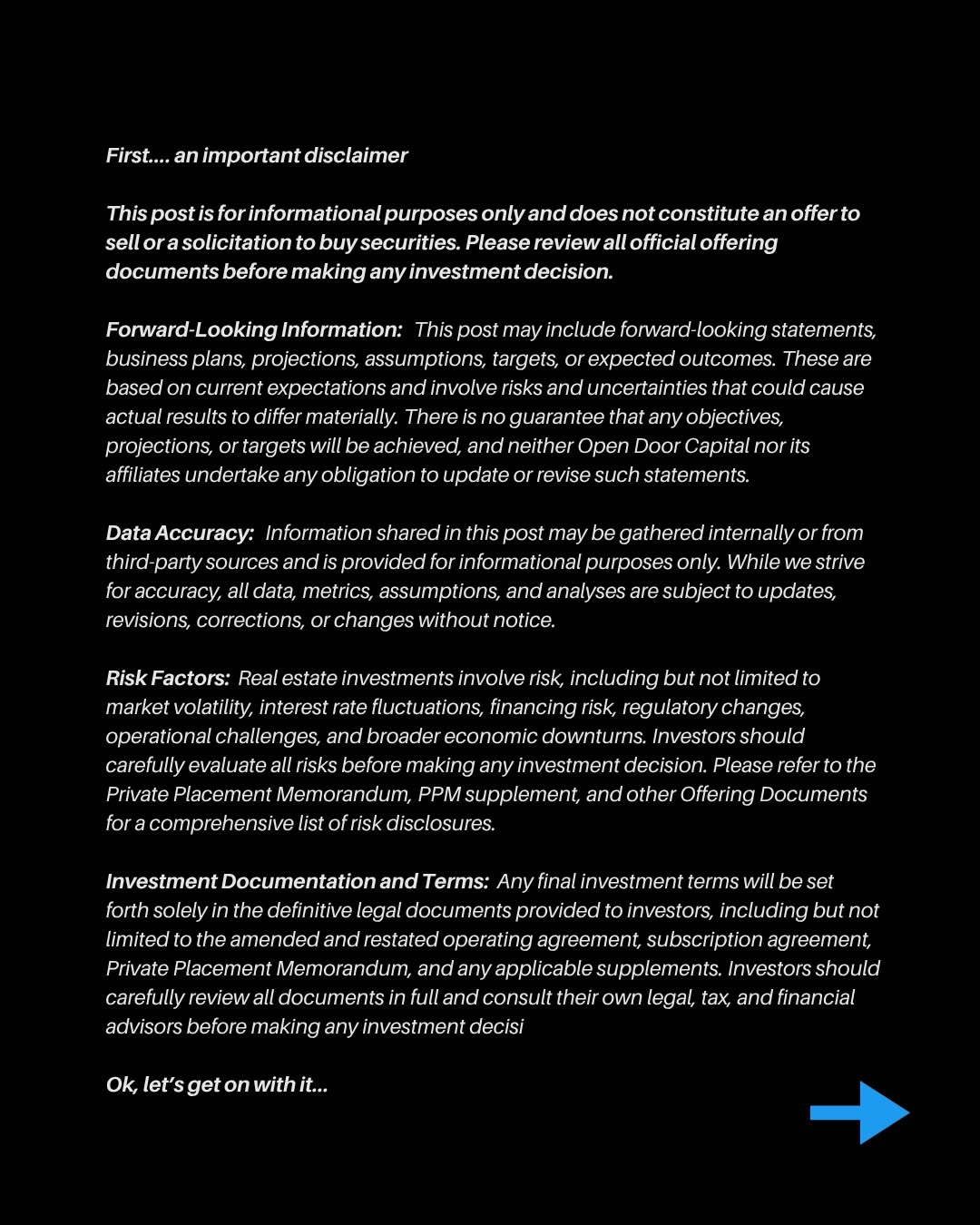
- Paperwork protects everyone: the full-screen disclaimer screams, “Real estate has real risk—read the docs, not just the marketing deck.”
Real-world transparency plays

Open Door Capital publishes detailed Instagram carousels walking investors through both winning and losing multifamily deals, reinforcing that real estate returns are never guaranteed.
Disrupt Equity highlights specific property-level plans like remodel timelines and rent-increase assumptions so investors see exactly what has to go right for a deal to work.
Creative Variations
Analyzed by Swipebot
Loading analysis...