Why Entrepreneurs Keep Building Despite Misery
Published on

Sam Parr
@thesamparr·May 6
“Knowing what you know today, would you still build your business?”
Someone on my team asked me this question recently.
My first few years of running entrepreneurship, I was miserable. I wasn’t making much money and I was jealous of my friends who had a normal job.
I only paid myself $2,000 a month for the first couple of years at my first company, and I was depressed, pretty fat and scared.
We sold, in my opinion, based on a lot of luck, but I would still do it again.
At this point, starting companies has become almost spiritual to me, where it's kind of an interesting way just to bend the world to your reality, even if it's a small, small way. Company building is also an extension of my personality.
That's one of the reasons why I love entrepreneurship.
So yes, I would absolutely do it again.
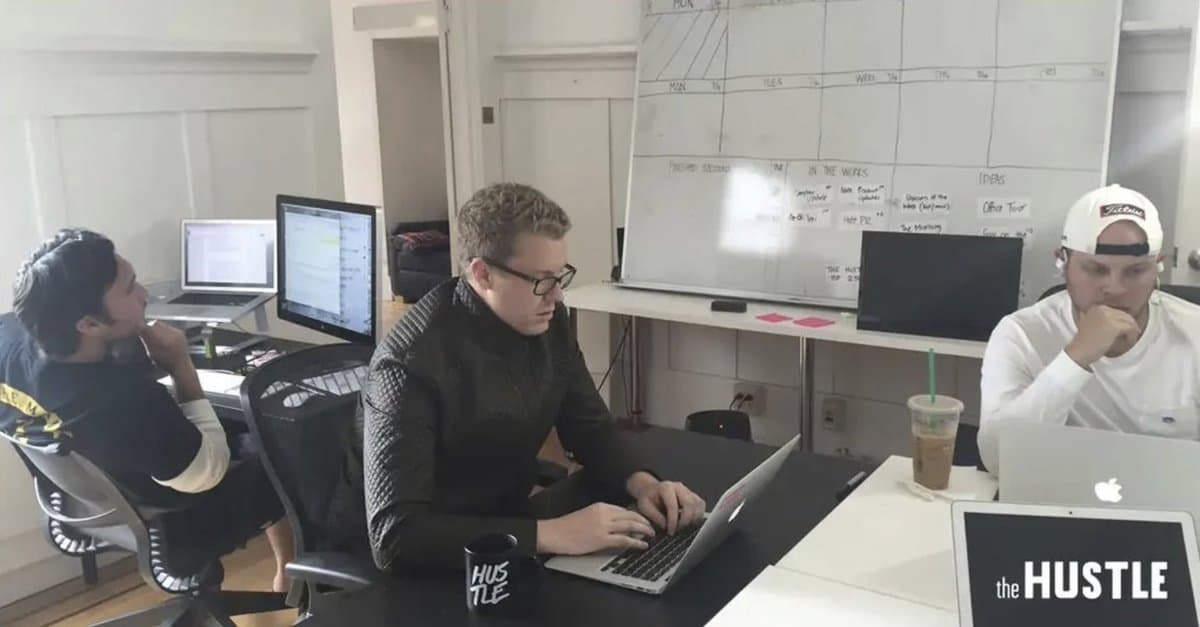
Zoom in on that photo: three tired-looking people hunched over laptops, a half-erased whiteboard, empty chairs, and a to-go coffee fighting for desk space. That’s the real face of entrepreneurship Sam Parr is talking about. Not stages, not exits, just fluorescent lighting and a cheap table that doubles as a war room. The wild part? Even with the misery baked in, founders keep coming back for another round.
What You Don’t See In The Photo
No one in that room is making big money. The calendar on the whiteboard is mostly blank. They’re probably underpaying themselves, second-guessing everything, and wondering if their friends with normal jobs figured it out better. But under the boredom and anxiety is the quiet thrill: this tiny room might bend reality, even a little, if they stick with it.
Why Entrepreneurs Keep Showing Up Anyway
- They trade comfort for control: that drab room is theirs, not HR’s.
- The work becomes identity: the company stops being a project and starts feeling like a personality extension.
- Even a small win rewires them: one lucky break is enough to justify years of grind.
- It feels spiritual: turning ideas on a whiteboard into something real is its own weird religion.
Real-World Echoes Of This Grind
The Hustle grew from rooms like this into a media company acquired by HubSpot, proving that boring-looking grind sessions can compound into a meaningful exit.
Basecamp famously started with a tiny, scrappy remote team and minimal salaries before turning their project management tool into a profitable, independent business.
Analyzed by Swipebot
Loading analysis...
.png?width=3840&quality=80)