Most Elite Athletes Specialize in Mid-Teens
Published on


1/5
8.0K
256
paulgamblephd If early specialisation worked, a lot of elite athletes would do it. Instead, this research with...
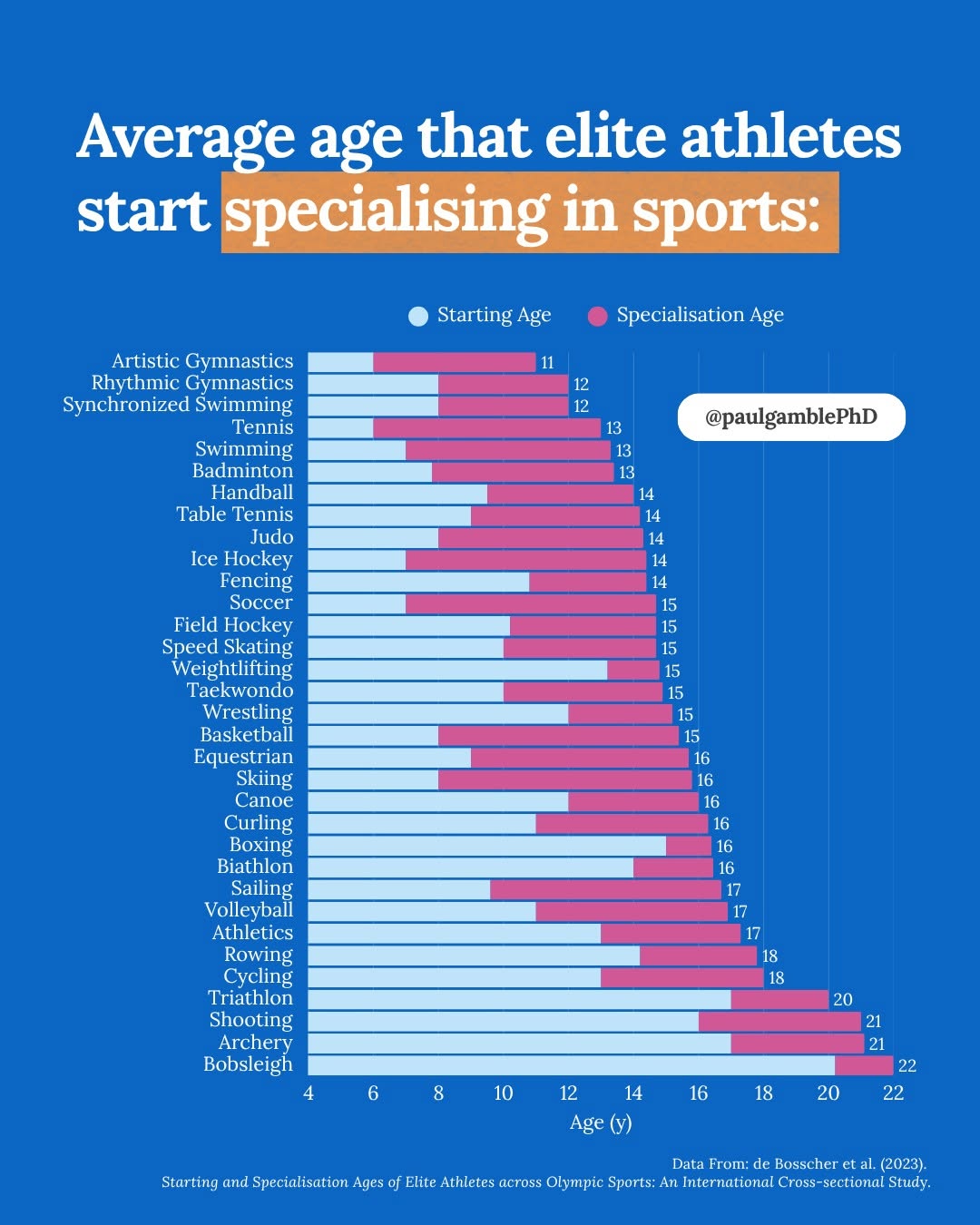
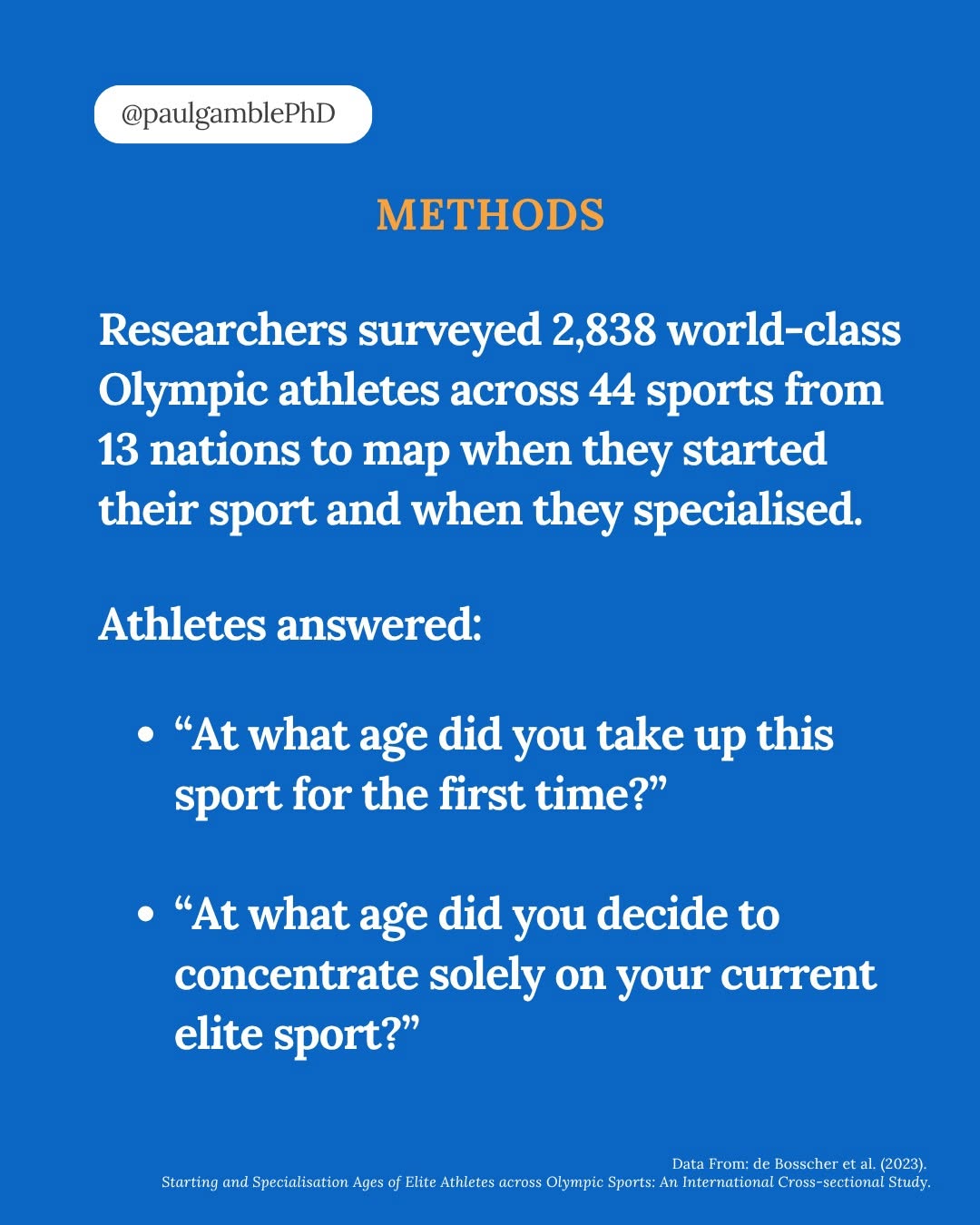
Parents think the path to the Olympics starts at age four with private coaching, year‑round leagues, and no off‑season. This chart blows that story up. When researchers actually asked 2,838 world‑class Olympians when they started and when they specialised, the answer was clear: most didn’t lock into one sport until the mid‑teens. The real “elite” move isn’t rushing; it’s sampling widely, then specialising later.
The psychology behind mid‑teen specialisation
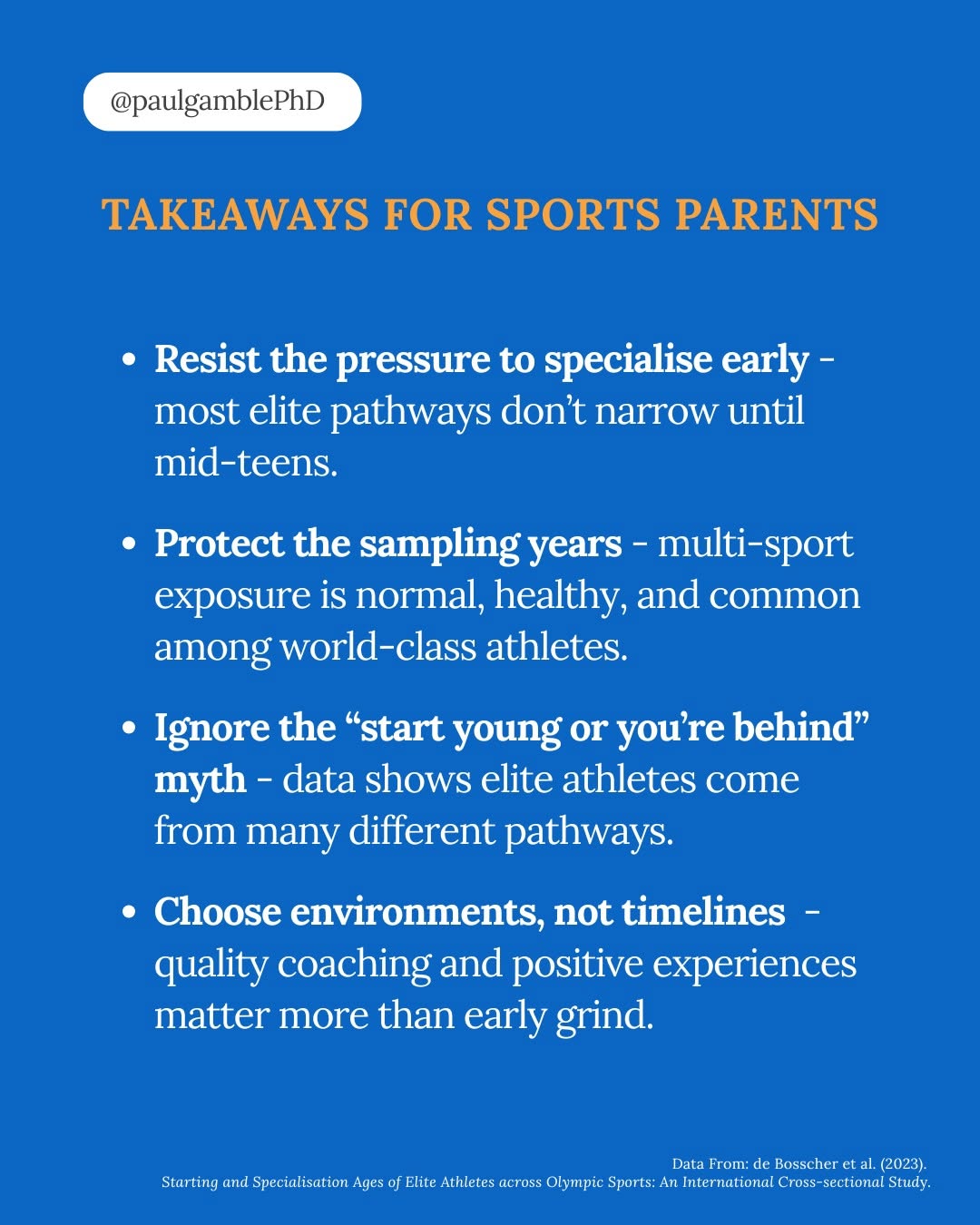
These visuals flip the fear‑driven narrative of youth sports. Instead of “hurry or fall behind,” the data says “experiment, then focus.” A long sampling phase builds general athleticism, keeps kids from burning out, and lets late bloomers catch up. By the mid‑teens, athletes know what they enjoy, where they’re built to excel, and are mentally ready to handle real training volume. That combination—not early grind—is what shows up over and over in Olympic careers.
What the images actually show
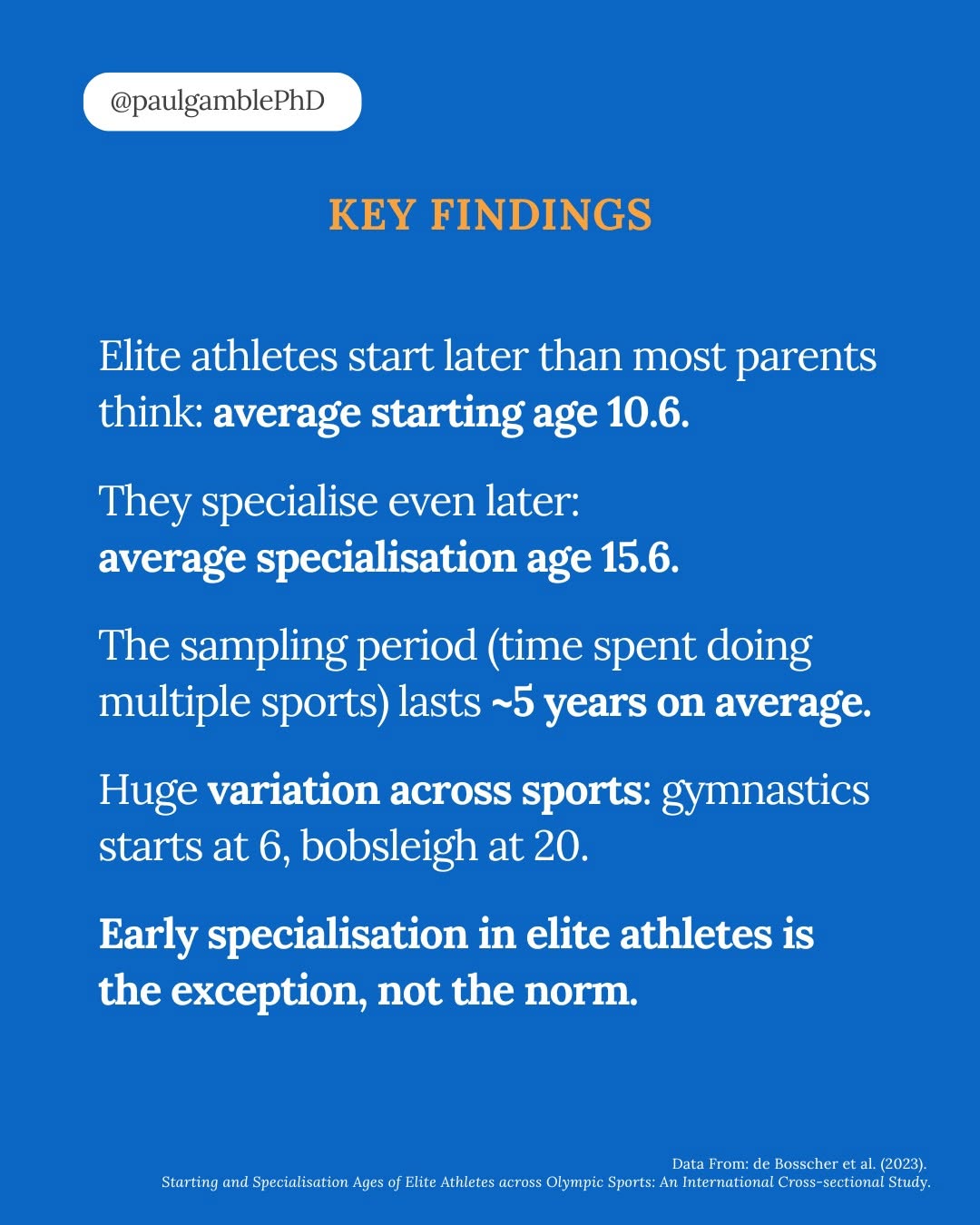
- Average start age across sports is about 10.6, not kindergarten.
- Average specialisation age is 15.6, right in the mid‑teens sweet spot.
- Athletes spend roughly five years sampling multiple sports before committing.
- Only a few sports (like artistic and rhythmic gymnastics) lean truly early; they’re outliers, not the template.
- Late‑entry sports exist too: bobsleigh specialists often begin around 20–22.
How different sports play out

Artistic gymnastics shows one of the earliest pathways, with athletes typically starting around age 6 and specialising near age 11.
Soccer athletes generally begin in childhood but do not specialise until roughly age 15 after years of playing other sports.
Bobsleigh athletes often come in as strong late‑transfer athletes, starting near age 20 and specialising around 22.
Creative Variations
Analyzed by Swipebot
Loading analysis...