10 Campaigns Marketers Never Bookmarked
Published on
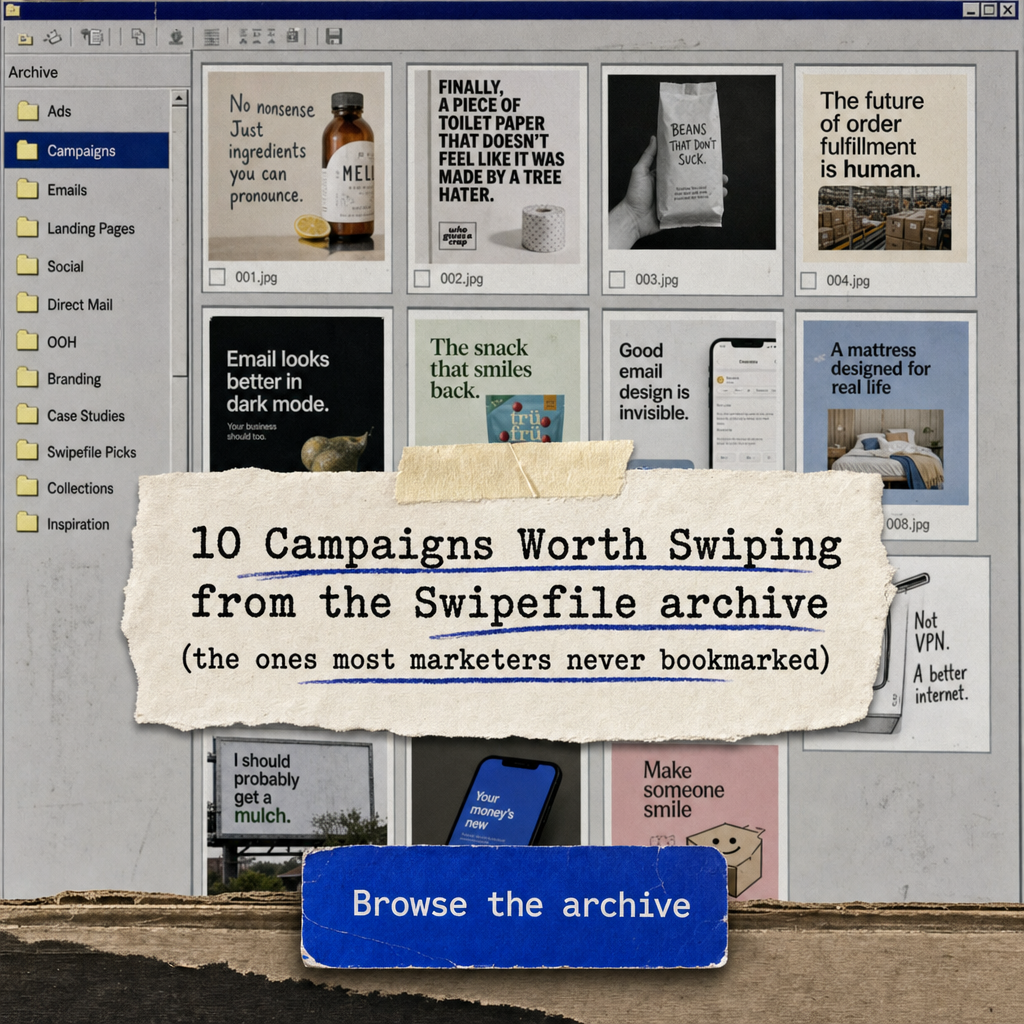
Most marketers bookmark the same shiny, award-winning campaigns. Meanwhile, the quiet killers sit unloved in dusty folders—still pulling sales, still teaching masterclasses in messaging. This post cracks open that forgotten hard drive and shows you the kinds of scrappy, clear, brutally simple ads that actually move products.
Inside the forgotten campaign folder
The image looks like an old-school desktop with a “Campaigns” folder open. Every thumbnail is a tiny lesson: honey with a line about pronunciation, toilet paper with a dead-simple benefit, beans that “don’t suck,” human-focused fulfillment, email in dark mode, snacks that smile back, invisible design, mattresses for real life, and even a VPN that sells peace of mind instead of tech specs. It feels like a private archive you’d only see on a veteran copywriter’s laptop.
Your next move
Don’t just scroll these and nod. Steal the structure. Screenshot lines you like. Build your own ugly little folder of “campaigns most marketers never bookmarked” and raid it every time you write a headline or brief. Then go browse the full archive and keep adding ammo.
What these un-bookmarked campaigns quietly nail
- Plain-language headlines (“No nonsense. Just ingredients you can pronounce.”) beat clever wordplay.
- Every ad leads with one sharp, specific benefit instead of a list of features.
- Visuals are boring-on-purpose so the copy does the heavy lifting and gets remembered.
- Each piece looks like a screenshot from real life, not a drippy brand-film fantasy.
- The grid layout screams “archive,” reminding you that collecting ads is a creative superpower.
Campaigns hiding in plain sight
Meli uses a no-BS bottle shot plus the line “No nonsense, just ingredients you can pronounce” to turn ingredient lists into a selling point.
An unnamed toilet paper brand grabs attention with “Finally, a piece of toilet paper that doesn’t feel like it was made by a tree hater,” turning comfort into a vivid villain-vs-hero story.
A VPN brand shrugs off geek-speak and simply promises “Not VPN, a better internet,” reframing the entire product as an upgrade to daily life.
Analyzed by Swipebot
Loading analysis...