8 moats for a business in the AI world
Published on
Anyone can build stuff with AI, so it's no longer that much of a "moat" like it used to be:
People are outputting WAYYYY more projects and sites and software....but overall it seems much harder to make money because a competitor can literally say to AI "Copy this product and make me a version" and 4 minutes later it's deployed.
This means your moat has to be something else, such as these:
People pay for human labor. They technically pay for machine labor too, but only to companies that organize humans to create the machines.
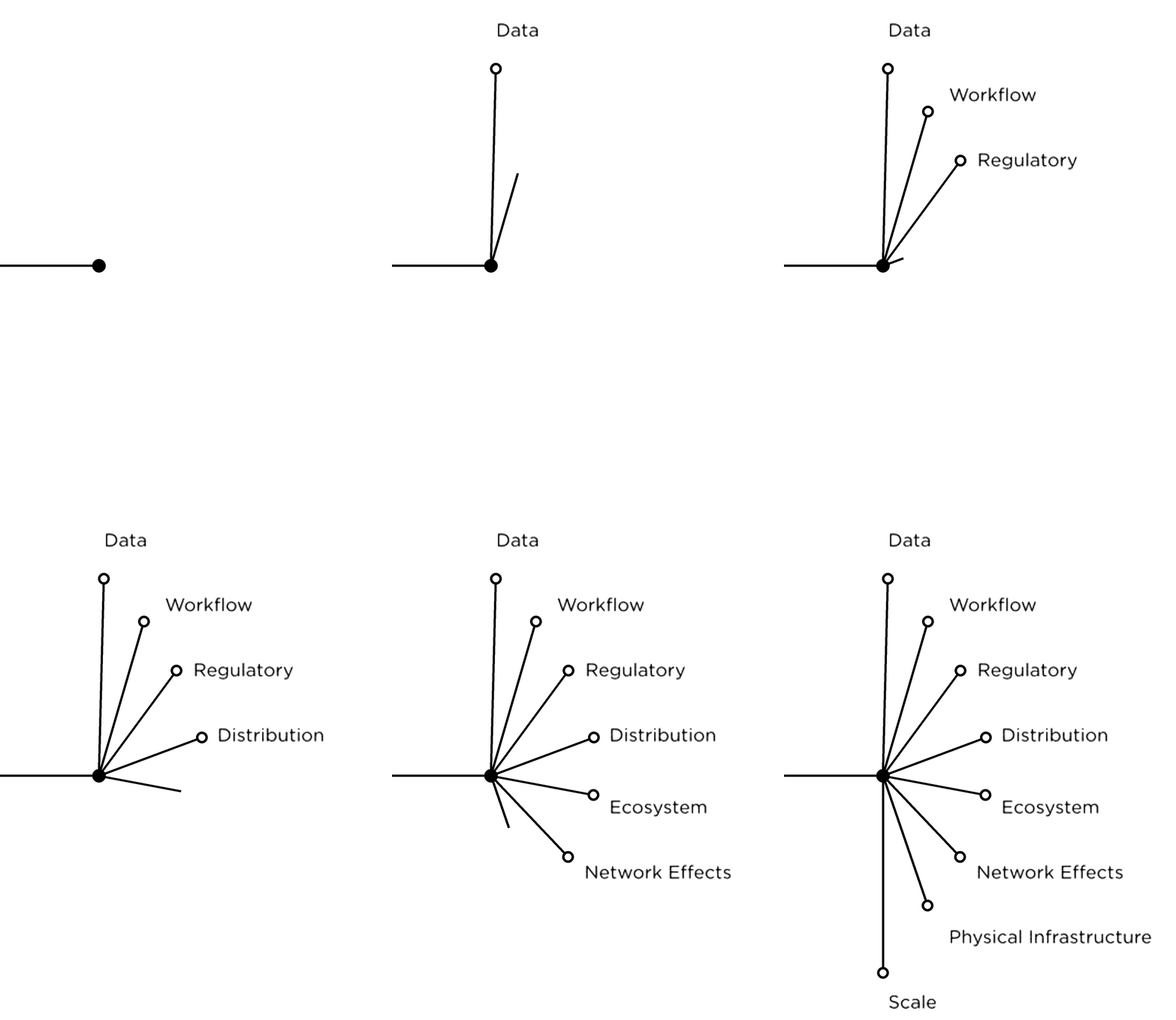
Original graph from: swipefile.com/8-moats-ai-startups-need-to-build
That tiny dot and line in the image is the perfect metaphor for your AI strategy: most businesses stop at a single clever feature (the dot) and never build the long, defensible moat (the line). In an AI world where models get cheaper and faster every quarter, the only way to bulletproof your business is to stretch that line into a moat competitors can’t casually copy. Use this visual as your checklist: if your AI advantage looks like a dot, keep going until it becomes a line.
How to Use the Visual
Print the dot‑and‑line image and stick it above your desk. Every time you ship an AI feature, ask: is this just a dot anyone with an API key can copy, or are we extending the line with data, distribution, workflow, and real switching costs? If a competitor could clone your "AI magic" in a weekend, you don’t have a moat yet—you just have a demo.
8 AI Moats to Turn a Dot Into a Line
- Proprietary data: you’re training on data no one else legally or practically can access.
- Distribution: you already own the audience and channels where AI outputs are delivered.
- Workflow lock‑in: your AI is welded into daily habits and internal processes.
- Switching costs: leaving you means painful exports, re-training, or downtime.
- Brand trust: buyers believe your AI is safer, more accurate, or more compliant.
- Human layer: experts review, correct, and improve the model in a tight loop.
- Infrastructure advantage: faster, cheaper, or more reliable compute than rivals.
- Ecosystem: partners, plugins, and community that make your product the default hub.
Real‑World Moats in the AI Era
Spotify turns listening history into a proprietary data moat that powers hyper-personalized playlists no new music app can instantly copy.
Notion bakes AI directly into documents and wikis, creating workflow lock-in because teams don’t just use AI, they run their entire knowledge base through it.
Figma builds an ecosystem moat by letting plugins, design systems, and dev tools hook into its interface so AI features live inside a community, not a solo app.
Analyzed by Swipebot
Loading analysis...