Teen Emoji Trend Chart
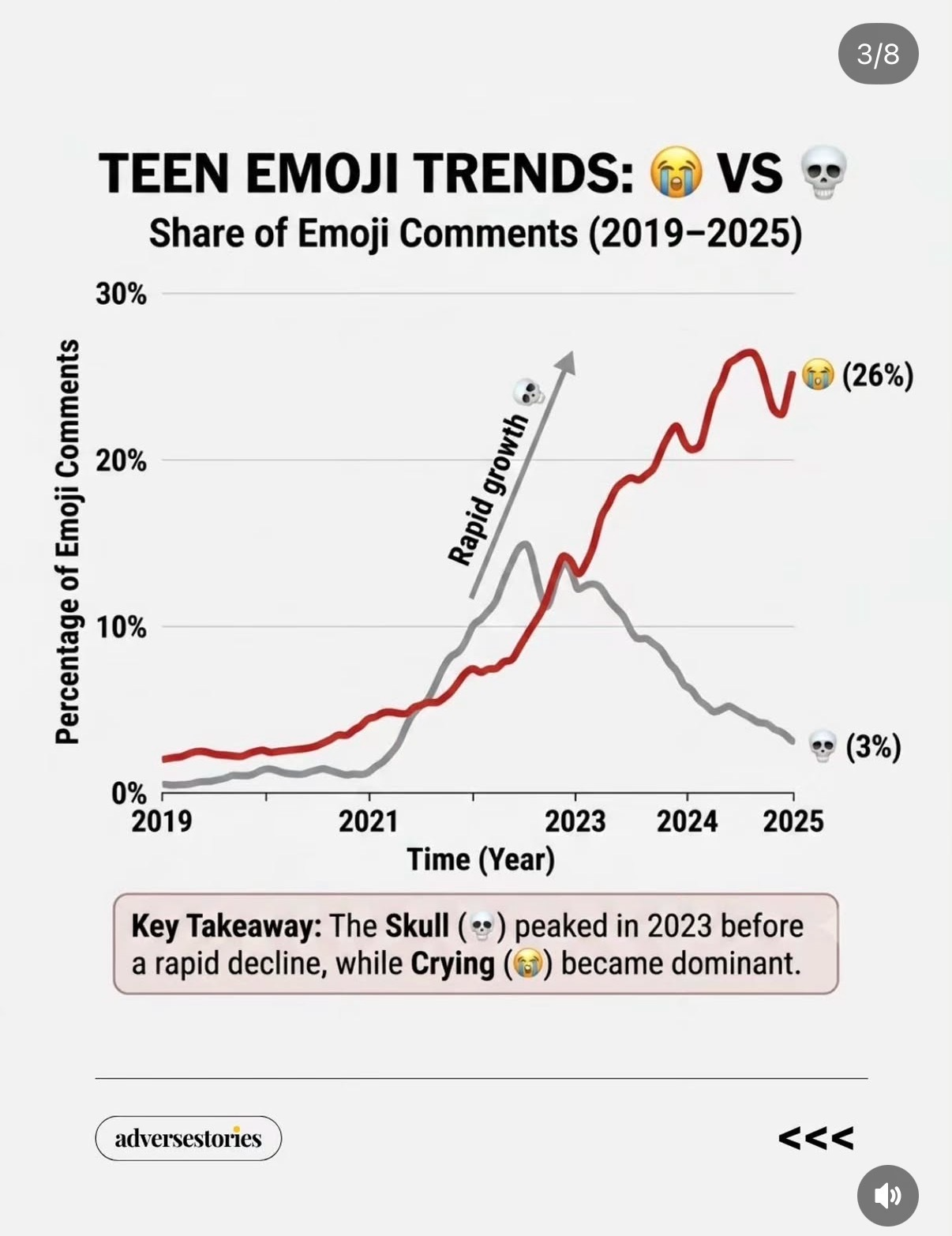
Teens just swapped “I’m dead 💀” for full-on meltdown 😭 and this chart shows the exact moment it happened. From 2019 to 2025, the skull spikes, crashes, and gets totally left on read while the crying face quietly takes over. If you market to teens and still write like it’s 2022, you’re already outdated. Let’s decode what this emoji flip is really saying about teen language, tone, and culture.
Reading the Emoji Chart Like a Marketer
The graph shows skull comments exploding to nearly 20% by 2023, then falling off a cliff to about 3%. At the same time, the crying emoji climbs slow and steady, then rockets past skull and lands around 26% by 2025. The key takeaway on the image nails it: the skull peaked hard, then crashed, while crying became the dominant reaction. Translation: irony and “I’m dead” humor cooled off, and exaggerated emotional drama took the throne.
Why Teens Ditched the Skull
- The skull went mainstream, so it stopped feeling like an inside joke and started feeling like something parents would use.
- Crying 😭 lets teens signal drama, sarcasm, and real feelings all at once, so it works in more contexts.
- Trend fatigue hit the skull peak in 2023, and teens moved on fast to a fresher, more expressive reaction.
- For creators, comments full of 😭 feel like louder engagement than 💀, so the crying emoji got amplified in captions and replies.
How Brands Can Ride the 😭 Wave
Netflix leans into teen language by using strings of crying emojis in show promo captions to mirror how fans already comment.
Duolingo amplifies dramatic reaction culture by pairing its mascot with over-the-top crying emojis in TikTok replies.
Chipotle taps the shift from 💀 to 😭 by screenshotting customer replies full of crying emojis and turning them into social proof posts.
Creative Variations
Analyzed by Swipebot
Loading analysis...