Where AI Gets Its Info Chart
Published on
Where AI Gets Its Info 𝗕𝗲𝗰𝗼𝗺𝗲 𝗯𝗲𝘁𝘁𝗲𝗿 𝗮𝘁 𝗔𝗜 𝗶𝗻 𝗷𝘂𝘀𝘁 𝟭 𝗺𝗶𝗻𝘂𝘁𝗲 𝗮 𝗱𝗮𝘆. 𝗚𝗲𝘁 𝘁𝗵𝗲 𝗔𝗜 𝗻𝗲𝘄𝘀𝗹𝗲𝘁𝘁𝗲𝗿 𝘀𝗺𝗮𝗿𝘁 𝗹𝗲𝗮𝗱𝗲𝗿𝘀 𝗿𝗲𝗮𝗱. 𝗦𝗶𝗴𝗻 𝘂𝗽 𝗳𝗿𝗲𝗲… | AI For SEO | 23 comments
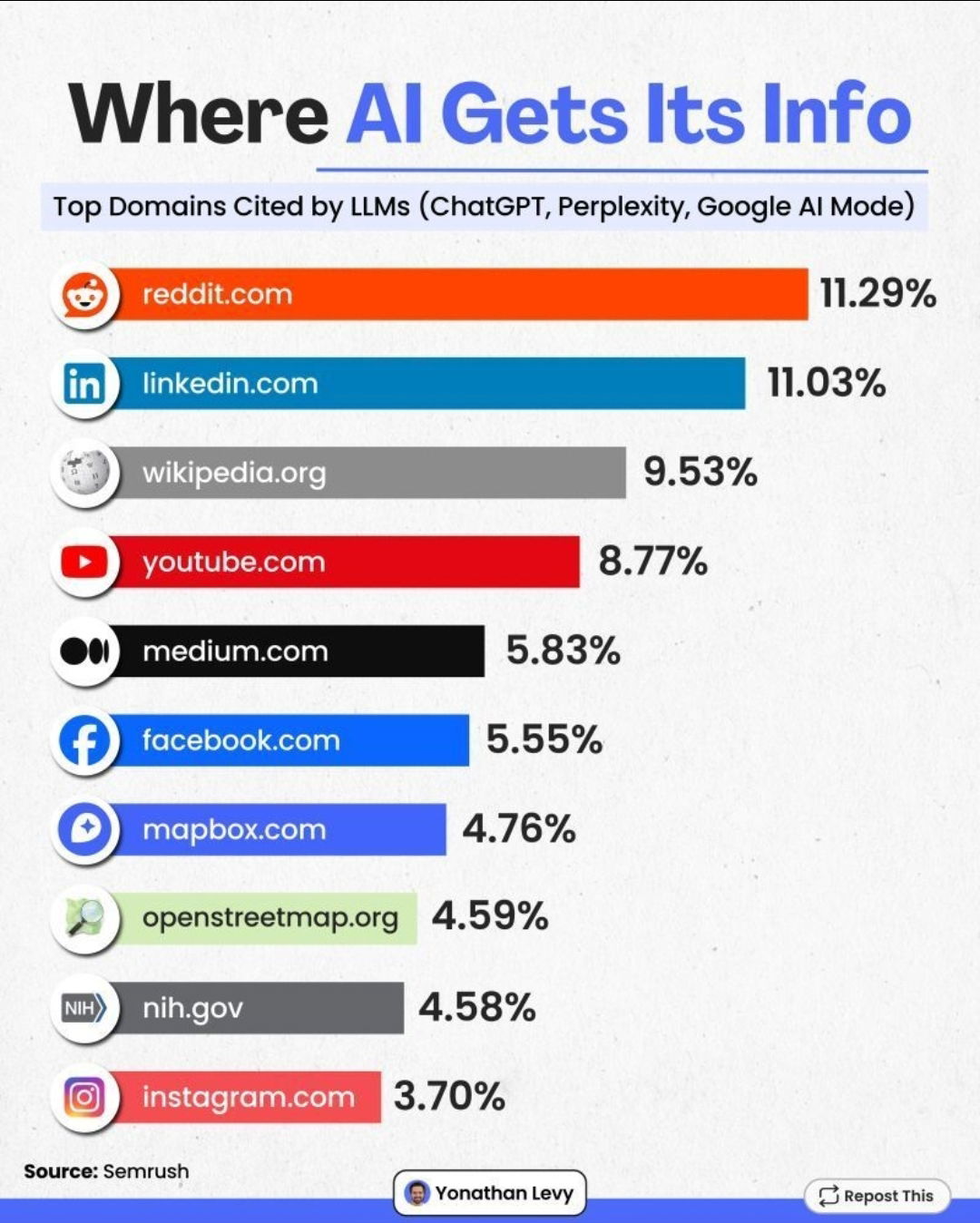
AI is already quoting you… or your competitors. Semrush data shows tools like ChatGPT, Perplexity, and Google AI Mode lean heavily on a tiny list of domains. If you publish in the right place and format, AI will happily mirror your content and cite you by name. Here’s how to use that chart to make AI your distribution channel instead of your copycat.
What the Chart Really Says
The Semrush graphic shows the top domains LLMs cite most: reddit.com (11.29%), linkedin.com (11.03%), wikipedia.org (9.53%), youtube.com (8.77%), medium.com (5.83%), facebook.com (5.55%), mapbox.com (4.76%), openstreetmap.org (4.59%), nih.gov (4.58%), and instagram.com (3.70%). Translation: AI doesn’t roam the whole internet equally. It keeps coming back to a few platforms packed with fresh, specific, human-written answers.
How To Make AI Cite Your Content Fast
- Publish original, answer-style posts on LinkedIn, Reddit, or Medium that directly solve niche questions in your space.
- Write in clear, factual language with concrete numbers, steps, and examples AI can easily quote or summarize.
- Use strong, descriptive titles that match real search prompts users might type into AI tools.
- Cross-post your best explanations to multiple high-citation platforms to multiply your odds of being referenced.
- Update and expand winning posts so AI models and AI-overview features keep finding your version as the freshest source.
Real-World Plays Using High-Citation Platforms
Semrush publishes deep LinkedIn breakdowns of AI and SEO data so their charts get lifted into AI answers and cited as the original source.
HubSpot turns blog frameworks into Medium articles that AI systems can easily quote when users ask for marketing playbooks.
NIH posts plain-language research summaries on nih.gov that LLMs reference whenever someone asks for medical explanations.
Creative Variations
Analyzed by Swipebot
Loading analysis...