1965 GMC Truck Affordable Pricing Ad
Published on
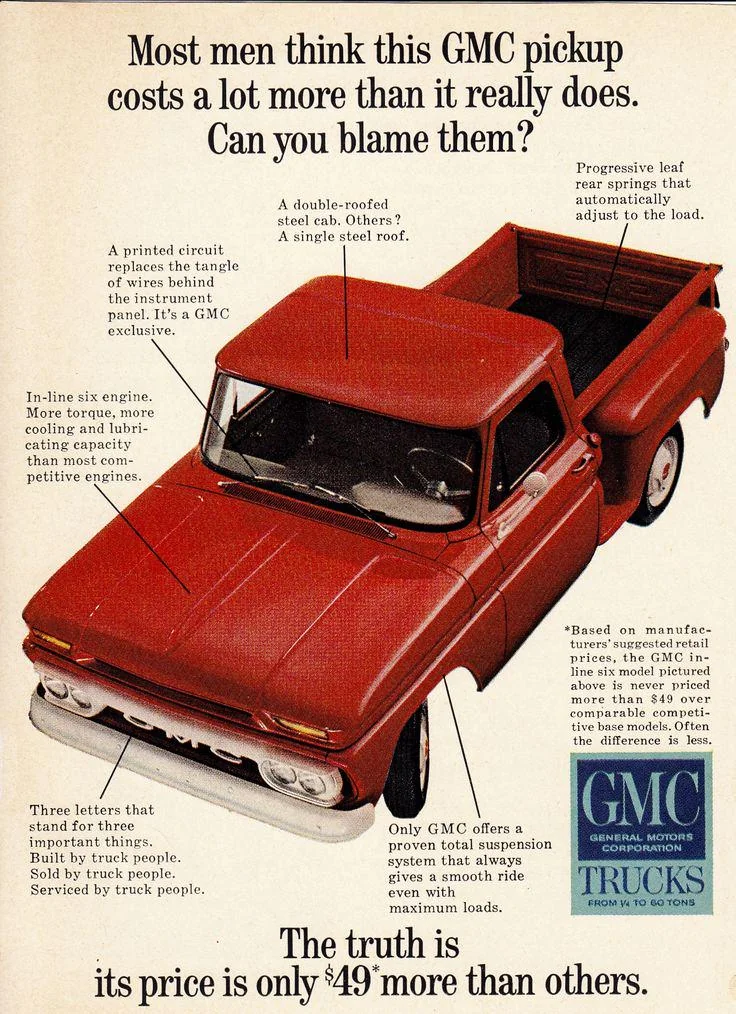
Want to make a premium product feel like a no‑brainer bargain? Steal a page from this old GMC pickup ad. They take a truck that *looks* expensive, zoom into tiny details, and calmly prove it’s only $49 more than “others.” The magic isn’t a discount, it’s how they stack specific value until the price feels almost suspiciously low.
How the Ad Makes Expensive Look Cheap
The headline sets the frame: “Most men think this GMC pickup costs a lot more than it really does. Can you blame them?” Boom—status first, price second. Then the image gets peppered with neat little arrows: double‑roofed steel cab, printed circuit, in‑line six engine, progressive leaf springs, smoother ride with maximum loads. Every line is: here’s a concrete, physical upgrade over “others.” Only at the bottom do they reveal the punchline: all that extra‑fancy engineering is “only $49 more than others.” By then, your brain has already decided the truck *should* cost way more, so $49 feels like couch‑cushion money.
Tactics You Can Steal For Your Own Offers
- Lead with perceived luxury: show the product big, bold, and beautiful before mentioning price.
- Use callouts to zoom in on specific, concrete upgrades instead of vague “quality.”
- Compare to a clear reference class (“other pickups,” “other software,” “other agencies”).
- Anchor high in the reader’s mind, then reveal a surprisingly small price difference.
- Translate features into outcomes: smoother ride, better cooling, easier servicing—not just specs.
Modern Ways To Make Premium Feel Affordable
Apple breaks down MacBook Pro pricing by highlighting specific pro‑level details like advanced cooling, dedicated GPU, and all‑day battery, so the final price feels justified rather than shocking.
Tesla presents its higher upfront vehicle price next to ongoing gas and maintenance savings, turning a premium electric car into a logical long‑term bargain.
Creative Variations
Analyzed by Swipebot
Loading analysis...