Turn Blank Briefs Into Winning Swipe Angles
Published on
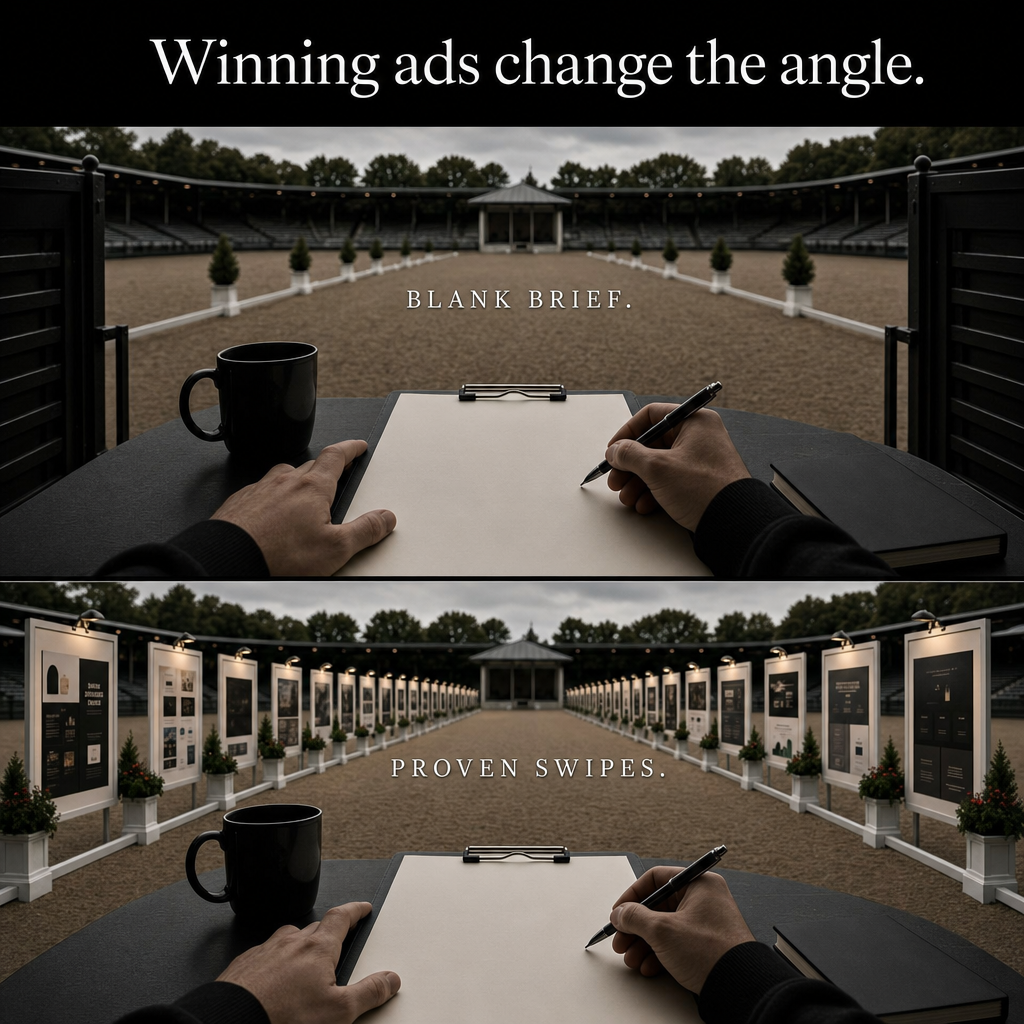
That image tells the whole story: same writer, same blank page, totally different results. On top, you’re staring into an empty arena with nothing to guide you. On the bottom, the walls are lined with winning ads, and suddenly the brief doesn’t feel so blank. This is the difference between guessing at ideas and stealing proven angles on purpose.
From Empty Arena To Idea Gallery
In the first frame, the clipboard faces a bare, open space. That’s what most briefs feel like: vague objectives, zero direction, and you alone with a deadline. In the second frame, the view is crowded with illuminated posters—each one a finished ad, headline, or layout. Nothing on your page has changed, but your brain now has rails to run on. Instead of inventing from scratch, you’re scanning, combining, and twisting angles that already work.
How To Turn Blank Briefs Into Swipe Angles
- Translate the brief into a wall of questions: Who, what pain, what proof, what payoff?
- Pull 10–20 proven ads that answer similar questions and lay them out like the posters in the image.
- Underline recurring angles (speed, status, simplicity, savings) and steal those as your starting points.
- Mix and match: pair one proven angle with your product’s unique proof, then draft three quick versions.
- Only after you’ve swiped for structure should you bother “being original” with voice and polish.
Real-World Swipe Angle Moves
Basecamp took the classic "project chaos" angle from agency ads and turned it into simple, calm screenshots showing everything in one place.
Grammarly lifted the old "before vs after" direct mail angle and applied it to clean, side‑by‑side writing comparisons in their digital ads.
Creative Variations
Analyzed by Swipebot
Loading analysis...