Ecommerce Terms 2026: 20 Key Definitions for Success | Francesco Gatti posted on the topic | LinkedIn
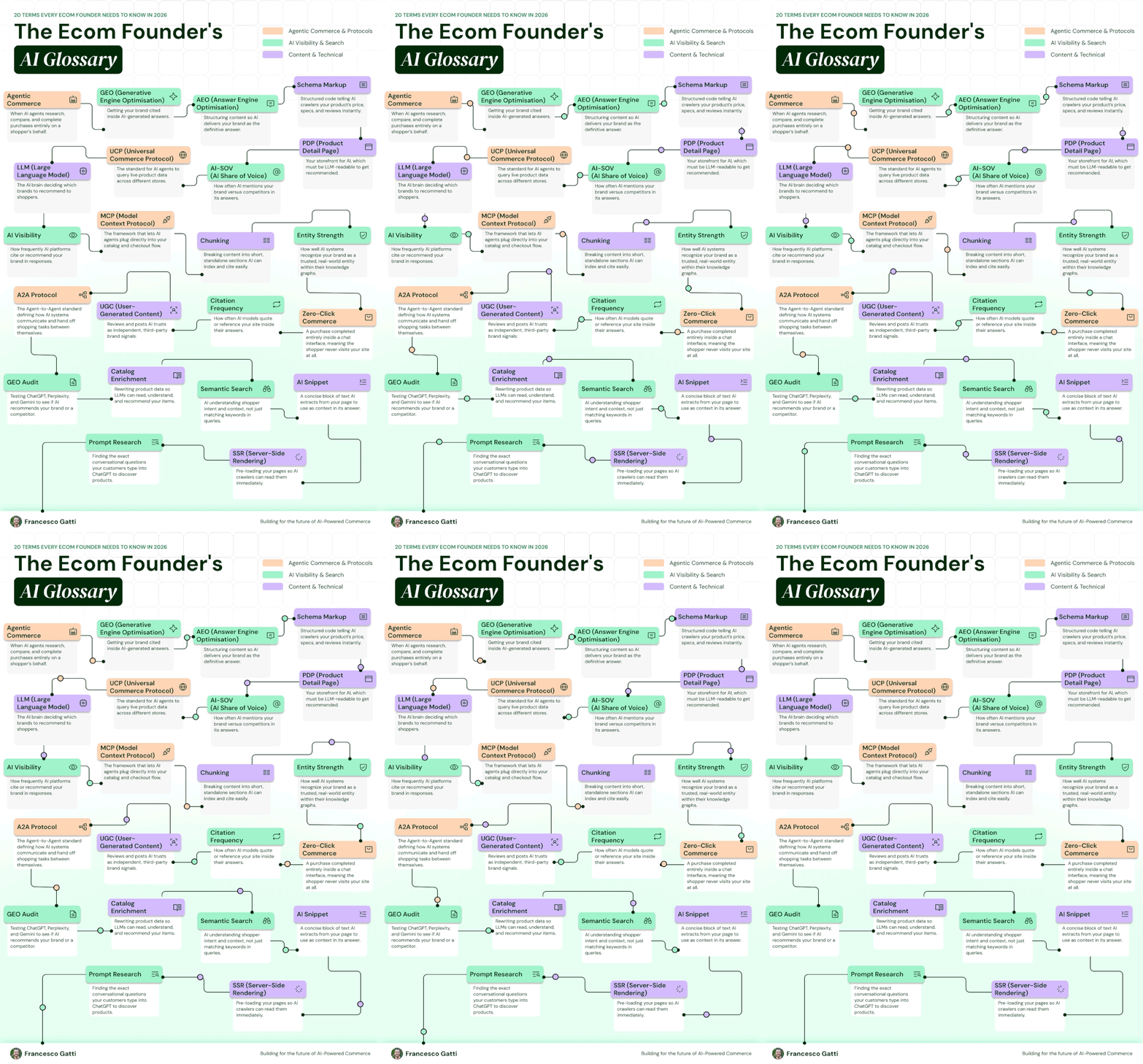
If you sell anything online in 2026, you’re not just running an ecommerce store anymore—you’re running an AI interface to your brand. This glossary turns the 20 terms from Francesco Gatti’s “Ecom Founder’s AI Glossary” map into a cheat sheet you can actually use. Skim it now, and you’ll know exactly what your agency, dev team, or AI tools are talking about—and which levers to pull first.
Next Step: Run a 1-Hour GEO Audit
Open ChatGPT, Perplexity, and Gemini and ask them how to buy your main products without mentioning your brand name, then list which competitors show up, note their AI snippets and PDP structure, and you’ve got your 90-day roadmap for winning ecommerce in 2026.
Ecom AI Glossary: 20 Terms to Win 2026
- Agentic Commerce – When AI agents research, compare, and complete purchases entirely on a shopper’s behalf.
- GEO (Generative Engine Optimisation) – Getting your brand cited inside AI-generated answers.
- AEO (Answer Engine Optimisation) – Structuring content so AI delivers your brand as the definitive answer.
- UCP (Universal Commerce Protocol) – The standard for AI agents to query live product data across different stores.
- LLM (Large Language Model) – The AI brain deciding which brands to recommend to shoppers.
- MCP (Model Context Protocol) – The framework that lets AI agents plug directly into your catalog and checkout flow.
- AI Visibility – How frequently AI platforms cite or recommend your brand in responses.
- A2A Protocol – The agent-to-agent standard defining how AI systems communicate and hand off shopping tasks.
- UGC (User-Generated Content) – Reviews and posts AI trusts as independent, third-party brand signals.
- GEO Audit – Testing ChatGPT, Perplexity, and Gemini to see if AI recommends your brand or a competitor.
- Schema Markup – Structured code telling AI crawlers your product’s price, specs, and reviews instantly.
- PDP (Product Detail Page) – Your storefront for AI, which must be LLM-readable to get recommended.
- AI-SOV (AI Share of Voice) – How often AI mentions your brand versus competitors in its answers.
- Chunking – Breaking content into short, standalone sections AI can index and cite easily.
- Citation Frequency – How often AI models quote or reference your site inside their answers.
- Entity Strength – How well AI systems recognize your brand as a trusted, real-world entity in their knowledge graphs.
- Zero-Click Commerce – A purchase completed entirely inside a chat interface, where the shopper never visits your site.
- Catalog Enrichment – Rewriting product data so LLMs can read, understand, and recommend your items.
- Semantic Search – AI understanding shopper intent and context, not just matching keywords in queries.
- AI Snippet – A concise block of text AI extracts from your page to use as context in its answer.
How to Actually Use This Glossary
- Turn each term into a yes/no checklist for your store: do you have it, or are you guessing.
- Prioritize visibility levers first: GEO, AEO, AI-SOV, citation frequency, and schema markup.
- Then fix your product layer: catalog enrichment, PDPs, chunking, and UGC that AI trusts.
- Finally, play offense with agents: agentic commerce, UCP, MCP, and A2A-ready workflows.
Real-World Style Plays Using These Terms

Amazon rewrites PDPs with rich schema markup and catalog enrichment so its products dominate GEO and AEO results inside AI shopping assistants.

Shopify helps merchants boost AI visibility by baking structured data, fast SSR, and UGC widgets directly into storefront themes.
Creative Variations
Analyzed by Swipebot
Loading analysis...