Old Content Still Wins Update Do Not Rewrite
Published on

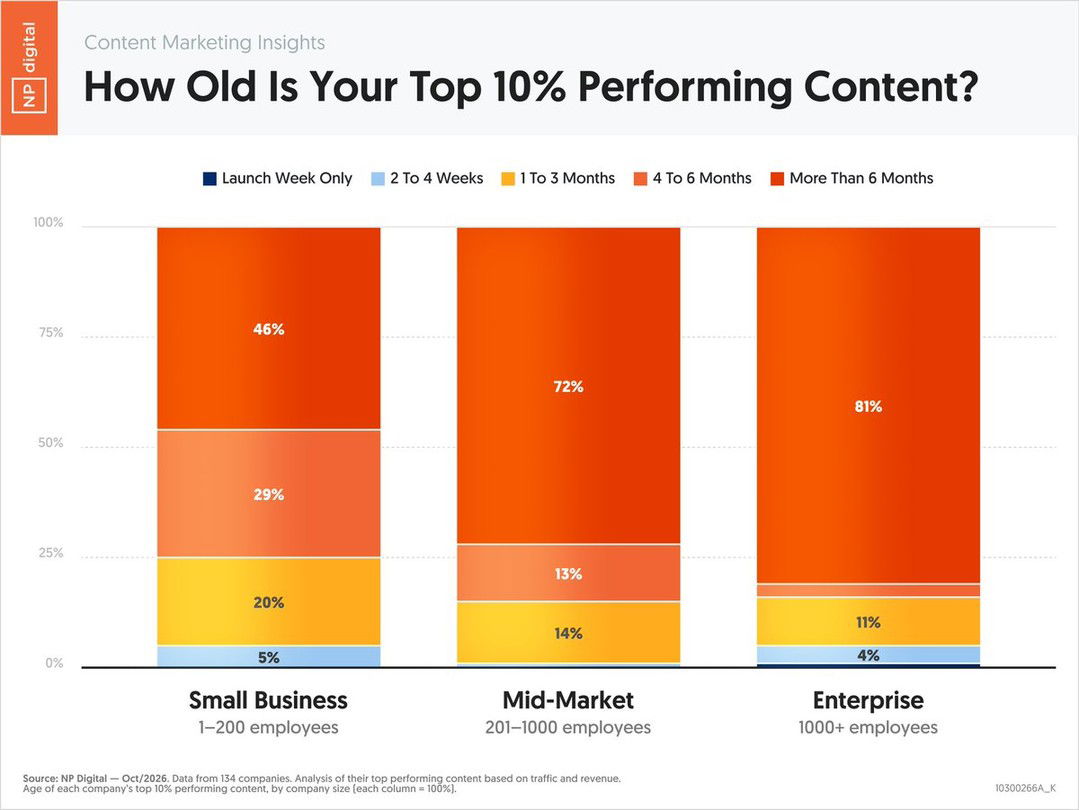
Everyone keeps yelling that you must pump out nonstop “fresh” content or get buried by algorithms. This chart politely says: nope. The real winners are sitting on a mountain of older posts still pulling traffic, leads, and revenue. Your job isn’t to constantly rewrite everything—it’s to update, protect, and promote what’s already working.
What the chart actually shows
The graphic breaks down the age of the top 10% performing content for three groups: small business (1–200 employees), mid-market (201–1,000), and enterprise (1,000+). Each column stacks performance by age: launch week, 2–4 weeks, 1–3 months, 4–6 months, and more than 6 months. In every segment, the biggest, brightest slice is “more than 6 months old.” The larger the company, the more they rely on these older pieces.
How to make old content still win
Turn this into a system: first, identify your top 10–20 pages by traffic and revenue. Second, update them quarterly—refresh stats, tighten copy, improve screenshots, upgrade CTAs. Third, re-promote those refreshed winners via email, internal links, and social. Instead of rewriting everything, you’re giving your best assets small upgrades that keep them relevant and compounding.
The numbers that should change how you work
- Small businesses already get 46% of their top results from content older than six months.
- Mid-market companies jump to 72% of their winners being 6+ months old.
- Enterprise brands are basically living on “old” content, with 81% of top performers past the six‑month mark.
- Launch-week hits are tiny across the board (single-digit percentages), so most content needs time and optimization to shine.
- The real compound gains come from keeping proven pieces updated, accurate, and promoted—not rewriting them from scratch.
Real-world “old but updated” winners
HubSpot consistently drives a huge chunk of its traffic from marketing guides published years ago but refreshed with new data and screenshots every few months.
Ahrefs ranks for competitive SEO terms with foundational blog posts that are several years old yet regularly updated with new experiments and interface changes.

Shopify pulls in search traffic from ecommerce tutorials written long ago that are routinely updated to reflect platform features, new examples, and current best practices.
Analyzed by Swipebot
Loading analysis...