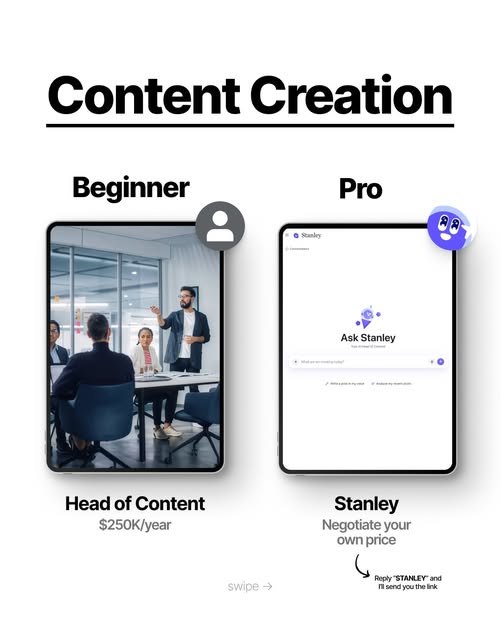
Replace a $250K Head of Content With Stanley
Published on

1/7
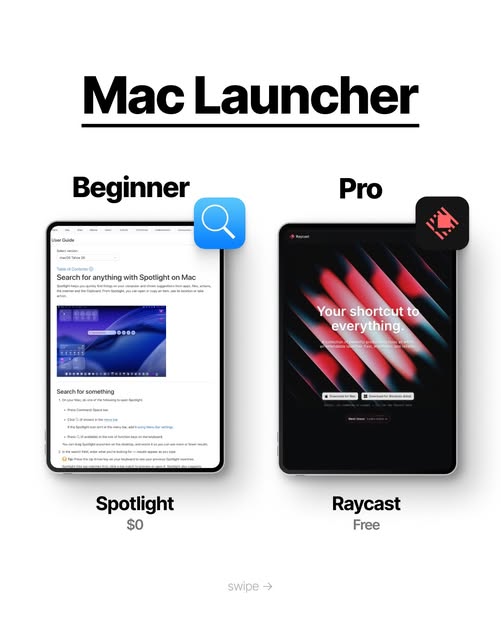
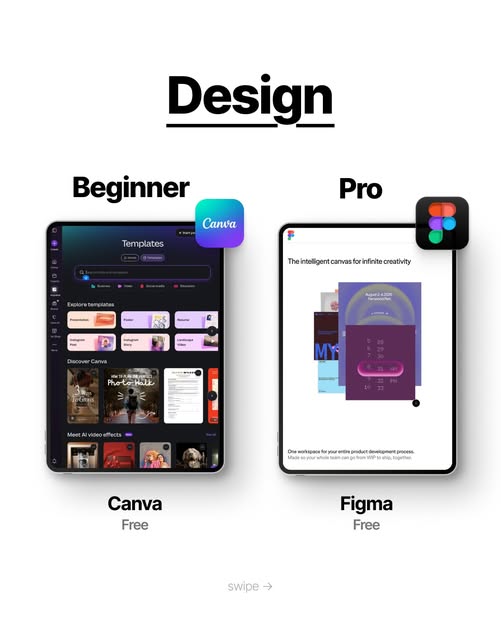
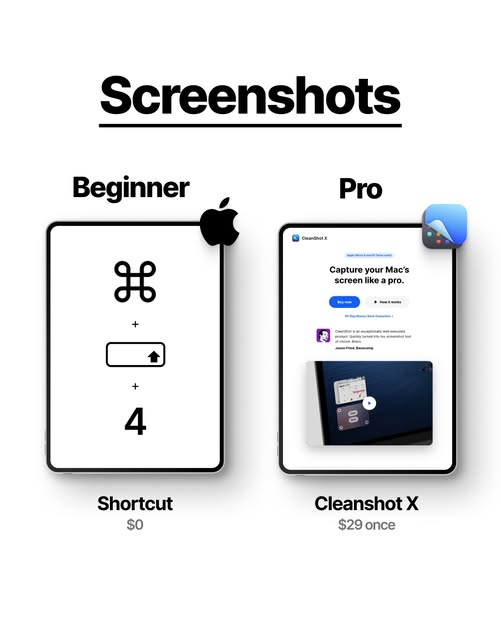
You don’t need a $250K Head of Content to crank out pro-level work. You need a simple, repeatable tool stack your whole team can understand in 10 minutes. That’s what “Stanley” really is: a dead-simple upgrade path from beginner apps to pro-grade systems. Use these Instagram visuals as your cheat sheet, not another folder lost in your screenshots graveyard.
Turn Notes Into a Content OS
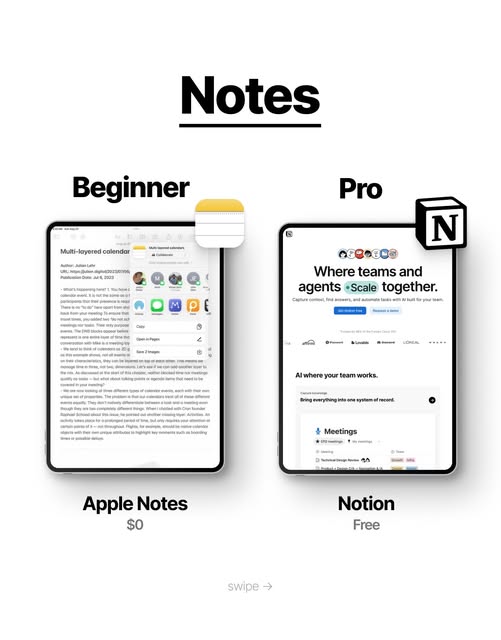
The first visual jumps from Apple Notes to Notion. Same idea (capture thoughts), totally different leverage. Apple Notes is where ideas go to nap. Notion is where they turn into briefs, calendars, SOPs, and swipe files your team actually reuses. Copy this: light capture in your phone notes, then promote winners into Notion pages, databases, and templates. That’s how a $0 app plus a free one quietly replaces a six-figure “strategy doc.”
Edit Like a Studio, Not a Hobbyist
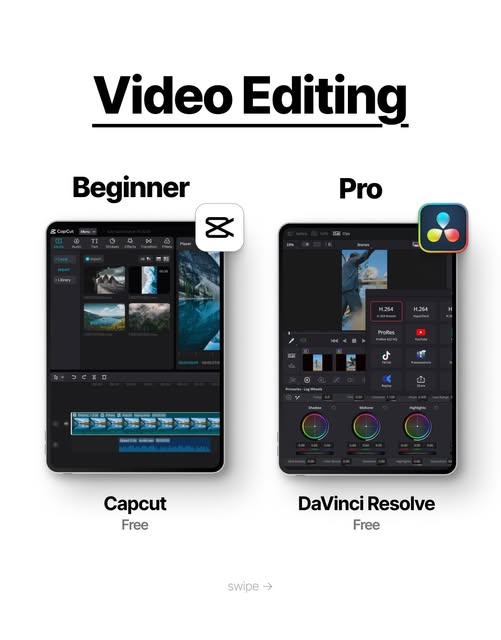
On video, the carousel upgrades from Capcut to DaVinci Resolve. Capcut is perfect for quick vertical clips. DaVinci is a full editing bay: color grading, audio, versions, templates. The move here isn’t “use fancier software.” It’s locking in repeatable projects: same intro, same lower thirds, same export settings. A Head of Content would call this a “visual identity system.” You can get 80% of that just by standardizing inside DaVinci once, then reusing forever.
Automate the Boring Stuff First
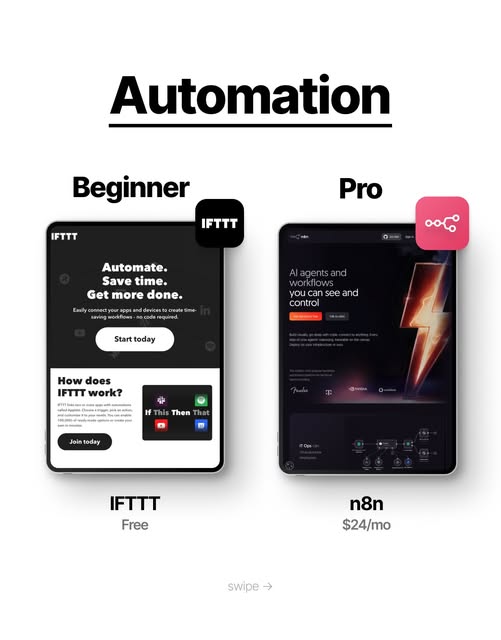
The final visual goes from IFTTT to n8n. IFTTT is cute for simple zaps. n8n lets you chain AI, webhooks, and APIs into real workflows. Translation: “Stanley” doesn’t manually upload, paste, and tag everything. He builds flows one bottleneck at a time—drafts to docs, docs to CMS, CMS to social, plus notifications. Start where you’re bleeding time right now and automate just that step. Congratulations, you just replaced 20% of a content manager’s job with a $24/month robot.
The Psychology Behind the Beginner → Pro Layout
- Side‑by‑side screenshots instantly frame each tool as a clear upgrade path, not an overwhelming menu of options.
- Simple labels like “Beginner” and “Pro” tap into status—readers instinctively want to graduate.
- Showing prices directly under each tool makes the “replace $250K salary” argument feel obvious instead of hypey.
- One category per slide (Notes, Video Editing, Automation) keeps the carousel scannable and shareable.
How Creators Actually Use a “Stanley Stack”

Pascio uses the beginner → pro visuals on Instagram to show creators exactly which tools replace a $250K content lead without a 40‑page blog post.
Notion turns scattered Apple Notes ideas into a living content command center with briefs, calendars, and publishing checklists in one place.
n8n lets small teams automate AI-assisted publishing workflows so they ship more content with fewer humans in the loop.
Creative Variations
Analyzed by Swipebot
Loading analysis...